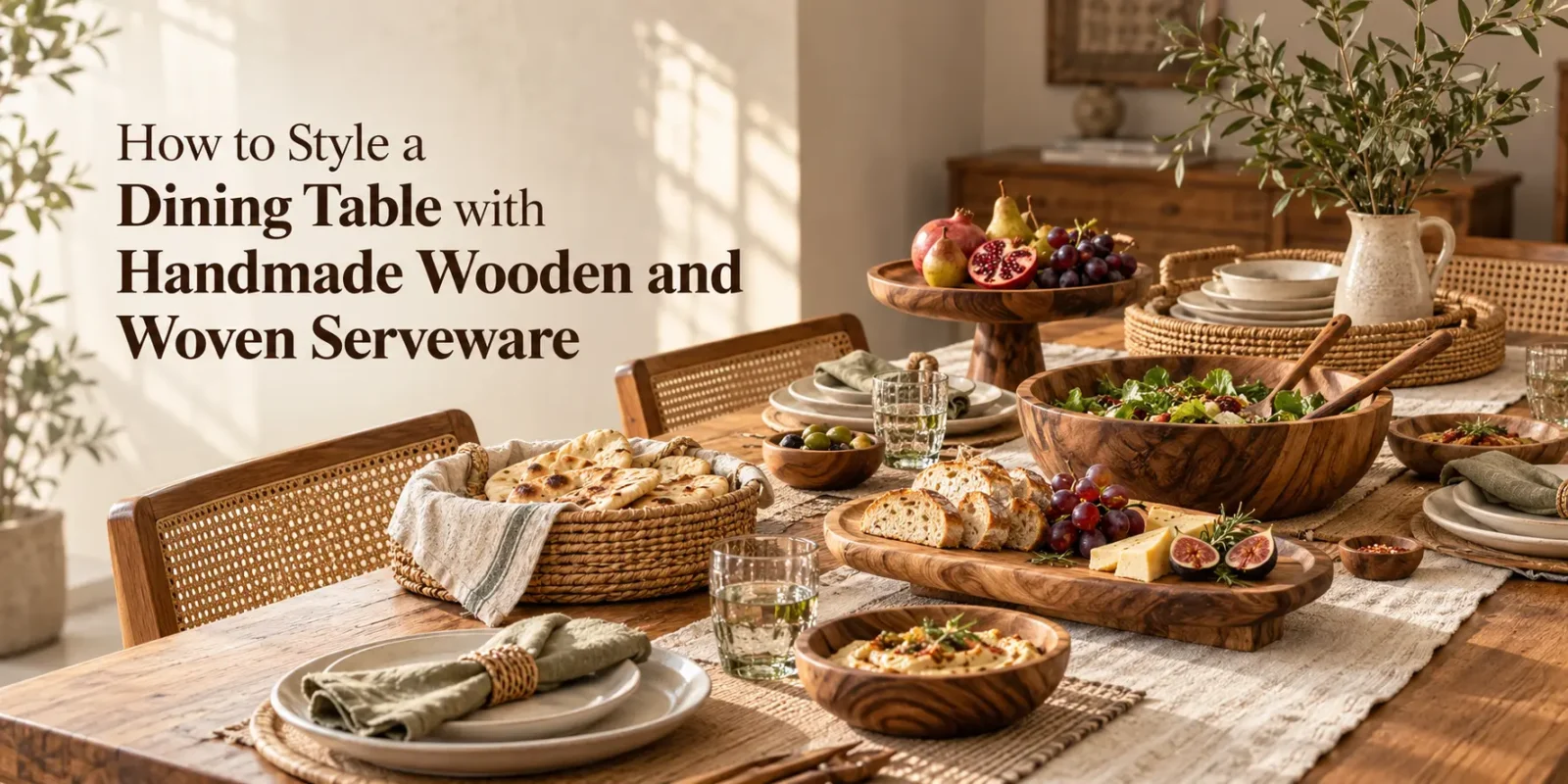
Dining tables are moving away from the matched, everything-identical look. More people are swapping ceramic sets for pieces with visible grain and the occasional uneven edge. Wooden dinnerware sits at the center of that shift.
This post covers durability, sustainability, styling, why the wood hotpot is showing up on more tables again, and the upkeep nobody mentions until a piece has already cracked.
The Organic Modern Aesthetic
Clean lines and minimal clutter define most modern kitchens, but one material in the mix usually feels handmade on purpose. That’s the organic modern trick. A textured wooden serving platter next to sleek glass or matte ceramic keeps a table from looking like a showroom.
On counters, round wood serving trays do the same thing kitchen islands need more of: something that isn’t a straight edge.
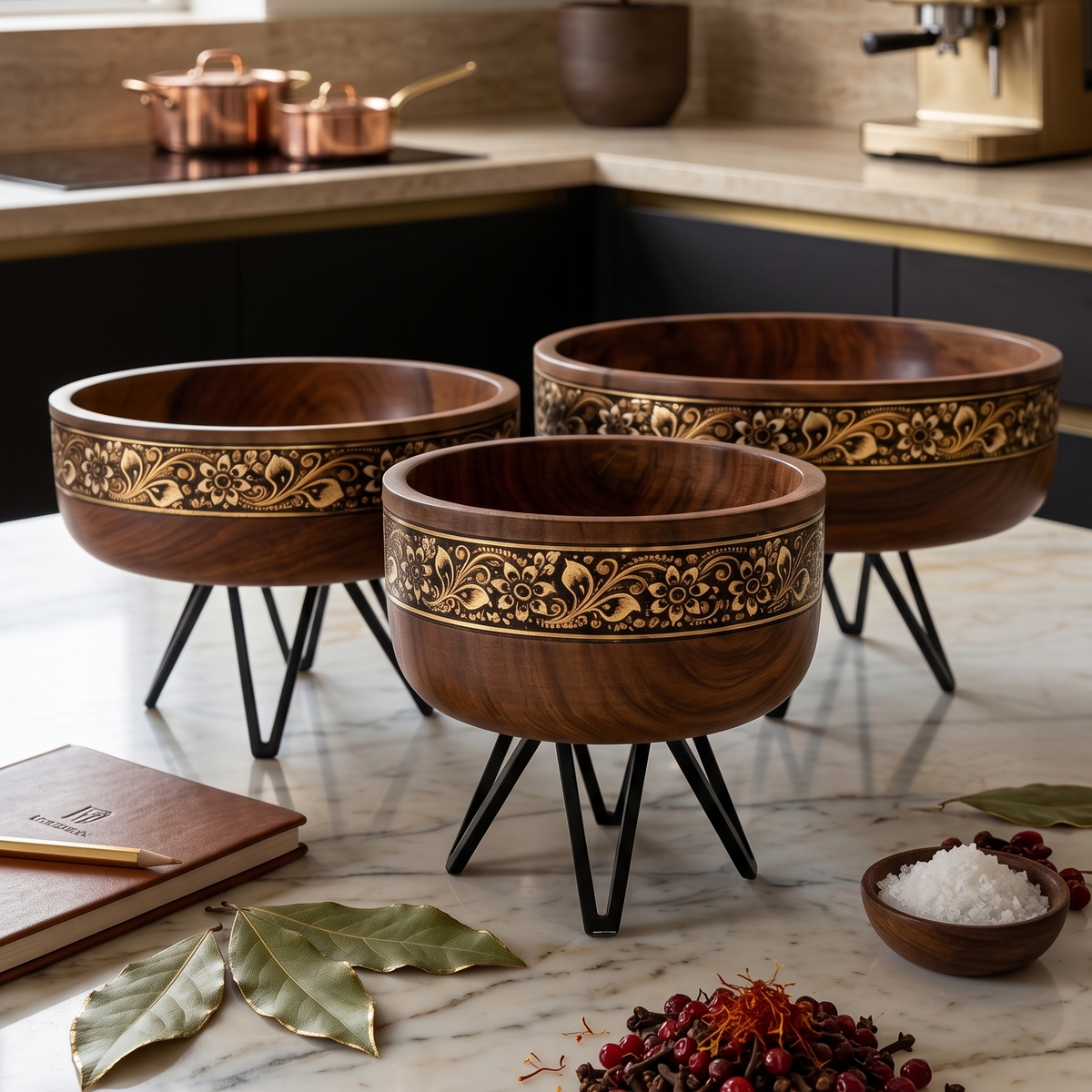
Ceramic bowls photograph fine and disappear into a table just as easily. Wooden bowl sets don’t have that problem. Fruit or greens sitting in warm wood grain simply hold attention longer than the same thing in plain white.
Picking the Right Wood
Walnut costs the most of the common options, and most people who buy it once don’t switch back. Teak handles humidity the best out of the three, which is really the only reason it shows up on patios and near sinks so often. Mango wood is the cheap option, and it looks like it after a couple of years of scratches.
Acacia dominates the market for a duller reason than quality. It’s heavy enough to feel substantial, cheap enough to sell in sets, and grained well enough to photograph nicely on a listing page. If a bowl feels too light in your hand for its size, that’s usually the tell.
Health Benefits and Sustainability
Bacteria doesn’t survive long on wood. Surface bacteria gets pulled down into the grain through capillary action, and once it’s trapped there, it dies off faster than the same bacteria would on plastic. Maple and oak are the species this has actually been tested on. Acacia carries the same reputation mostly through marketing, not lab results specific to acacia itself.
Heat is a different mechanism entirely. A sealed tray resists melting, warping, and off-gassing because of the seal, not the wood underneath it. Strip that finish away and the same board behaves like a completely different material.
There’s a manufacturing angle too: timber generally takes less energy to produce than glass or ceramic.
Three things worth knowing before you buy: it survives drops that would shatter ceramic, it doesn’t leach chemicals into food the way some plastics do, and making it costs less energy than firing glass or ceramic ever does.
The Cultural Comeback of the Wood Hotpot
Plastic insulated hotpots have been a fixture in South Asian kitchens for decades, and they’re slowly losing ground to wood versions built for the exact same job: keeping rotis or rice warm through a long family meal.
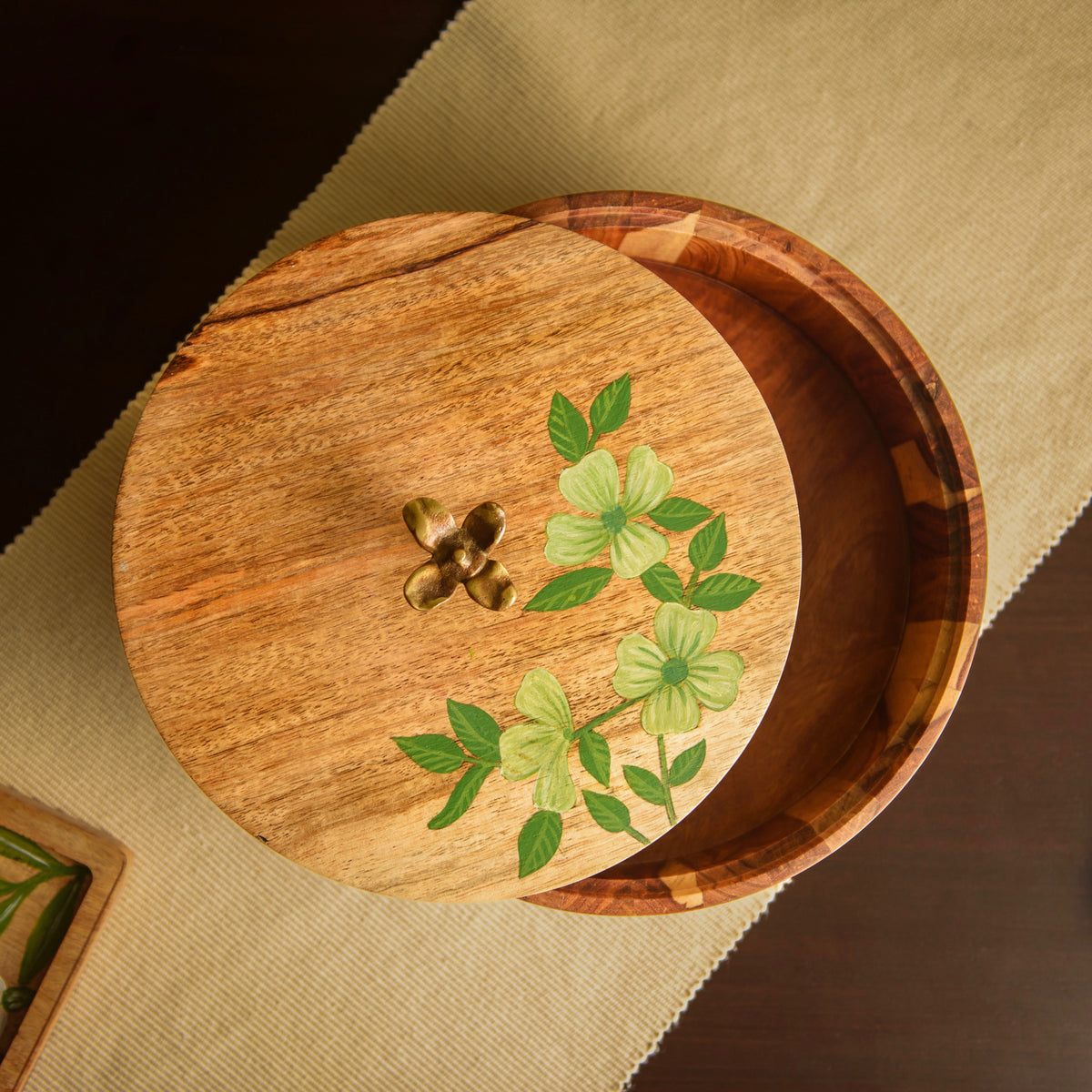
Most wood hotpots aren’t solid wood at all. A stainless steel lining tucked inside the shell handles the actual heat retention while the exterior does the job of not looking like plastic.
Capacity runs from a few cups up to around two liters in most of what’s currently on the market.
One thing to actually check before buying a hotpot online: the seal. A loose lid defeats the entire purpose no matter how good the wood grain looks in the product photos.
Care and Maintenance Advice
Dishwashers and wood don’t get along. Heat plus standing water is close to the worst combination for a wooden tray.
Hand washing solves most of it. Mild soap, a towel right after, no air drying.
Humidity swings are the real long-term threat, more than any single spill. Winter heating dries indoor air out, and wood dries out right along with it, which is why an oiling in late fall does more good than one done after a board already looks chalky.
Citrus and tomato juice pull the natural oils out of wood on contact, not gradually. A rinse within a few minutes keeps staining from setting in at all.
Monthly mineral oil, the food-safe kind, is the baseline. Olive and vegetable oil go rancid on wood, so keep those in the pantry instead. A beeswax finish brings back shine on older pieces, and one habit matters more than any product: don’t leave anything wooden sitting in water overnight.
Creative Styling Ideas
Metal and glass against a dark walnut board create the kind of contrast that a matching ceramic set can’t produce on its own.
Shape still matters for function. A rectangular platter carries a baguette or a long spread better than a round one, and a round board suits cheese, where people are cutting in from several sides at once.
None of this is limited to mealtimes. A tray with a candle and a stack of books works on a coffee table just as well as it works at dinner, and a couple of small wooden bowls next to a bigger platter cover dips, nuts, or olives whenever people are grazing instead of sitting down to plates.
Conclusion
Wooden pieces don’t stay looking the same for long, and that’s the actual selling point. A board darkens, a bowl picks up small marks, the grain shifts slightly with each oiling. None of that happens to a ceramic set sitting untouched in a cabinet.
That’s worth trying before committing to a full set: pick one piece, use it daily for a month, and see whether the wear looks like damage or like character. Most people find out it’s the second one.