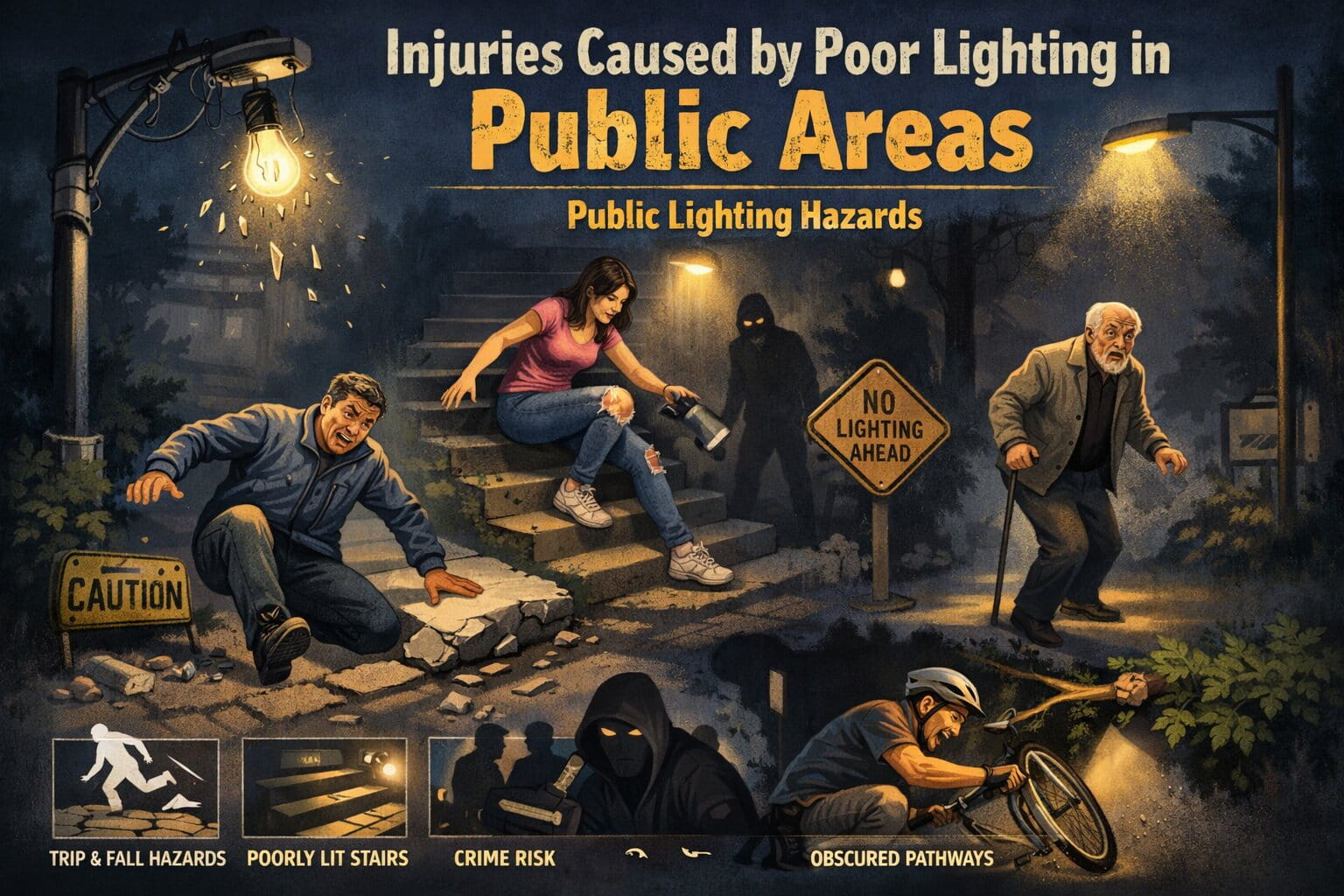
Poor lighting in public areas is more than an inconvenience – it is a serious safety hazard that can lead to devastating injuries. From dimly lit parking lots and stairwells to poorly illuminated sidewalks and apartment complexes, inadequate lighting increases the risk of accidents, assaults, and falls.
Property owners and municipalities have a legal responsibility to maintain safe environments for visitors, tenants, and pedestrians. When they fail to address dangerous lighting conditions, victims may have the right to pursue compensation for their injuries.
How Poor Lighting Causes Injuries?
Adequate lighting is essential for visibility and safety. When public areas are not properly illuminated, individuals may be unable to identify hazards, uneven surfaces, obstacles, or dangerous conditions in time to avoid an accident. Poor lighting commonly contributes to incidents such as:
- Slip and fall accidents
- Trip and fall injuries
- Stairway accidents
- Pedestrian collisions
- Criminal assaults and robberies
- Parking lot accidents
For example, a person walking through a dark parking garage may not see a pothole or broken pavement, leading to a severe fall. Similarly, inadequate lighting in apartment hallways or staircases can prevent residents and visitors from noticing loose railings, wet floors, or uneven steps.
In some cases, poor lighting can also create opportunities for criminal activity. Dimly lit public spaces may increase the likelihood of assaults, muggings, or other violent crimes because perpetrators believe they are less likely to be seen or identified.
Common Locations Where Poor Lighting Injuries Occur
Poor lighting accidents can happen in many types of public and private properties. Some of the most common locations include:
- Parking lots and parking garages
- Sidewalks and walkways
- Shopping centers and retail stores
- Apartment complexes
- Hotels and resorts
- Office buildings
- Public parks
- Stairwells and hallways
- Construction sites
Property owners are generally expected to inspect their premises regularly and repair hazardous conditions, including broken or insufficient lighting. Failure to replace burned-out bulbs, maintain lighting systems, or install adequate illumination may constitute negligence.
Injuries Associated With Inadequate Lighting
The injuries resulting from poor lighting accidents can range from minor to life-altering. Victims often suffer:
- Broken bones
- Sprains and fractures
- Head injuries and traumatic brain injuries (TBIs)
- Back and spinal cord injuries
- Cuts and lacerations
- Neck and shoulder injuries
- Emotional trauma and anxiety
Older adults are especially vulnerable to severe injuries from falls caused by poor visibility. A single accident can result in extensive medical treatment, rehabilitation, lost wages, and long-term pain.
Who May Be Liable?
Determining liability in a poor lighting injury case depends on where the accident occurred and who was responsible for maintaining the property. Potentially liable parties may include:
- Property owners
- Landlords
- Business owners
- Property management companies
- Municipalities or government entities
- Maintenance contractors
Under premises liability law, these parties may be held accountable if they knew or should have known about the dangerous lighting condition and failed to correct it within a reasonable period.
For instance, if a shopping center owner ignored repeated complaints about broken parking lot lights and a customer was injured in a fall, the owner could potentially be liable for damages.
Proving Negligence in a Poor Lighting Case
To successfully pursue a premises liability claim, injured victims generally must prove the following elements:
- The property owner owed a duty of care
- The lighting condition was unsafe or inadequate
- The owner knew or should have known about the hazard
- The unsafe lighting directly caused the injury
- The victim suffered damages as a result
Evidence can play a critical role in proving negligence. Helpful evidence may include:
- Photographs or videos of the poorly lit area
- Surveillance footage
- Maintenance records
- Witness statements
- Accident reports
- Medical documentation
An experienced personal injury attorney can help investigate the circumstances surrounding the accident and gather the evidence needed to support a claim.
Compensation Available to Victims
Victims injured due to poor lighting conditions may be entitled to compensation for both economic and non-economic damages. Depending on the severity of the injuries, compensation may include:
- Medical expenses
- Future medical treatment
- Lost wages and reduced earning capacity
- Pain and suffering
- Emotional distress
- Rehabilitation costs
- Permanent disability or disfigurement
In cases involving gross negligence, punitive damages may also be available.
Why Legal Representation Matters
Premises liability claims involving poor lighting can be complex. Insurance companies often attempt to minimize payouts or argue that victims were partially responsible for their injuries. A personal injury solicitor perth can evaluate the claim, negotiate with insurers, and advocate for fair compensation.
Additionally, there are strict deadlines for filing injury claims, known as statutes of limitations. Delaying legal action could jeopardize a victim’s ability to recover damages.
Final Thoughts
Poor lighting in public areas creates preventable dangers that can result in serious injuries and lasting consequences. Property owners have a responsibility to provide safe and adequately illuminated spaces for visitors and tenants. When they fail to do so, injured individuals may have legal options to seek compensation for their losses.
If you or a loved one has suffered injuries caused by inadequate lighting in a public place, consulting with an experienced premises liability attorney can help you understand your rights and determine the best path forward.