Sterilization is a crucial procedure in hospitals, dental clinics, laboratories and medical device companies to assure patient safety. But sterilization is not enough. Instruments need to remain sterile until the time they are used and this is where the importance of proper packaging becomes vital. One of the most common products in healthcare packaging is Sterilization Reels. These reels are used to create custom-size Sterilization Pouches for different instruments. But even the best sterilization reel can fail if the heat sealing process isn’t performed correctly. Weak or damaged seals can allow bacteria and dust to enter the pouch, resulting in contamination and the possibility of infection. In this article we will review the best practices for heat sealing sterilization reels. But sterilization is not enough. Instruments must be sterile until the moment they are used. This is why proper packaging has a very important role.
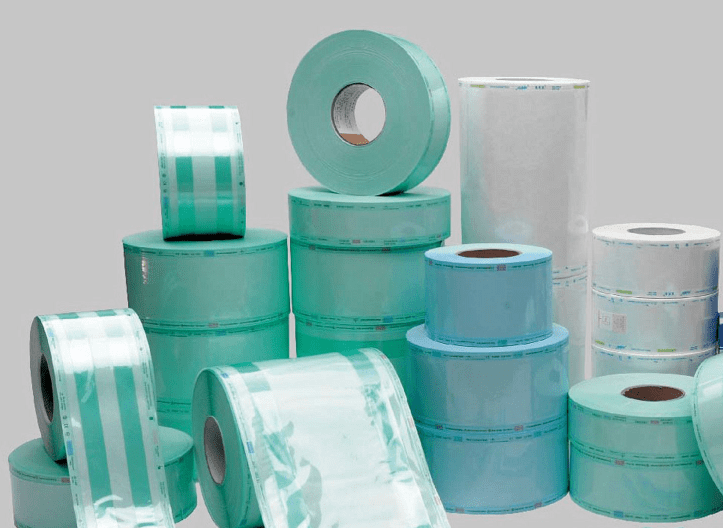
Sterilization Reels are one of the most widely used products in healthcare packaging. These reels are used to produce custom sized Sterilization Pouches for various instruments. But even the best sterilization reel will not work if the heat sealing process is not done correctly.
Weak or broken seals allow bacteria and dust to enter the pouch, which can lead to contamination and a risk of infection.
In this article, we will learn the best ways to heat seal sterilization reels.
What are Sterilization Reels?
Sterilization Reels are continuous rolls made using:
- Medical-grade paper or Tyvek® on one side
- Transparent plastic film on the other side
The reel is cut according to the instrument size and then sealed using a heat sealing machine to create a pouch.
These reels are widely used because they:
- Reduce packaging waste
- Allow custom-size packaging
- Improve storage efficiency
- Support better sterilization performance
Why proper heat sealing is important
The seal is the most important part of any sterile package.
Even if the instrument is perfectly sterilized, a poor seal can destroy sterility.
Improper sealing may cause:
- Seal leakage
- Instrument contamination
- Wet packs
- Pouch opening during handling
- Failure during storage or transport
Good sealing ensures that Sterilization Pouches remain sterile until use.
1) Use the correct sealing temperature
Every sterilization reel material has a recommended sealing temperature.
If the temperature is too low:
- The seal may become weak
- The pouch may open easily
If the temperature is too high:
- The paper or film may burn
- The material may shrink or wrinkle
- The seal may become brittle
Always follow the sealing temperature recommended by the reel manufacturer.
2) Maintain proper sealing pressure
Pressure is equally important during sealing.
Too little pressure:
- Incomplete sealing
- Air gaps in the seal
Too much pressure:
- Damage to paper or film
- Distorted seal area
A uniform pressure across the sealing area helps create strong and consistent seals.
3) Correct sealing time is necessary
Heat, pressure, and time must work in unison. If sealing time is too short: The layers may not bond properly If sealing time is too long: The material may overheat or deform Adequate dwell time is crucial for ensuring good seal integrity.
Heat, pressure and time.
If seal time is too brief:
The layers may not bond well
If sealing time is too long:
The material could overheat or distort
Proper dwell time encourages good seal integrity.
4) Keep the sealing area clean
Dust, fibers, moisture or oil in the seal area can cause seal failure. Before sealing: Make sure sealing surface is clean Keep hands dry and clean Remove any particle from pouch area Even a small contamination inside the seal can cause leakage channels.
Seal failure may be caused by dust, fibers, moisture or oil in the seal area.
Before you seal:
Clean the seal surface
Keep hands dry and clean.
Remove any particle from the pouch area
A small contamination inside the seal can create leakage channels.
5) Avoid wrinkles during sealing
Wrinkles are one of the biggest reasons for seal failure.
Wrinkles can create:
- Small air channels
- Weak spots in the seal
- Sterility failure
While sealing:
- Keep the reel flat
- Avoid folding or twisting
- Ensure smooth placement inside the machine
A flat and uniform seal is always stronger.
6) Choose the correct pouch size
The pouch should not be too tight or too loose.
If the pouch is too small:
- Instrument may touch the seal
- Puncture risk increases
If the pouch is too large:
- Excess material may wrinkle
- Handling becomes difficult
Proper sizing improves sealing quality and sterilization efficiency.
7) Leave proper sealing margins
Always leave enough space between the instrument and the seal area.
This helps:
- Prevent stress on the seal
- Improve pouch opening
- Reduce puncture risk
Normally, a safe sealing margin should always be maintained according to packaging guidelines.
8) Regularly check the sealing machine
A poorly maintained machine can create inconsistent seals.
Regular maintenance should include:
- Checking heater performance
- Cleaning sealing jaws
- Inspecting pressure settings
- Verifying temperature calibration
A properly maintained machine gives better and more reliable sealing performance.
9) Perform routine seal inspection
Every sealed pouch should be checked before sterilization.
Look for:
- Uniform seal width
- No wrinkles or gaps
- No burn marks
- Proper adhesion
If any pouch looks damaged, it should not be used.
10) Train staff properly
Even high-quality Sterilization Reels can fail if operators are not trained properly.
Staff should understand:
- Correct sealing parameters
- Proper loading techniques
- Inspection methods
- Safe handling practices
Good training reduces human error and improves infection control.
Common mistakes to avoid
Overloading the pouch
Too many instruments create pressure on seals.
Using damaged reels
Do not use torn or folded reel material.
Incorrect temperature settings
Can cause weak or burnt seals.
Sealing over dust or moisture
Creates contamination risk.
Not checking seals after sterilization
Always inspect before use.
Importance of seal integrity in infection control
A strong seal acts as a barrier against:
- Bacteria
- Dust
- Moisture
- External contamination
This helps maintain sterility during:
- Storage
- Transportation
- Hospital handling
Good heat sealing directly supports infection prevention and patient safety.
How proper sealing improves Medical Packaging quality
In modern healthcare, Medical Packaging is not just about appearance. It is about safety and reliability.
Properly sealed Sterilization Pouches provide:
- Better shelf life
- Improved sterile barrier protection
- Easier handling and storage
- Better compliance with healthcare standards
- Reduced packaging failures
This is why sealing quality is taken very seriously in hospitals and medical device industries worldwide.
Final thoughts
Heat sealing may look like a simple process, but it plays a major role in maintaining sterility and patient safety.
By following proper sealing temperature, pressure, timing, cleanliness, and inspection methods, healthcare facilities can improve the performance of Sterilization Reels and create safer Sterilization Pouches.
In today’s healthcare industry, reliable Medical Packaging is one of the most important parts of infection control.
Bottom line
Proper heat sealing of Sterilization Reels helps maintain sterility, reduce contamination risk, and improve patient safety. Good sealing practices ensure that Sterilization Pouches remain strong, safe, and effective until the moment of use.