Starting an ecommerce business in the UK is one of the most accessible and rewarding paths to entrepreneurship today. With more consumers shifting towards online shopping than ever before, digital storefronts offer businesses the unique opportunity to reach a nationwide audience without the heavy overhead costs of a physical retail location.
Whether your passion lies in selling fashion apparel, artisanal takeaway food, beauty products, or electronics, the ecommerce landscape provides unmatched flexibility and scalability. However, turning a digital storefront into a profitable venture requires careful planning, deep market research, and a well-defined business strategy.
This comprehensive guide breaks down the essential steps to launching a successful ecommerce business in the UK and building a reliable foundation for sustainable growth.
1. Understand the UK Ecommerce Market
Before uploading products or launching your store, it is vital to gain a clear understanding of your target audience and the industry landscape. Comprehensive market research should focus on:
- Customer Buying Habits: Analysing what drives your target audience to make a purchase.
- Industry Trends: Identifying shifting demands and emerging shopping patterns.
- Competitor Websites: Studying established brands to see what they do well and where they fall short.
- Pricing Strategies: Balancing profitability with competitive market rates.
Understanding what consumers expect allows you to position your brand effectively. Strategic market research drastically reduces initial business risks and sets you up for long-term success.
2. Choose Your Specific Business Niche
The trajectory of your ecommerce business heavily depends on selecting the right niche. Some of the fastest-growing and consistently popular categories include:
- Fashion and apparel
- Health, wellness, and beauty
- Specialized food delivery and takeaways
- Premium pet supplies
- Fitness and lifestyle gear
When selecting your inventory, focus on products that have steady, year-round demand and a clearly defined target audience. Focus on value-driven products that solve practical problems or fulfill a genuine need for the consumer.
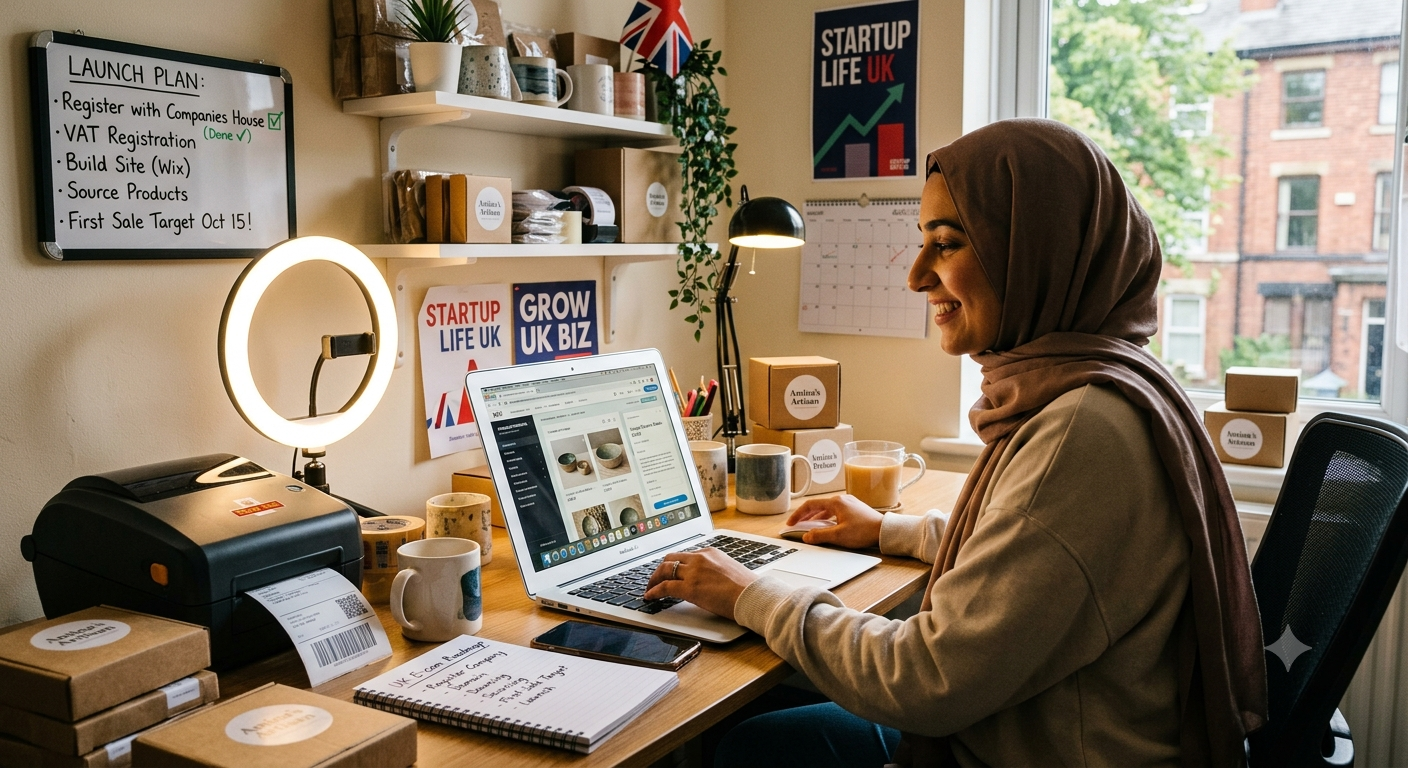
3. Step-by-Step: How to Start an Ecommerce Business UK
Many aspiring entrepreneurs wonder how to start an online business successfully without any prior industry experience. While the process requires dedication, breaking it down into structured stages keeps the journey manageable:
- Identify your specific niche and target audience.
- Conduct thorough market and competitor research.
- Formally register your business with HMRC and set up legal requirements.
- Source reliable manufacturers or wholesale suppliers.
- Develop a memorable brand identity (name, logo, and tone of voice).
- Build and design a user-friendly ecommerce website.
- Integrate secure, reliable payment gateways.
- Plan and execute targeted digital marketing campaigns.
4. Build a Trustworthy & Professional Brand
In the digital marketplace, your brand identity is what differentiates you from a sea of competitors and builds immediate trust with cold visitors. A cohesive brand experience consists of a memorable business name, a clean logo, a consistent color palette, and engaging messaging. Online shoppers are naturally cautious; they are far more likely to share their payment details with brands that appear established and secure.
5. Elevate the Customer Unboxing Experience
Packaging is no longer just a tool for shipping—it is a critical extension of your brand’s marketing strategy. Today, leading online food retailers actively invest in custom creative packaging to elevate the customer experience the moment a package arrives on their doorstep.
When a customer receives an aesthetically pleasing, branded box, it creates a premium unboxing experience. This visual appeal encourages buyers to snap photos, record unboxing videos, and share their purchases on social media networks, generating free marketing for you.
6. Secure Fast-Food Deliveries with Premium Packaging
For businesses venturing into the hot food and Asian culinary sector, packaging quality requires absolute perfection. To ensure food survives transit without leaking or losing its freshness, takeout businesses rely on specialized containers.
For instance, using high-quality custom chinese boxes keeps specialized dishes secure, well-insulated, and presentable during transit. Similarly, online takeaway startups delivering stir-fries and pasta choose durable custom noodle boxes to protect product temperature and uphold hygiene standards. Investing in these custom-printed solutions reassures buyers of your premium quality and ensures a highly professional first impression.
7. Develop a Seamless Ecommerce Website
Your website is the heart of your digital business. To convert casual browsers into paying customers, your online store must deliver a flawless user experience. A high-converting website should be intuitive to navigate, optimized for mobile devices, highly secure with SSL certificates, and fast loading. Write detailed product descriptions and use crisp, high-resolution imagery to give shoppers complete buying confidence.
8. Master the Mechanics of Internet Commerce
Modern internet commerce has completely redefined retail standards and shaped consumer expectations. Today’s online shoppers demand a frictionless experience from checkout to delivery. To remain competitive, your business model must accommodate rapid shipping options, encrypted payment gateways, and responsive customer support.
9. Stay Ahead of Future Digital Trends
The ecommerce landscape evolves rapidly alongside technological advancements. To maintain a competitive edge, successful business owners keep a close eye on emerging trends, such as:
- Artificial Intelligence (AI): Using smart chatbots for customer support.
- Mobile Commerce (M-Commerce): Tailoring the entire purchasing path for smartphone users.
- Social Commerce: Allowing users to buy items directly through social networks.
10. Implement High-Impact Marketing Strategies
Even the most beautiful online store will struggle to generate revenue without a consistent flow of targeted traffic. Developing a multi-channel ecommerce marketing strategy is essential for driving customer acquisition:
- Search Engine Optimisation (SEO): Optimizing your website’s content to rank higher on Google search results naturally.
- Pay-Per-Click Advertising (PPC): Running targeted paid ads for immediate traffic.
- Email Marketing: Building a subscriber list to share exclusive discounts and updates.
11. Core Strategies for Sustainable Business Growth
Scaling an ecommerce business requires continuous optimization. Successful store owners do not guess; they analyze performance data to refine the customer journey. Proven growth strategies include actively collecting customer reviews, improving website speed, and designing clear call-to-action (CTA) buttons to improve conversion rates.
12. Prioritize Customer Retention and Data Analysis
Acquiring a new customer is valuable, but retaining an existing one is highly profitable. Satisfied buyers act as organic brand ambassadors, leaving positive reviews and recommending your store to friends. Focus heavily on providing swift communication and resolving delivery issues instantly.
Additionally, closely monitor your store’s key performance indicators (KPIs) such as monthly website traffic, conversion rates, and Average Order Value (AOV) to make smart, data-driven decisions.
Conclusion
Launching an ecommerce business in the UK opens up a world of potential for driven entrepreneurs. By understanding your market dynamics, cultivating a polished brand identity, designing a seamless website, and backing it up with a reliable digital marketing strategy, you can carve out a highly profitable space in the online world. With a consistent approach, your online store can grow into a trusted, thriving brand.