Quick answer: Yes, teeth whitening is safe when it is done properly, especially professional whitening supervised by a dentist. It does not damage the enamel. The most common side effect is temporary tooth sensitivity, which settles. The real risks come from overusing strong shop bought or online products without advice, which can irritate the gums and harm teeth.
Whiter teeth are one of the most requested cosmetic changes, but people are right to ask whether whitening is safe before they try it. The honest answer is that teeth whitening is safe when done sensibly, and unsafe mainly when people misuse strong products at home without guidance. Knowing the difference protects both your smile and your teeth.
Does whitening damage your teeth?
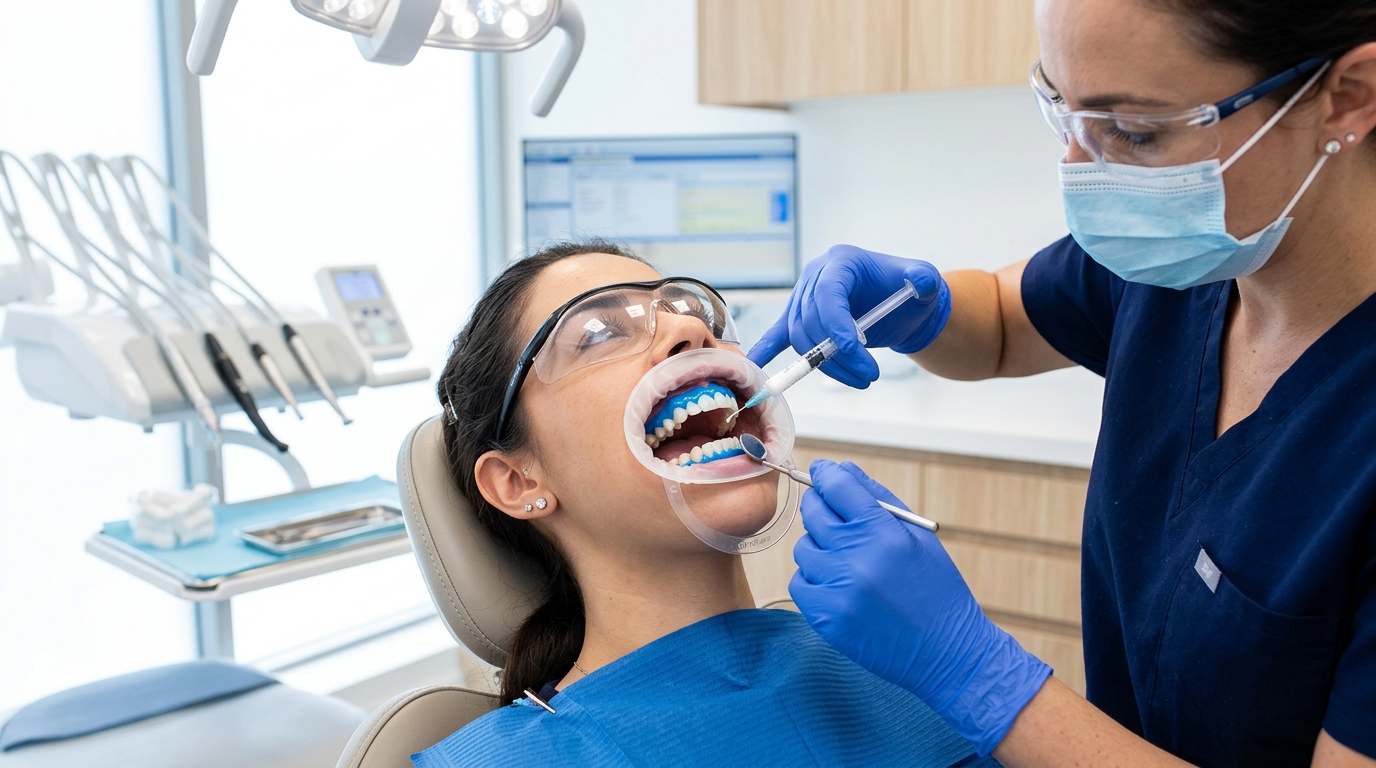
Done correctly, no. Professional whitening uses a controlled level of whitening agent that lifts stains from the tooth without harming the enamel. The enamel is not stripped or weakened by a proper treatment. What whitening can cause is temporary sensitivity, because the process opens the tiny channels in the tooth for a short time, but this settles within a few days and does not mean damage has occurred. The trouble starts when people reach for very strong or unregulated products and use them too often.
Professional versus home whitening
There is a real difference between whitening at the dentist and whitening from a shop or website. The table shows it honestly.
|
Type |
How it works |
Safety |
|
In clinic whitening |
Stronger gel, dentist supervised |
Safest, controlled and checked |
|
Dentist take home kit |
Custom trays, measured gel |
Safe, used as instructed |
|
Shop or online kits |
Weaker or unregulated gel |
Variable, easy to misuse |
|
Charcoal and DIY trends |
Abrasive, no real evidence |
Can wear enamel, not advised |
The honest risks to know
Being straight about the risks helps you whiten safely. Overusing whitening, especially strong online gels, can irritate or burn the gums and leave teeth painfully sensitive. Abrasive home trends like charcoal can actually wear the enamel over time, doing the opposite of what you want. Whitening also does not work on everything, crowns, veneers and fillings do not change colour, so whitening natural teeth around them can leave a mismatch. And whitening a mouth that has decay or gum disease first can cause real pain, which is why a check up should come before any whitening.
Who should be careful?
Whitening is not right for everyone at every time. It is best avoided or delayed if you have untreated cavities, gum disease, or very sensitive teeth, until those are sorted. It is not recommended during pregnancy as a precaution. Children and teenagers should not whiten without professional advice. None of this means whitening is dangerous, it means it should be matched to the right person at the right time, which is exactly what a dentist checks before starting.
How long does whitening last?
People often expect whitening to be permanent, so it is honest to set the right expectation. Whitening is not forever. Depending on the method and your habits, results typically last from several months to a couple of years before a top up is needed. What fades it fastest is the same things that stained the teeth in the first place, tea, coffee, smoking and dark coloured foods. You can stretch the result by cutting back on those, rinsing after staining drinks, and keeping up good cleaning. A maintenance top up now and then keeps the shade bright without overdoing it. Whitening is often planned as one step in a wider cosmetic dental makeover, so the colour is matched to any other work and the whole smile stays even. The key honest point is that whitening is a treatment you maintain, not a one time permanent change, and that is perfectly normal rather than a sign it did not work. It also helps to think of whitening as part of an overall fresh look rather than a single dramatic event, since clean, healthy teeth and a sensible shade usually look far more natural than an extreme result. Aiming for a brighter version of your own natural colour tends to age better, stay believable, and be kinder to your teeth than chasing the whitest possible shade.
Why are teeth stained in the first place?
It helps to understand why teeth darken, because that explains what whitening can and cannot do. Stains come in two broad kinds. Surface stains build up on the outside of the enamel from tea, coffee, smoking, and dark coloured foods, and these are the ones whitening lifts most effectively. Deeper, internal discolouration can come from ageing, certain medicines taken in childhood, or a tooth that has had its nerve removed, and these respond less predictably to standard whitening. Knowing which kind you have sets honest expectations, since a single grey tooth from an old root canal will not match the rest simply by whitening. There is also a simple point about prevention. The most reliable way to keep teeth bright is to limit what stains them and to clean well every day, because no whitening can outpace a daily flood of strong tea, coffee or tobacco. Many people find that good cleaning, a scaling to remove surface build up, and cutting back on staining drinks already make their teeth look noticeably brighter before any gel is used. Whitening then lifts the colour further from a clean, healthy starting point, which is why thinking of it as the final step rather than a shortcut gives the best and longest lasting result. It is also worth being patient with the process, because gentle whitening over a sensible period is safer and more even than a single harsh session. Going slowly lets you stop at a shade that looks natural for you, and it gives your teeth time to settle between treatments rather than being pushed too hard at once.
How to whiten teeth safely
The safe route is simple. Start with a dental check and a scaling and cleaning, because clean, healthy teeth whiten better and more evenly. Choose professional whitening or a dentist provided take home kit rather than guessing with strong online products. Follow the instructions and do not overdo it, since more is not better with whitening. If you want a brighter smile done safely and matched to any existing dental work, you can book an appointment for advice on the right option for your teeth.
Medical disclaimer: This article is for general information only and is not a substitute for professional dental advice, diagnosis or treatment. Every mouth is different, so please see a qualified dentist for advice on your own situation.
Frequently Asked Questions
Does teeth whitening damage enamel?
Done properly, no. Professional whitening lifts stains without harming enamel. Temporary sensitivity can happen but is not damage.
Why are my teeth sensitive after whitening?
Whitening briefly opens the tiny channels in the tooth, which causes short term sensitivity. It usually settles within a few days.
Is professional whitening safer than home kits?
Yes. Dentist supervised whitening uses controlled strength and is checked for safety. Strong online kits are easier to misuse and can harm gums.
Does whitening work on crowns and veneers?
No. Crowns, veneers and fillings do not change colour. Whitening only lifts stains from natural teeth, so a mismatch is possible.
Is charcoal good for whitening teeth?
No. Charcoal is abrasive and can wear the enamel over time, and there is no good evidence it whitens safely. It is best avoided.