A few years ago, “logistics software” mostly meant a dashboard that showed where a truck was. That’s changed. The companies building logistics technology today are less like dashboard vendors and more like infrastructure partners — designing the systems that decide which truck picks up which load, predict delays before they happen, and keep a warehouse, a fleet, and a customer’s tracking app all working off the same real-time data.
Understanding what these companies actually do — and where the technology is headed — matters for any operator trying to figure out where to invest next.
What a Logistics Software Development Company Actually Does
A logistics software development company designs and builds the digital systems that run freight, fleet, and warehouse operations: dispatch engines, tracking platforms, driver apps, warehouse management tools, and the integrations that connect all of it to a shipper’s or carrier’s existing ERP and accounting systems.
The distinction from generic software development is operational fluency. Building for logistics means understanding how a dispatcher actually triages a delayed load at 6 a.m., what a driver needs visible on a phone screen mid-route, and how a warehouse team reconciles inventory counts without stopping the floor. Software built without that context tends to look fine in a demo and fail in daily use.
Key Features That Define Modern Logistics Platforms
Most capable logistics platforms share a common core, regardless of whether they’re built for last-mile delivery, freight brokerage, or multi-warehouse fulfillment:
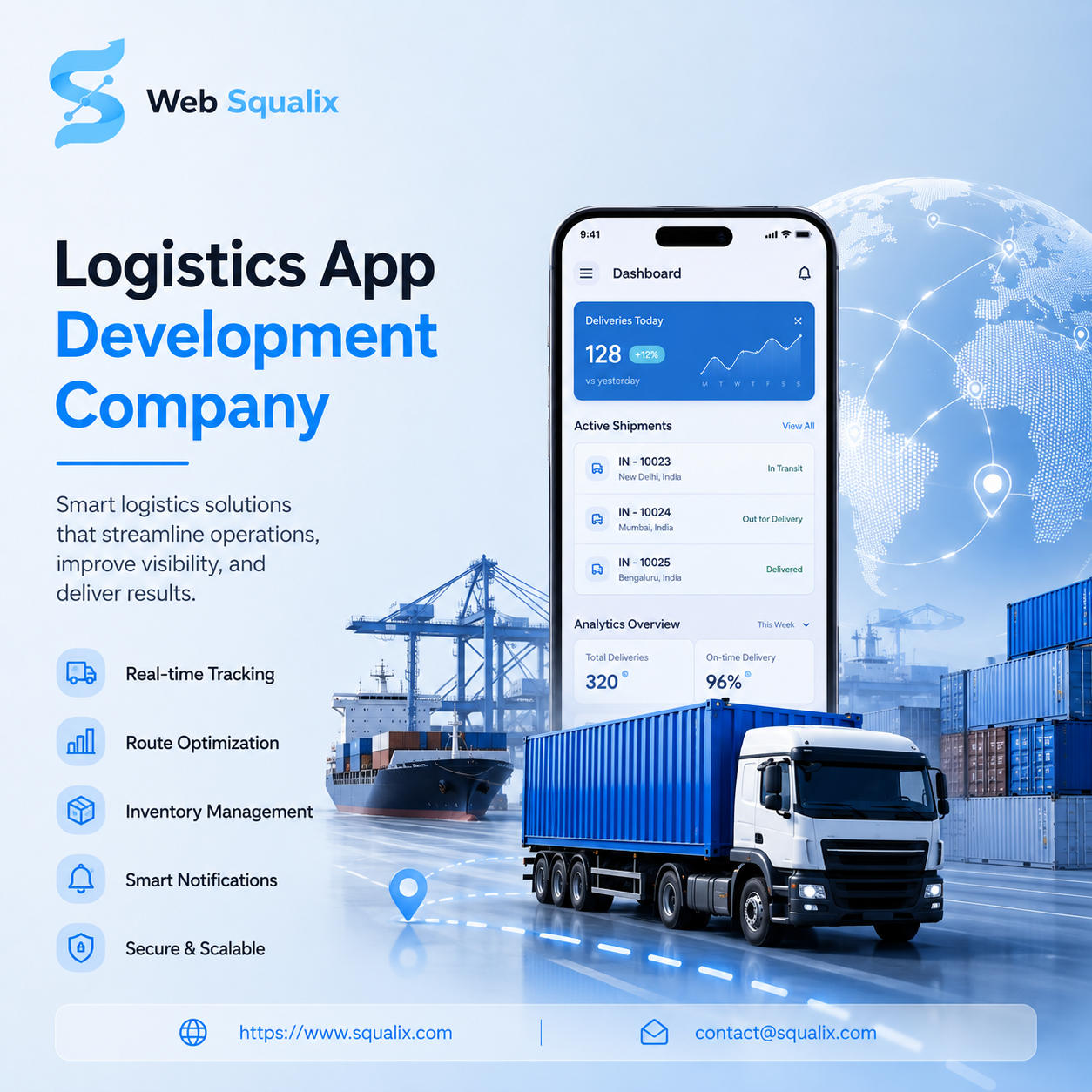
- Real-time GPS tracking and geofencing, giving dispatchers and customers a live view of where a shipment actually is
- Automated dispatch and route optimization, assigning loads and routes based on live traffic, delivery windows, and driver availability rather than manual scheduling
- Digital documentation, replacing paper bills of lading and physical signatures with instant, synced records
- Warehouse and inventory integration, keeping stock counts accurate across multiple facilities without manual reconciliation
- Customer-facing tracking portals, cutting down support volume by giving customers accurate status information directly
- Analytics and reporting, surfacing cost-per-mile, on-time performance, and fleet utilization trends that inform real operational decisions
How AI Is Actually Helping the Logistics Industry
AI in logistics gets talked about in fairly abstract terms, but the practical uses are specific and already running in production systems:
- Predictive ETAs that adjust in real time based on traffic, weather, and historical delay patterns, instead of a fixed transit-time estimate
- Dynamic load matching, where machine learning pairs available capacity with nearby demand faster and more accurately than manual broker calls
- Predictive maintenance, flagging vehicle issues before they cause a breakdown, based on telematics data rather than fixed service intervals
- Demand forecasting, helping warehouses and carriers anticipate volume spikes instead of reacting to them
- Anomaly detection, catching unusual delays, route deviations, or documentation mismatches automatically rather than relying on someone noticing
The common thread across all of these is that AI isn’t replacing the dispatcher or the warehouse manager — it’s removing the manual pattern-recognition work that used to eat up their day, so decisions get made faster and with better information.
Where Logistics Technology Is Headed in 2026
A few shifts are becoming clear heading into 2026. First, integration is becoming the differentiator, not any single feature. Platforms that connect cleanly with existing WMS, ERP, and telematics systems are winning out over standalone tools that require operators to rebuild their workflow from scratch.
Second, on-demand capacity matching is expanding well beyond parcel delivery into full truckload freight and warehousing-as-a-service, driven by the same real-time matching logic that made ride-hailing scalable. Third, sustainability tracking is moving from a reporting afterthought to a built-in feature, as operators face more pressure to measure and reduce empty-mile mileage and per-shipment emissions.
And increasingly, the software itself is expected to explain its own decisions — why a route was chosen, why a delay was predicted — rather than functioning as a black box dispatchers have to trust blindly.
AI and Automation Are Reshaping Freight
The freight industry’s biggest structural problem has never really been a shortage of trucks — it’s been a shortage of visibility into where existing capacity already is and how to use it efficiently. AI and automation are closing that gap directly. Dynamic pricing engines respond to real supply and demand instead of stale rate cards. Automated dispatch reduces the lag between a load appearing and a truck being assigned to it. Digital documentation collapses disputes that used to take days into resolutions that take minutes.
None of this eliminates the physical realities of freight — weather delays, equipment failures, and demand spikes aren’t going away. But it changes how much of that friction gets absorbed by software instead of passed down the chain to the customer. Teams doing focused work in this space, including logistics software development at Web Squalix, are increasingly building around that principle: less time digitizing the old manual process, more time designing for a supply chain where the data is already flowing in real time.
That shift — from reactive coordination to predictive, automated operations — is what’s actually defining the next generation of logistics technology.
What to Look for in a Logistics Development Partner
Given how much of this shift depends on integration and real-time data rather than any single feature, the choice of who builds the software matters as much as the feature list itself. A few things tend to separate partners who can actually deliver on this:
- Operational fluency, not just technical skill — understanding how dispatchers, drivers, and warehouse teams work day to day, rather than building features that look good in a demo but don’t fit real workflows
- Integration depth, with the ability to connect cleanly into existing ERP, WMS, and telematics systems instead of forcing operators to rebuild their stack
- Real-time architecture experience, since logistics platforms live or die on how well they handle live location data, dispatch events, and notifications at scale
- A track record across the freight lifecycle — dispatch, fleet, warehouse, and customer-facing tracking — rather than a narrow point solution
- Post-launch iteration, since dispatch algorithms and predictive models need to keep improving as an operation’s data grows
Web Squalix’s logistics work has followed this pattern — building platforms around existing operational workflows and integration needs rather than starting from a generic template, which is closer to how most successful logistics software actually gets built.