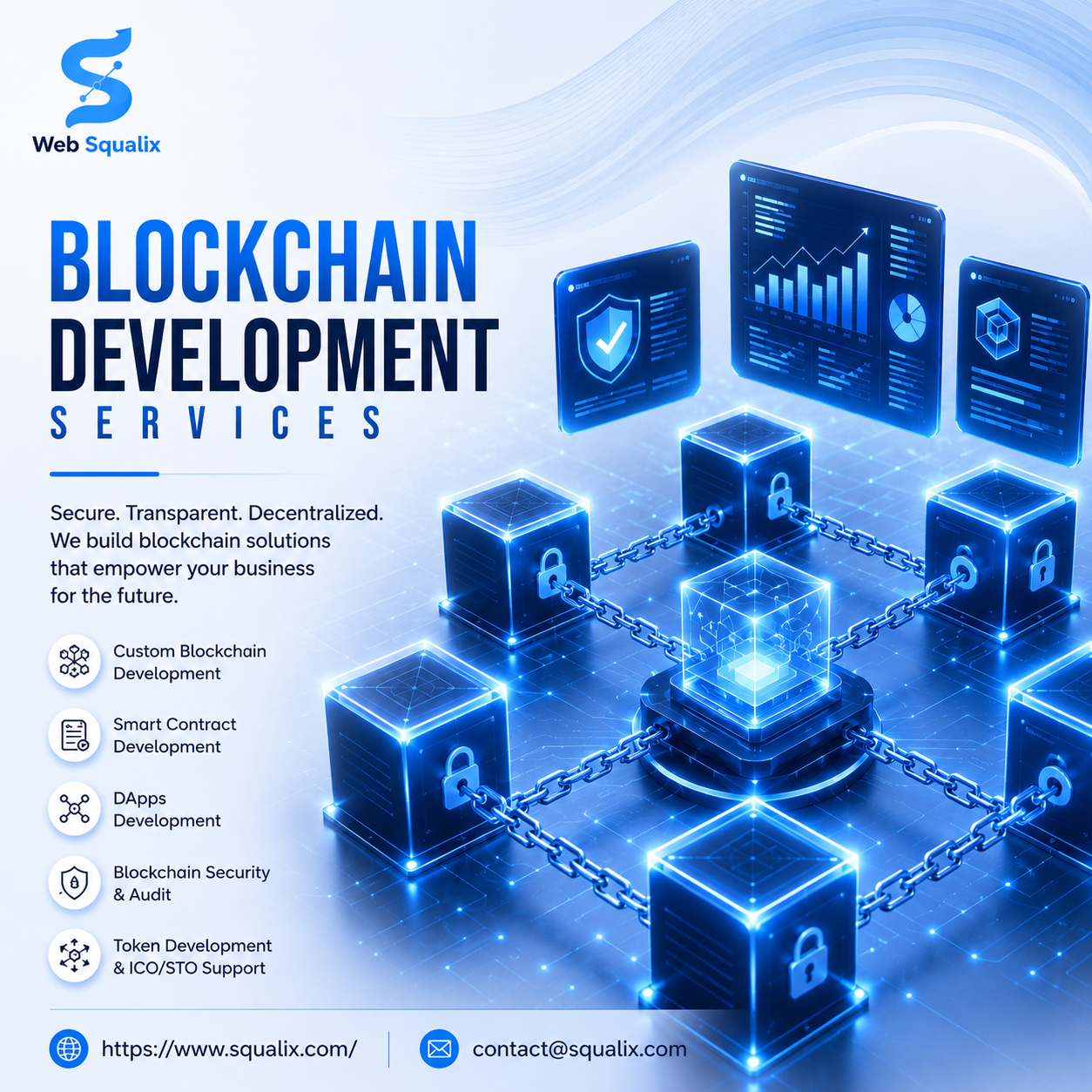
A few years back, blockchain was something people mostly associated with crypto trading and speculative investing. That’s changed. Walk into any serious tech conversation now and you’ll hear blockchain mentioned alongside supply chains, healthcare records, voting systems, gaming economies. The technology quietly moved from “interesting experiment” to “core infrastructure” for a growing list of industries, and the businesses that got in early are the ones setting the pace now.
This shift is exactly why blockchain development services have become such a hot area. Companies aren’t just asking “should we look into blockchain” anymore — they’re asking “who can build this for us properly.” Let’s break down what blockchain actually is, where it’s headed, and what to look for when picking a development partner.

What Is Blockchain?
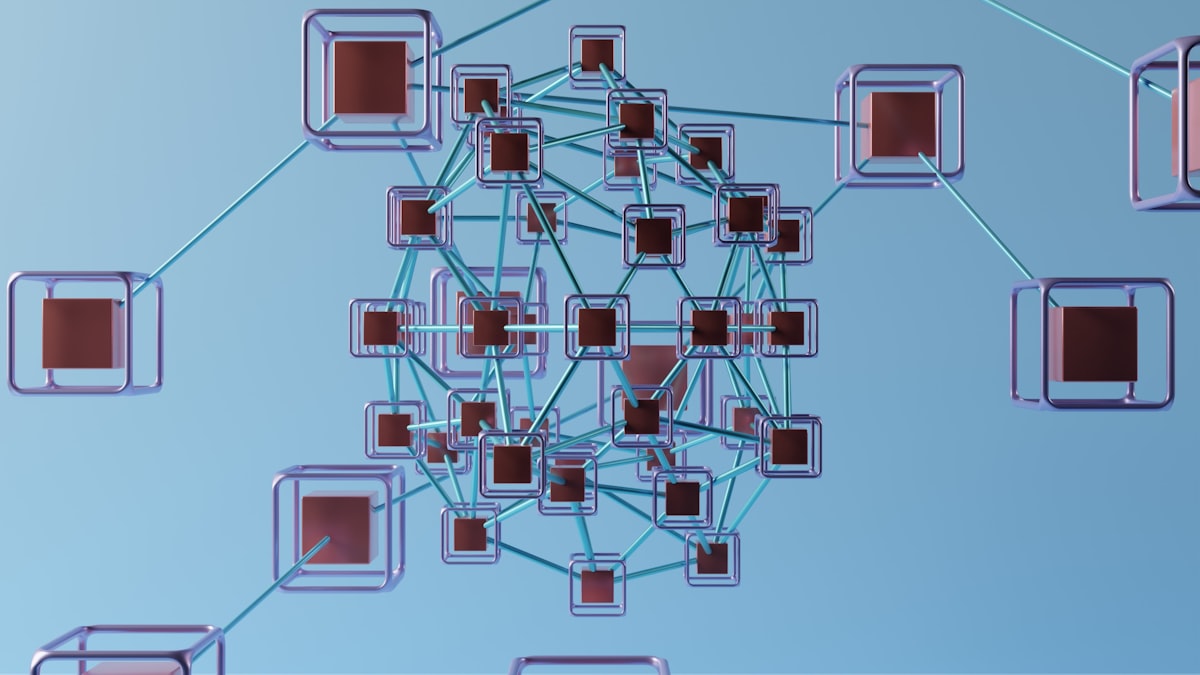
Strip away the jargon and blockchain is really just a way of keeping records that nobody can quietly change after the fact. Picture a ledger — like an accounting book — except instead of sitting in one office where someone could tear out a page, copies of it live across thousands of computers simultaneously. Every new entry gets bundled into a “block,” that block gets linked to the one before it, and once it’s added, altering it would mean rewriting every copy on every machine at the same time. Practically impossible.
That’s the whole trick. No single company or government controls the record. No middleman is needed to vouch that a transaction happened. The network itself does the verifying, through a process called consensus, where multiple participants agree a transaction is valid before it gets locked in.
This is why blockchain became the backbone for cryptocurrencies like Bitcoin and Ethereum first — you need a system where money can move between strangers without a bank sitting in the middle. But the same trick works for anything that needs a tamper-proof record: a shipment moving through customs, a medical prescription changing hands, a vote being cast.
Types of Blockchain
Not all blockchains are built the same way, and the type matters a lot depending on what you’re trying to do.
Public blockchains are open to anyone. Bitcoin and Ethereum fall here — anyone can join the network, verify transactions, or build on top of it. Transparency is the whole point, which makes public chains great for things like cryptocurrency, but not always ideal for businesses that need to keep certain data private.
Private blockchains flip that around. Access is restricted to a specific organization or a chosen group of participants. A company might run a private blockchain internally to track inventory across its own warehouses, keeping full control over who sees what.
Consortium blockchains sit somewhere in between — a handful of organizations share control instead of just one. Banks running a shared settlement network, or several manufacturers tracking a joint supply chain, tend to lean on this model.
Hybrid blockchains mix public and private elements, letting a business keep sensitive data locked down while still exposing certain information publicly for verification.
Then there’s a whole layer of applications and ecosystems built on top of these blockchain types, which is where terms like Web3 and crypto come in:
- Web3 refers to the broader vision of a decentralized internet — apps and services that run on blockchain rather than through centralized servers owned by a handful of big tech companies. Think of it as rebuilding the internet so users control their own data and digital assets instead of handing that control to a platform.
- Cryptocurrency is the most familiar application — digital money that runs on blockchain rails, letting value move between people without a bank as intermediary.
- Smart contracts are self-executing agreements written in code. Once conditions are met, they run automatically — no lawyer, no manual approval, no waiting period.
- NFTs (non-fungible tokens) represent ownership of a unique digital or physical asset, verified on-chain.
- DeFi (decentralized finance) rebuilds financial services — lending, trading, insurance — without traditional banks acting as gatekeepers.
- DAOs (decentralized autonomous organizations) let groups govern projects collectively, with rules enforced by code rather than a board of directors.
Each of these draws on the same underlying blockchain principles but solves a different problem, which is part of why “blockchain development” covers such a wide range of work.
The Future of Blockchain — and Where AI Fits In
Blockchain on its own is powerful. Pair it with AI and things get genuinely interesting.
AI systems have always had a trust problem — how do you know the data feeding a model wasn’t manipulated, or that an AI’s decision-making process is auditable after the fact? Blockchain offers an answer. Recording AI training data, model versions, and decision logs on-chain creates a verifiable trail that can’t be quietly edited later. That matters enormously in fields like healthcare or finance, where an AI’s recommendation needs to be explainable and traceable.
Flip it around, and AI also makes blockchain smarter. Smart contracts today follow fixed, rigid rules — if X happens, do Y. AI can make those contracts adaptive, capable of analyzing real-time data and adjusting behavior instead of just executing a static script. Fraud detection on blockchain networks is another area where AI is already proving useful, spotting unusual transaction patterns far faster than manual review ever could.
There’s also a growing conversation around AI agents that transact autonomously on blockchain networks — software that can hold a wallet, make purchases, negotiate terms, and settle payments without a human clicking “approve” each time. It’s early, but the direction is clear: the next wave of blockchain development won’t be separate from AI, it’ll be built alongside it from the start.
How Blockchain Is Reshaping Industries
It’s easy to think of blockchain as a niche technology for finance, but the reach goes far wider than that.
Healthcare is using blockchain to secure patient records, letting different providers access accurate medical history without the data being duplicated, lost, or tampered with. Drug supply chains also benefit — every step a medication takes from manufacturer to pharmacy can be logged, cutting down on counterfeit drugs entering the market.
Supply chain and logistics might be the clearest win. A product’s entire journey — raw material, factory, shipping, warehouse, retail shelf — can be recorded on-chain, giving companies and customers a way to verify authenticity and origin. Food safety recalls become faster too, since contaminated batches can be traced back to their source in minutes instead of days.
Finance was blockchain’s first real proving ground, and it’s still evolving fast — cross-border payments settle faster and cheaper, trade finance paperwork gets automated through smart contracts, and lending platforms built on DeFi principles skip traditional credit intermediaries altogether.
Real estate is starting to tokenize property ownership, letting investors buy fractional shares of a building instead of needing to purchase the whole thing outright, while title transfers become faster and harder to dispute.
Gaming and entertainment have embraced blockchain through in-game assets that players actually own, tradeable across marketplaces, along with royalty structures for creators that pay out automatically through smart contracts.
Voting and governance systems are experimenting with blockchain to create tamper-resistant, auditable election records — still early-stage, but the interest is real given how much trust matters in this space.
Insurance is using smart contracts to automate claims — a flight delay triggers an automatic payout without a customer having to file paperwork and wait weeks for approval.
The common thread across every one of these industries is the same: blockchain removes the need to blindly trust a single party, and replaces that with a system where trust is built into the process itself.
Why Businesses Choose Web Squalix for Blockchain Development
Building on blockchain isn’t like building a typical web app. It demands people who genuinely understand consensus mechanisms, smart contract security, tokenomics, and how to architect systems that can’t be quietly patched after deployment — mistakes on-chain tend to be permanent and expensive.
Web Squalix has built a reputation around exactly that kind of specialized development, working across blockchain, Web3, crypto wallet infrastructure, and smart contract engineering alongside its broader software development practice spanning healthcare platforms, logistics systems, and AI-driven products. That range matters — a team that only knows blockchain in isolation often struggles to connect it meaningfully to the rest of a business’s systems, whereas a team that also builds healthcare software and logistics platforms understands how blockchain needs to plug into real operational workflows, not just exist as a standalone experiment.
For companies exploring blockchain development services, the priority should be a partner who treats security audits as non-negotiable, who can explain architectural decisions in plain language instead of hiding behind jargon, and who’s building with an eye toward where the technology is actually heading — including the AI convergence already reshaping the space.
Learn more: https://www.squalix.com/blockchain-development-services
Wrapping Up
Blockchain isn’t chasing hype anymore. It’s solving practical problems around trust, transparency, and verification across industries that badly needed better solutions. Whether it’s Web3 applications, crypto infrastructure, smart contracts, or AI-integrated systems, the technology is maturing into something businesses can build real, lasting value on — provided they’re working with a development partner who actually understands the terrain