Fitness App Development Company in 2026: Cost, Features, Process & How to Choose the Right Partner
The fitness industry has quietly become one of the most competitive software categories out there. Every gym chain, boutique studio, personal trainer, and wellness brand wants an app that looks like it belongs next to the biggest names on the app store — and members expect nothing less. But building one isn’t as simple as bolting a workout tracker onto a login screen. Choosing the right fitness app development company means finding a team that understands member retention, wearable integrations, class scheduling logistics, and payment compliance, not just mobile UI.
This guide breaks down what a fitness or gym management app actually costs to build in 2026, which features matter most, what a real development process looks like end to end, and how to evaluate a partner before signing anything.
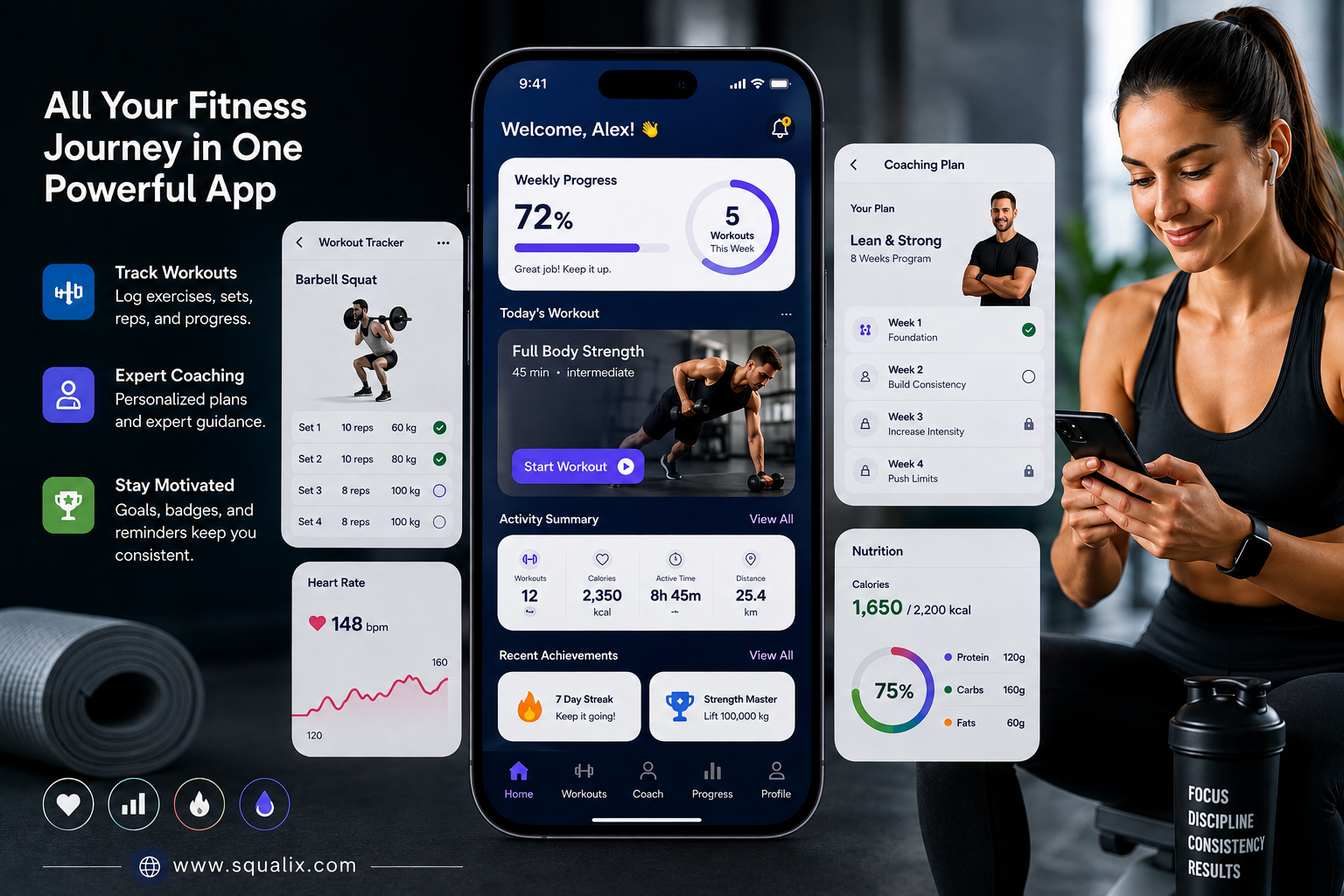
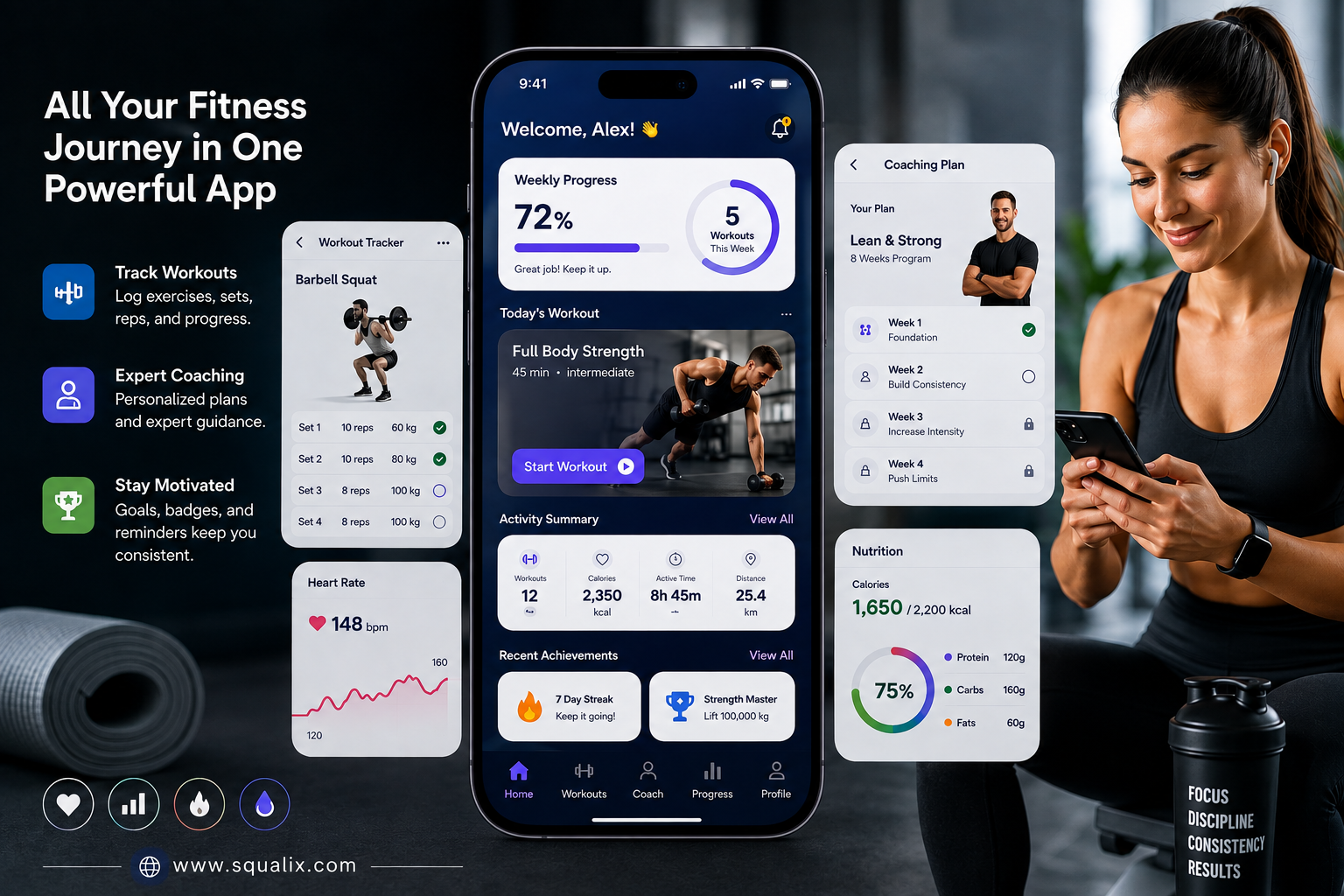
A well-designed fitness app blends workout tracking, coaching, and motivation into one seamless member experience.
Why Fitness App Development Is Different in 2026
Fitness apps used to be little more than digital workout logs. That’s no longer good enough. Members now expect AI-guided coaching, real-time wearable sync, in-app class bookings, community feeds, and personalized nutrition plans inside a single experience. At the same time, gym owners and studio operators expect the same app to double as gym management software — handling memberships, staff scheduling, billing, and attendance behind the scenes.
That combination of consumer-grade polish and back-office operational depth is exactly why generic app builders fall short, and why demand for specialized custom fitness app development services keeps climbing.
Types of Fitness Apps Businesses Are Building
- Personal workout and training apps — exercise libraries, custom routines, progress tracking, and video-guided form correction
- Gym and studio management apps — membership handling, class scheduling, staff rosters, attendance, and facility-wide communication
- Hybrid gym member apps — a consumer-facing app for members backed by an admin dashboard for owners, essentially custom fitness and gym management app development combined into one product
- Corporate wellness apps — activity challenges, team leaderboards, and wellness benefit tracking
- Nutrition and habit-coaching apps — meal logging, calorie and macro tracking, and habit-streak mechanics
- Wearable-first fitness apps — apps built primarily around smartwatch and fitness-band data rather than manual logging
Most serious clients don’t want just one of these. They want a platform that starts as a member app and grows into full gym management software as the business scales — which is why getting the architecture right from day one matters more than chasing flashy features first.
Must-Have Features for a Fitness or Gym Management App
| Feature Category | What It Should Include | Why It Matters |
|---|---|---|
| Onboarding & profiles | Goal setting, fitness assessment, body metrics, injury notes | Personalization from the first session drives long-term retention |
| Workout & class engine | Custom workout builder, video demos, class booking, waitlists | Core daily-use feature that keeps members opening the app |
| Wearable & device sync | Integration with popular fitness trackers and smartwatches | Members expect heart rate, steps, and sleep data reflected automatically |
| AI coaching & recommendations | Adaptive workout plans, form feedback, smart progression | Differentiates the app from static workout-log tools |
| Gym management module | Membership tiers, billing, attendance, staff scheduling | Turns the app into real gym management software, not just a tracker |
| Community & social features | Leaderboards, challenges, group chat, progress sharing | Social accountability is one of the strongest retention levers in fitness apps |
| Nutrition tracking | Meal logging, macro tracking, food database integration | Members expect training and nutrition guidance in one place |
| Payments & subscriptions | Recurring billing, membership tiers, in-app purchases | Directly powers the business’s recurring revenue |
| Admin & analytics dashboard | Churn tracking, revenue reports, class attendance analytics | Gives owners real operational visibility |
“The apps that retain members aren’t the ones with the most features — they’re the ones where every feature nudges the member back into the app tomorrow.”
What Drives Fitness App Development Cost
There’s no single number that fairly represents what a fitness app costs, because the range between a lightweight MVP and a full gym management platform with AI coaching, wearable integrations, and multi-location support is enormous. Instead of chasing a flat quote, it helps to understand the variables that actually move the number:
- App complexity — a simple workout tracker costs far less than a hybrid platform combining member features and gym management software
- Platform coverage — building for iOS and Android simultaneously, plus a web admin dashboard, adds meaningful engineering time
- Third-party integrations — wearable APIs, payment gateways, video streaming, and calendar sync each add their own integration and testing overhead
- AI and personalization depth — rule-based recommendations are inexpensive; adaptive AI coaching requires more data engineering
- Design maturity — a fully custom, branded UI takes longer than a templated design system, but pays off in perceived quality and retention
- Backend architecture — real-time features like live class streaming or leaderboards need more robust infrastructure than static content
- Post-launch scope — ongoing maintenance and scaling support should be planned as part of the build, not an afterthought
A good development partner will walk through these variables before proposing a number, and will build a phased roadmap rather than cramming every feature into version one. Vague, single-line quotes are usually a warning sign, not a good deal.
The Fitness App Development Process, Step by Step
- Discovery & strategy — defining the target user, business model, and which features belong in the first release versus a later phase
- UX research & wireframing — mapping the member journey from onboarding through daily use
- UI design — building a distinctive visual identity rather than a generic fitness template
- Backend architecture — designing a scalable backend, commonly on Node.js with MongoDB, to comfortably handle workout data, membership records, and wearable sync at scale
- Core development — building the workout engine, gym management module, payment flows, and integrations in parallel sprints
- Wearable & third-party integration — connecting fitness trackers, payment processors, and any video or streaming providers
- QA & performance testing — testing across devices, network conditions, and real workout scenarios, including offline behavior
- Launch & app store optimization — preparing store listings, screenshots, and metadata so the app is actually discoverable
- Post-launch iteration — using early usage data to refine onboarding, retention flows, and feature priorities
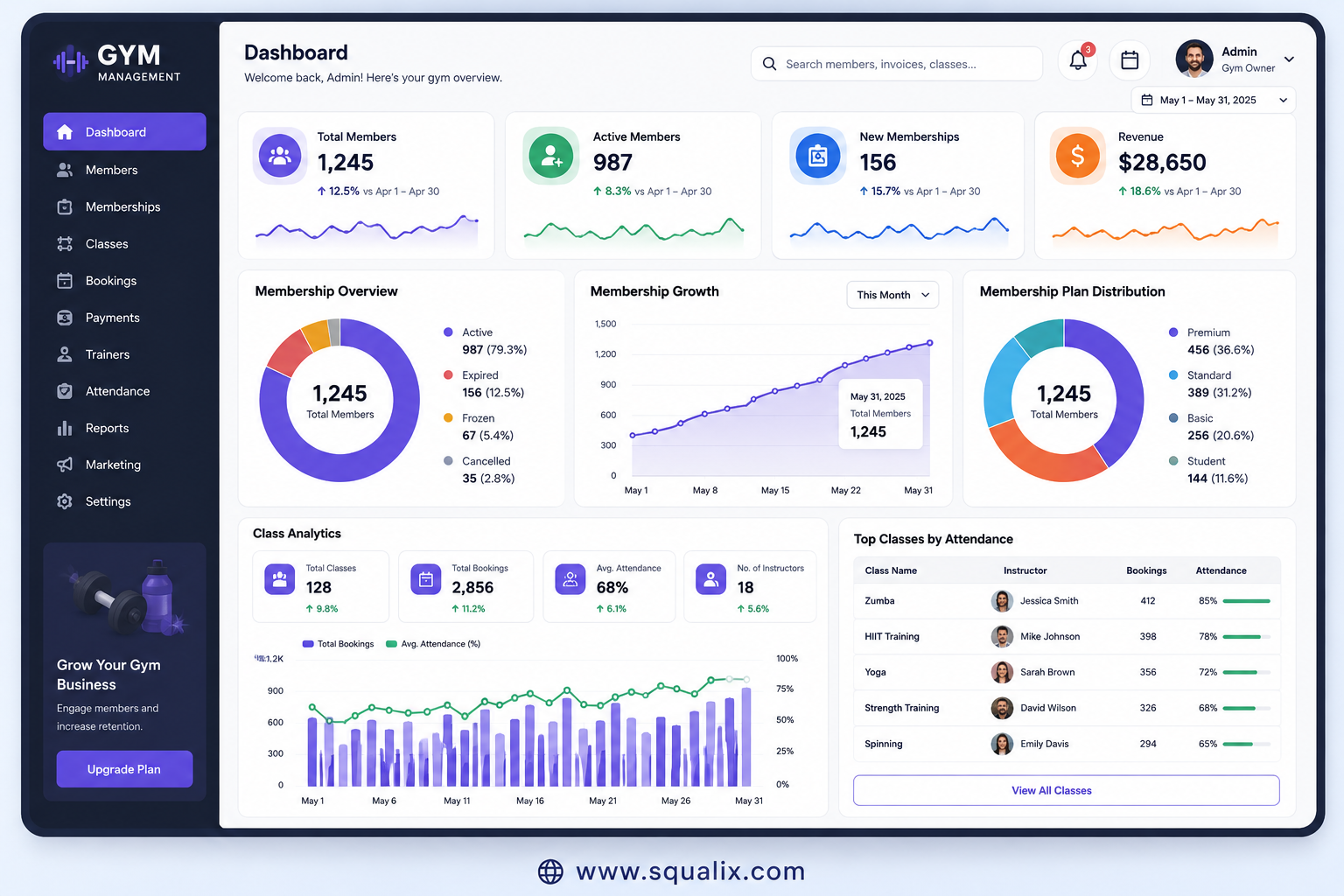
Behind every great member-facing app, gym management software gives owners real-time visibility into memberships, classes, and revenue.
How to Choose the Right Fitness App Development Company
- Ask to see fitness or health-vertical work specifically, not just a general portfolio — wearable integration and gym scheduling logic aren’t generic app features
- Check whether they’ve delivered custom fitness and gym management app development projects combining a member app with an operational back office, not just a standalone tracker
- Ask how they handle wearable and third-party API changes over time, since fitness data providers update APIs frequently
- Look for a clear, phased development process rather than a single vague “we’ll build it all” proposal
- Confirm they offer ongoing support after launch — fitness apps need continuous iteration as user behavior and wearable ecosystems evolve
- Evaluate their approach to data privacy and health-data handling, since fitness apps collect sensitive personal and biometric information
- Ask direct questions about backend choices and scalability plans rather than accepting design mockups alone as proof of capability
Some development teams, such as Web Squalix, have built dedicated practices around exactly this intersection — pairing member-facing app design with the operational depth of real gym management software — which is worth looking for when shortlisting a partner.
Final Thoughts
A fitness app in 2026 isn’t just a feature checklist — it’s the product experience your members judge your brand by every single day, and the operational backbone your staff relies on to run the business. Getting the balance right between a motivating consumer experience and dependable gym management software underneath is what separates apps that get deleted after a week from ones that become part of a member’s daily routine. Choosing a fitness app development company that understands both sides of that equation is the single highest-leverage decision in the entire project.
“Learn more ” → https://squalix.com