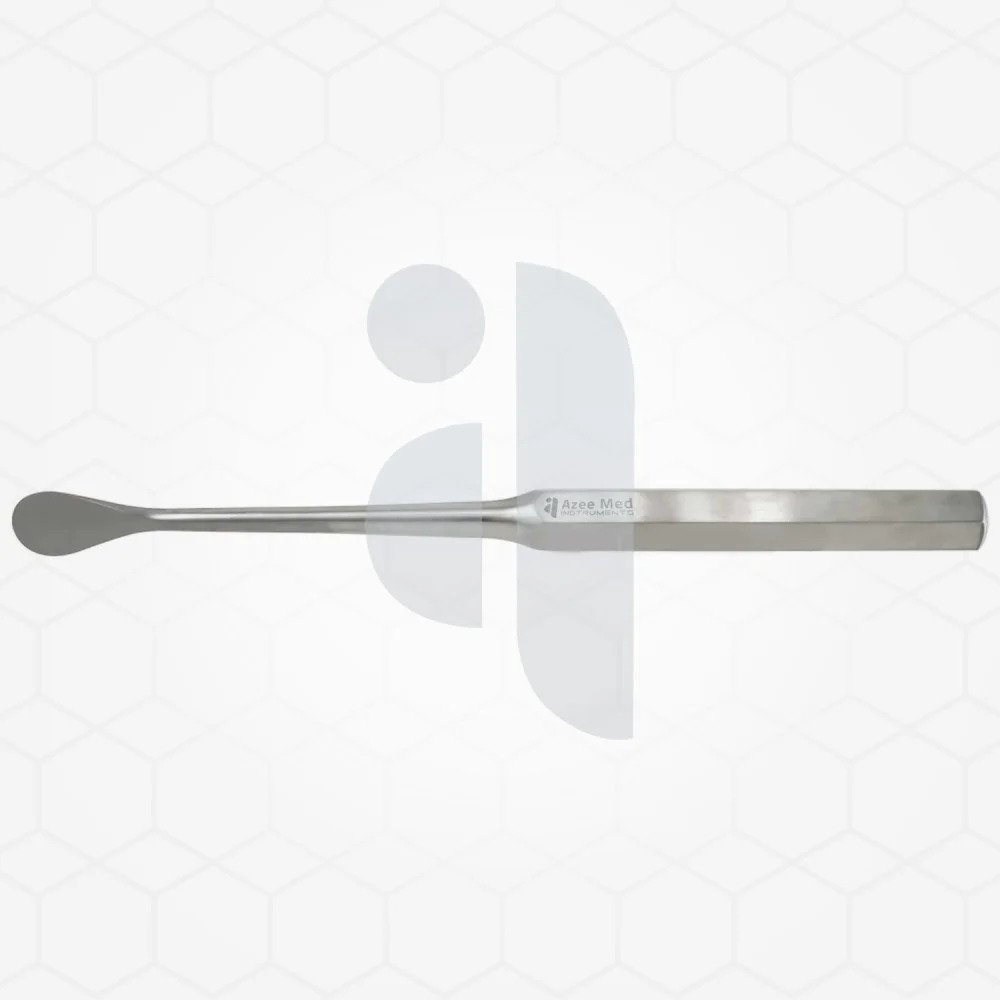
Surgeons working on the spine and periosteum need tools that separate soft tissue from bone without tearing or slipping. The cobb instrument was designed for exactly this task. It gives the surgeon controlled leverage during dissection, which reduces trauma to surrounding tissue and shortens the time spent on each step. For any procedure that requires clean elevation of tissue from bone, this tool remains a standard part of the tray. This guide explains what the instrument does, how it is built, and why material quality determines its performance in the operating room.
Design and Function of the Cobb Instrument
Poorly balanced dissectors force the surgeon to apply uneven pressure, which raises the risk of slipping and damaging tissue. The cobb instrument solves this with a curved or straight blade fixed to a handle shaped for a firm grip. The blade elevates the periosteum, the thin membrane covering bone, so the surgeon can expose the working area cleanly. Most versions come in a range of blade widths, typically from 6 mm to 25 mm, which lets the surgeon match the tool to the size of the bone and the depth of the incision. This means one design supports both narrow spinal work and broader orthopedic exposure. A well-made dissector transfers force directly from hand to blade, giving the surgeon steady control at every angle.
Material Standards and Compatibility With Walsham Forceps
Instruments made from low-grade steel corrode, dull quickly, and fail during repeated sterilization cycles. The cobb instrument should be forged from surgical-grade stainless steel, which resists rust and holds an edge through hundreds of autoclave cycles. This same standard applies to companion tools such as walsham forceps, which surgeons use to grasp and reposition small bone fragments during nasal and facial procedures. When both the dissector and the walsham forceps meet the same material specification, the full set performs consistently across sterilization and repeated use. Walsham forceps built to this grade maintain their grip strength and alignment, which matters when the surgeon handles delicate fragments. Matching material quality across a tray reduces the chance that one weak tool compromises an otherwise reliable set.
Reliability Across Sterilization and Repeated Use
A tool that warps or loses its finish after cleaning creates hidden risk in the operating room. Reliability in a cobb instrument depends on how well it survives autoclaving, chemical cleaning, and daily handling. Precision-ground blades keep their working edge, and a properly hardened handle resists bending under load. Surgical teams depend on this consistency because a single dull or misaligned tool can slow a procedure and force a mid-operation swap. Instruments that pass strict manufacturing checks hold their shape and function over years of service. This durability protects both the surgical schedule and the patient on the table.
Choosing a Supplier That Meets Professional Standards
Sourcing instruments from suppliers without clear quality controls leads to inconsistent tools and short service life. The safer approach is to select a manufacturer that documents its material grade, finishing process, and testing standards. Azeemed Instruments is dedicated to providing high quality surgical tools that meet the needs of professionals. This focus means each cobb instrument leaves the workshop tested for edge accuracy, balance, and finish. Surgeons and procurement teams benefit when a supplier holds every tool to the same measurable standard rather than relying on general claims. A documented process gives the buyer confidence that the tool will perform as specified.
Practical Value in the Operating Room
The value of a well-made cobb instrument comes down to what it does during surgery. It elevates tissue cleanly, holds up through sterilization, and gives the surgeon predictable control at every step. When a tool performs this reliably, the surgical team spends less time compensating for equipment and more time focused on the procedure. Quality instruments reduce interruptions, protect tissue, and support consistent outcomes. That reliability, built into every detail of the design and material, is what keeps this instrument on the tray across spinal and orthopedic practice.