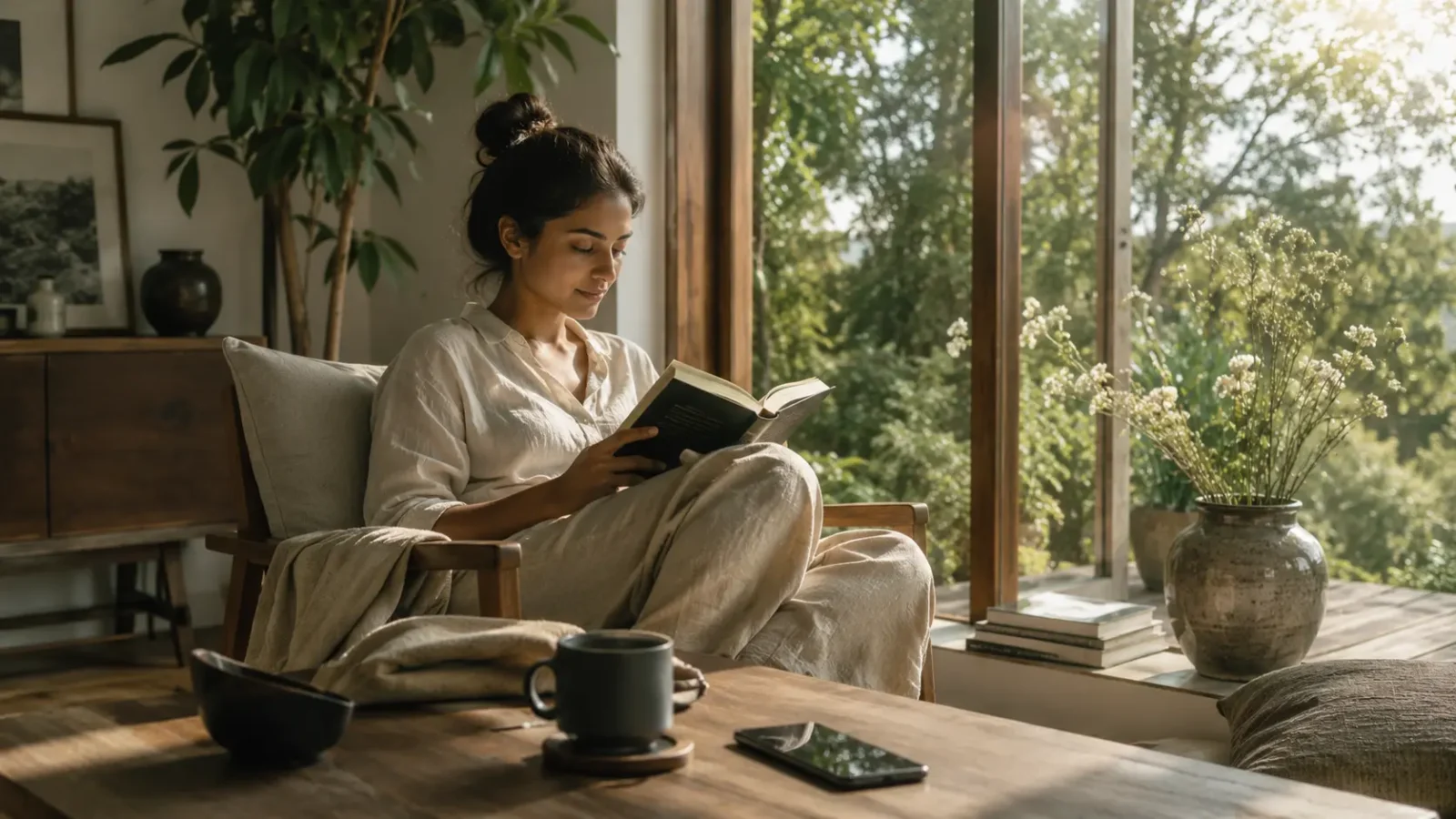
The Rise of Slow Living in 2026: Why People Are Choosing Calm Over Constant Connectivity
For years, modern life seemed to reward speed.
Reply faster.
Work longer.
Travel more.
Stay connected.
Never miss an update.
Even relaxation became something to optimize.
But in 2026, a different idea is gaining momentum:
What if a better life is not about doing more, but about doing less — more intentionally?
That question sits at the heart of the growing slow living movement.
Slow living is not about abandoning technology, quitting your job or moving permanently to the countryside. Instead, it is about becoming more deliberate about how you spend your time, attention and energy.
The movement is appearing across travel, wellness, home design, hobbies, food, social experiences and even the way people use technology.
Recent lifestyle coverage in India and internationally points toward growing interest in digital detox, restorative travel, quiet experiences and more intentional routines.
And that makes slow living more than just an aesthetic trend.
It may be a response to one of the biggest problems of modern life:
constant stimulation.
What Is Slow Living?
Slow living is a lifestyle approach centered around intentionality, presence and balance.
Instead of constantly rushing from one activity to another, slow living encourages people to pay more attention to the experience itself.
That could mean:
- Eating without looking at your phone
- Taking a walk without checking notifications
- Spending an evening reading
- Cooking instead of ordering every meal
- Taking a slower holiday
- Spending time in nature
- Having conversations without screens
- Creating a calmer home
- Taking regular breaks from social media
The goal isn’t to make life boring.
It is to make life more meaningful and less automatic.
Why Is Slow Living Trending in 2026?
The modern lifestyle has become increasingly connected.
Smartphones, social media, streaming platforms, AI assistants, instant messaging and digital work tools make it possible to remain connected almost every minute of the day.
That convenience comes with a trade-off.
People are increasingly aware of how much attention technology demands.
The result is a growing interest in experiences that feel slower, quieter and more physical.
Vogue’s 2026 trend reporting highlights growing interest in digital detoxing, boredom, play and device-free experiences, while wellness trend coverage is increasingly focused on calm and intentional separation from digital noise.
Slow living is therefore not necessarily anti-technology.
It is about using technology without allowing it to control every moment of the day.
Digital Detox Is Becoming Part of Everyday Lifestyle
One of the clearest expressions of slow living is the digital detox.
A digital detox simply means intentionally reducing your use of digital devices or platforms for a specific period.
It could be:
- One phone-free evening
- A social-media-free weekend
- No screens during meals
- No phone in the bedroom
- A technology-free holiday
- Turning off notifications
- Replacing scrolling with an offline hobby
The idea is gaining attention in India as well.
Recent reporting from Pune highlighted how some people are using the Shravan period as an opportunity to reduce social-media use, reconnect with family and nature, read, and spend more time in reflection.
The important point is that digital detox does not have to mean completely disappearing from the internet.
It can simply mean creating boundaries around technology.
From FOMO to JOMO
Another lifestyle idea gaining attention is JOMO — the Joy of Missing Out.
For years, social media encouraged FOMO:
Fear of Missing Out.
People constantly checked:
- Where friends were travelling
- What events they were attending
- What restaurants they were visiting
- What products they were buying
- What was trending online
JOMO turns that idea around.
Instead of worrying about what you’re missing, you become comfortable with choosing what actually matters to you.
That could mean saying:
“I don’t need to attend everything.”
Or:
“I don’t need to post everything.”
Or simply:
“I’m happy staying home tonight.”
Recent lifestyle coverage has linked JOMO with slow travel, digital detox and intentional living, particularly among younger consumers.
Slow Travel Is Changing the Way People Take Holidays
Travel has traditionally been associated with seeing as much as possible.
Three cities in four days.
Ten attractions in one weekend.
Hundreds of photographs.
But slow travel follows a different philosophy.
Instead of asking:
“How many places can I see?”
the question becomes:
“How deeply can I experience one place?”
This might mean:
- Staying longer
- Exploring local neighbourhoods
- Eating local food
- Walking instead of rushing between attractions
- Spending time in nature
- Choosing smaller destinations
- Avoiding overcrowded itineraries
Travel trend coverage for 2026 shows increasing interest in nature-based, restorative and slower experiences. National Geographic Traveller describes a shift toward elemental experiences and accommodation that allows travellers to disconnect, while other coverage highlights quiet and wellness-focused trips.
The Rise of “Quietcations”
One of the most interesting developments in travel is the rise of quietcations.
A quietcation is essentially a holiday designed around peace rather than activity.
Instead of:
Nightlife + shopping + sightseeing + packed itinerary
the experience may be:
Nature + sleep + reading + walking + silence
This can include:
- Forest cabins
- Mountain retreats
- Wellness resorts
- Beach stays
- Yoga retreats
- Rural homestays
- Off-grid accommodation
For people experiencing digital fatigue, the absence of notifications can become part of the luxury.
Nature Is Becoming a Lifestyle Escape
Another major part of the slow-living movement is reconnecting with nature.
This doesn’t necessarily mean planning an expensive retreat.
It could simply mean:
- Walking in a park
- Gardening
- Sitting outdoors
- Weekend hikes
- Visiting a lake
- Spending time near the sea
- Having coffee outside
- Taking a nature-focused holiday
The appeal is partly psychological.
Natural environments provide a contrast to the highly stimulating digital environments people experience throughout the day.
In 2026 wellness travel reporting, nature immersion and elemental experiences are emerging as major themes.
Slow Living Is Changing Home Design Too
The movement is not limited to travel.
It is also influencing how people think about their homes.
The idea of a home as a restorative space is becoming increasingly important.
Instead of filling rooms with unnecessary objects, slow-living design tends to emphasize:
- Natural materials
- Soft lighting
- Plants
- Comfortable furniture
- Neutral spaces
- Open areas
- Fewer distractions
- Personal objects with meaning
The goal isn’t necessarily minimalism.
A slow-living home can still be colourful and expressive.
The difference is that the space should feel comfortable rather than overwhelming.
Why Offline Hobbies Are Coming Back
Technology has made entertainment easier than ever.
But that doesn’t mean people always feel more satisfied.
As screen fatigue increases, traditional hobbies are finding new relevance.
Examples include:
- Reading physical books
- Journaling
- Painting
- Cooking
- Baking
- Gardening
- Photography
- Knitting
- Drawing
- Playing board games
- Listening to records
- Crafting
These activities have something digital entertainment often lacks:
physical participation.
You are not just consuming content.
You are creating an experience.
The Return of Analog Experiences
The broader trend is sometimes described as a return to analog living.
That could mean using:
- Paper notebooks
- Printed books
- Physical calendars
- Film cameras
- Vinyl records
- Board games
- Handwritten letters
- Offline maps
Interestingly, this does not necessarily mean people dislike technology.
Many people simply want a better balance.
Technology remains useful for work, communication and entertainment.
But offline experiences provide a different kind of attention.
Wellness Is Becoming Less Extreme
Another important shift in 2026 is happening within wellness itself.
For years, wellness culture often promoted strict routines:
- Extreme diets
- Aggressive fitness plans
- Long morning routines
- Constant self-optimization
- Highly structured schedules
The newer direction is softer.
Recent wellness coverage describes a move toward gentler wellness, where recovery, presence and sustainable habits are prioritized over restrictive or punishing routines.
That means wellness can look much simpler.
A good night’s sleep.
A walk.
A nutritious meal.
A quiet evening.
Time with family.
A break from your phone.
These small actions can become more sustainable than an elaborate routine that is impossible to maintain.
“Micro-Recovery” Is Replacing the Perfect Routine
One emerging wellness idea is micro-recovery.
Instead of waiting for a full weekend or holiday to relax, people are incorporating small recovery moments throughout the day.
For example:
5 minutes of walking
Step away from the desk and move.
2 minutes of breathing
Take a short pause between meetings.
A screen-free lunch
Eat without simultaneously checking messages.
A quiet evening
Spend 20 minutes reading or listening to music.
A short outdoor break
Step outside instead of scrolling during a work break.
Recent wellness coverage has highlighted this move away from rigid routines toward smaller, repeatable recovery moments.
Slow Living Doesn’t Mean Being Unproductive
One common misunderstanding is that slow living means doing nothing.
It doesn’t.
Slow living is not the opposite of ambition.
It is about intentional productivity.
There is a difference between:
Being busy
and
being productive.
You can spend an entire day responding to notifications and still accomplish very little.
A slower approach may involve:
- Choosing fewer priorities.
- Focusing deeply.
- Taking meaningful breaks.
- Reducing unnecessary distractions.
- Protecting personal time.
In this sense, slow living can actually improve the quality of work.
The Role of Technology in a Slow Lifestyle
Technology isn’t going anywhere.
AI, smartphones, cloud services and social platforms are becoming increasingly important.
The goal isn’t to reject them.
Instead, people are beginning to ask:
“How can technology serve my life instead of consuming it?”
For example:
- Use navigation when needed, but walk without your phone when possible.
- Use AI to save time, then spend the saved time offline.
- Use fitness apps, but don’t let every activity become a performance metric.
- Use social media, but decide when to log off.
- Use smart-home technology, but keep your home visually calm.
This is a more realistic version of digital wellness.
Slow Living and Social Media
Social media has changed the way people experience their lives.
Sometimes people don’t simply experience a moment.
They experience it while thinking about:
“Should I post this?”
Slow living challenges that mindset.
A meal doesn’t need to be photographed.
A holiday doesn’t need to become a travel reel.
A quiet morning doesn’t need to become content.
Sometimes an experience can simply remain yours.
That idea is particularly relevant as younger consumers increasingly look for more intimate and less performative experiences.
Why Younger Generations Are Embracing It
Gen Z and younger millennials have grown up with smartphones and social media.
They understand the benefits of digital connection.
But they have also experienced its downsides.
That is helping create demand for:
- Digital boundaries
- Offline communities
- Mental wellness
- Nature-based experiences
- Slow travel
- Screen-free events
- Authentic social experiences
The interesting part is that slow living isn’t necessarily a rejection of modern culture.
It is an attempt to rebalance it.
The New Meaning of Luxury
Luxury is also changing.
For decades, luxury often meant:
More space + expensive products + exclusive experiences.
But in a hyperconnected world, another form of luxury is becoming attractive:
Time + privacy + silence + space.
The Global Wellness Institute’s 2026 wellness tourism trends specifically identifies privacy as a growing luxury, with travellers seeking lower-density environments and opportunities to disconnect.
That is a fascinating shift.
A quiet room without notifications can sometimes feel more valuable than another expensive gadget.
How Brands Are Responding
Lifestyle brands are noticing this change.
Hotels are offering:
- Digital detox stays
- Wellness programmes
- Nature experiences
- Quiet spaces
- Phone-free activities
Restaurants and hospitality businesses are experimenting with:
- Device-free experiences
- Intimate environments
- Slow dining
- Listening spaces
Travel companies are promoting:
- Nature retreats
- Wellness journeys
- Local experiences
- Longer stays
- Less crowded destinations
The lifestyle industry is increasingly selling not just products, but feelings.
And one of the most valuable feelings in 2026 is calm.
How to Start Slow Living Without Changing Your Entire Life
You don’t need to move to a mountain cabin.
You can start with small changes.
1. Create a Phone-Free Hour
Choose one hour each day without social media or unnecessary notifications.
2. Eat Without Screens
Give your meals your full attention.
3. Take One Slow Walk
Leave your phone in your pocket and simply observe your surroundings.
4. Choose One Offline Hobby
Read, cook, draw, garden or play music.
5. Protect Your Morning
Don’t immediately start the day with notifications.
6. Reduce Digital Noise
Unfollow accounts that create unnecessary comparison or stress.
7. Plan Less
Leave some empty space in your calendar.
8. Take a Slow Weekend
Instead of filling every hour, allow yourself to stay home, explore locally or spend time outdoors.
A Simple Slow-Living Routine
You can create a realistic daily routine like this:
Morning
30 minutes without social media
Drink water, stretch, walk or simply sit quietly.
Workday
Take short screen breaks
Step away from your desk between major tasks.
Lunch
No-phone meal
Eat without simultaneously consuming digital content.
Evening
One offline activity
Read, cook, walk or spend time with family.
Night
Reduce screen exposure
Give yourself time to wind down before sleeping.
The goal isn’t perfection.
Consistency matters more than intensity.
Is Slow Living Just Another Social Media Trend?
This is an important question.
Ironically, slow living itself has become highly visual on social media.
You can find countless photos of:
- Perfectly designed homes
- Morning coffee
- Linen clothing
- Books
- Candles
- Nature
- Minimalist interiors
But real slow living doesn’t need to look perfect.
You don’t need a beautiful farmhouse kitchen.
You don’t need expensive wellness retreats.
You don’t need designer furniture.
You don’t even need to post about it.
At its core, slow living is simply about being more intentional with your attention.
The Future of Lifestyle: Less Noise, More Meaning
The biggest lifestyle shift may not be about completely abandoning technology.
Instead, it may be about becoming more selective.
People will continue using:
- Smartphones
- AI
- Social media
- Streaming
- Digital payments
- Online shopping
But alongside all of that, they may increasingly seek:
- Nature
- Silence
- Physical experiences
- Real conversations
- Offline hobbies
- Meaningful travel
- Personal time
That combination could define the next phase of modern lifestyle.
Final Thoughts
Slow living is gaining momentum because it responds to something many people already feel: life can become exhausting when everything is urgent, connected and optimized.
The answer doesn’t necessarily have to be a dramatic lifestyle change.
Sometimes it can be much simpler.
Put the phone down.
Eat slowly.
Take a walk.
Read a book.
Spend time with someone you love.
Leave some space in your schedule.
Travel somewhere without trying to see everything.
And allow yourself to experience a moment without turning it into content.
In 2026, the idea of slowing down is becoming increasingly visible across wellness, travel, technology use and everyday lifestyle choices.
The most important part of slow living is not moving slowly all the time.
It is knowing when to slow down.
Because in a world that constantly asks us to do more, choosing what truly deserves our time may be one of the most valuable lifestyle choices we can make.
What is slow living?
Slow living is an intentional lifestyle approach that focuses on presence, balance, meaningful experiences and reducing unnecessary speed or distraction.
Why is slow living trending in 2026?
Growing digital overload, screen fatigue and interest in wellness are contributing to greater demand for quieter experiences, digital boundaries, nature-based activities and intentional routines.
Is slow living the same as digital detox?
Not exactly. Digital detox is one part of slow living. Slow living can also include mindful eating, slow travel, offline hobbies, spending time in nature and creating more intentional routines.
What is JOMO?
JOMO stands for Joy of Missing Out. It describes the feeling of being comfortable choosing not to participate in every event, trend or online conversation.
How can I start slow living?
Start with small changes such as having phone-free meals, reducing notifications, taking screen breaks, spending time outdoors and choosing one offline hobby.
Does slow living mean being less productive?
No. Slow living focuses on intentional productivity rather than constant busyness. It encourages people to prioritize meaningful work and reduce unnecessary distractions.
What is slow travel?
Slow travel focuses on experiencing a destination deeply rather than trying to visit as many places as possible. It can involve longer stays, local experiences, nature and less crowded destinations.
What is a digital detox?
A digital detox is a planned period of reducing or avoiding unnecessary use of digital devices, apps or social media.
e hobbies and leaving more unstructured time in your schedule.