Creating a more sustainable home does not always require major lifestyle changes. Sometimes, small choices in everyday routines can make a meaningful difference. The kitchen is a good place to begin because cooking and food preparation involve utensils and tools used almost every day. Choosing durable, responsibly made alternatives can reduce reliance on disposable plastic products while bringing warmth and character to the kitchen.
Natural kitchenware has become increasingly popular among households looking for practical products made from materials such as wood, bamboo, rattan and other natural fibres. Along with functional benefits, these materials can add a timeless, handcrafted feel to everyday cooking.
Why Choose Natural Kitchenware?
Kitchen utensils experience regular contact with food, heat and moisture, so durability matters. Wooden and bamboo products can provide a useful alternative to many conventional plastic utensils, particularly when proper care is given.
Natural materials also bring a distinctive appearance. Wood grain, subtle variations in colour and handmade detailing mean that each item can have its own character. Instead of looking purely functional, a well-made utensil can complement the overall appearance of a kitchen.
Another advantage is longevity. A quality wooden spoon, spatula or serving tool can remain useful for years when cleaned and maintained correctly. Choosing products designed for repeated use can therefore be a sensible approach for anyone trying to reduce unnecessary consumption.
Teak Wood Kitchen Utensils for Everyday Cooking
Among wooden kitchen products, teak wood kitchen utensils are a popular choice because teak is naturally dense and durable. A well-crafted teak utensil can be suitable for a range of everyday tasks, including stirring, mixing, serving and preparing meals.
The natural grain gives teak utensils an attractive appearance, while the smooth surface makes them comfortable to hold. Wooden utensils are also useful with many types of cookware because the material is less likely to cause scratches than harder metal tools.
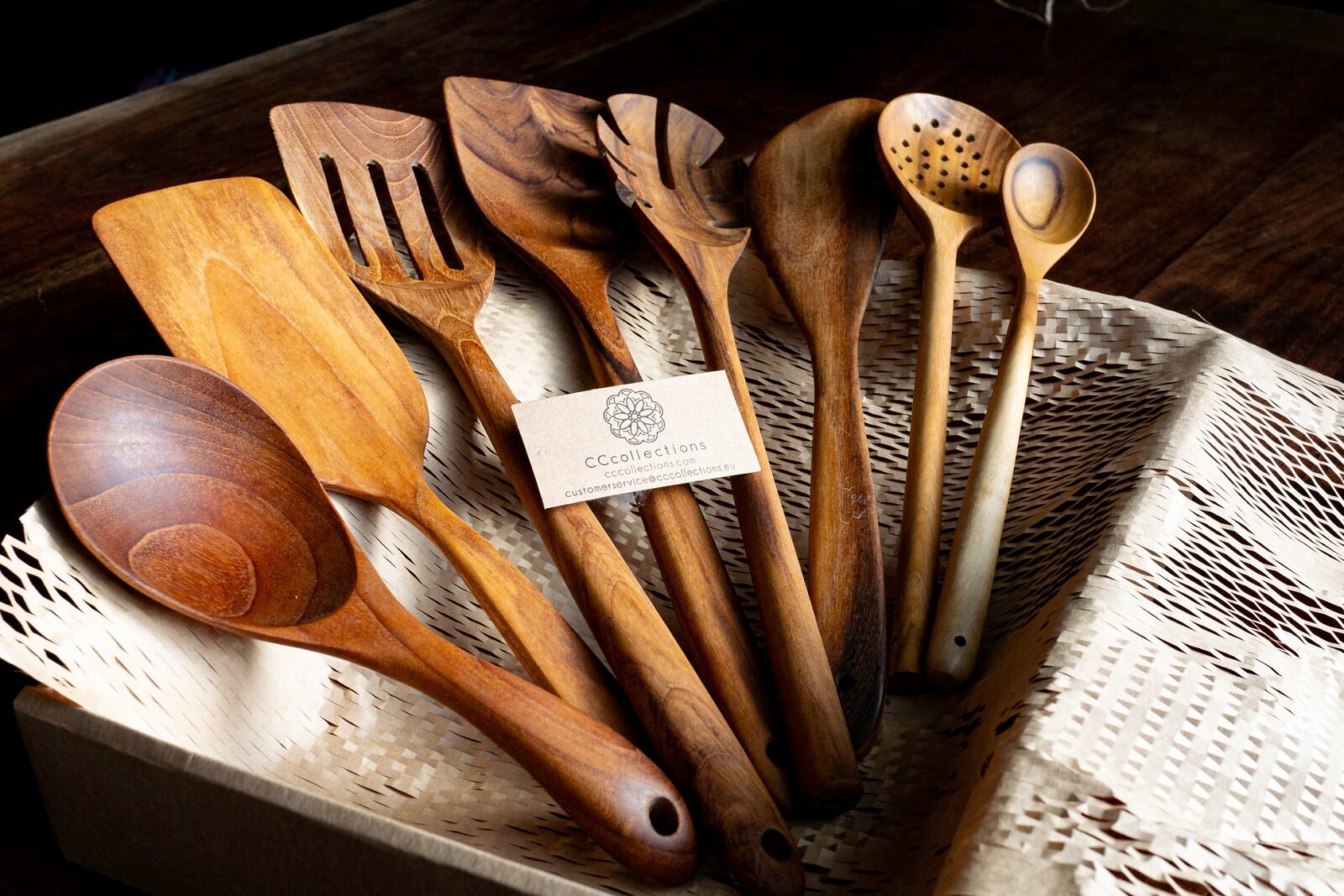
A collection of teak utensils can include spoons, spatulas, forks and other practical pieces. Selecting several complementary tools can make food preparation easier while creating a cohesive look throughout the kitchen.
Wooden Cooking Sets: A Practical Kitchen Upgrade
For someone replacing several old utensils, a wooden cooking set can be more convenient than purchasing individual pieces. A coordinated set may include essential tools for stirring, flipping, serving and mixing, giving a kitchen a useful foundation without filling drawers with unnecessary gadgets.
When selecting a wooden set, consider the construction, finish, shape and intended use. Smoothly finished handles should feel comfortable, while sturdy heads should be suitable for regular cooking. It is also worth checking whether the products are intended for food preparation and following the manufacturer’s care instructions.
A thoughtfully selected set can combine practicality with natural aesthetics, making it suitable for both everyday meals and more elaborate cooking.
Bamboo Kitchenware for a Sustainable Lifestyle
Bamboo is another widely used natural material for kitchen products. Bamboo grows relatively quickly and can be crafted into serving utensils, containers, chopping boards and storage products.
Bamboo kitchenware can work particularly well in homes where lightweight, natural-looking products are preferred. As with wooden products, responsible sourcing and proper maintenance are important considerations when choosing bamboo items.
Rather than focusing solely on whether a material is labelled “eco-friendly”, look at the entire product. A durable product designed for repeated use may offer greater practical value than an inexpensive item that needs frequent replacement.
How to Choose Sustainable Kitchenware
Buying sustainable kitchenware is about more than selecting a natural material. Consider the following points before purchasing:
Durability: Choose products made for regular use rather than short-term convenience.
Functionality: Select utensils that genuinely serve a purpose in your cooking routine.
Material quality: Look for well-finished wood, bamboo or other suitable natural materials.
Care requirements: Check whether the product requires hand washing, occasional oiling or other maintenance.
Craftsmanship: Handmade products can provide distinctive character and support traditional making techniques.
Quantity: Avoid buying more pieces than the kitchen actually needs. A smaller collection of versatile utensils can be more practical.
Caring for Natural Kitchenware
Good maintenance can significantly extend the useful life of wooden and bamboo kitchen products. Most wooden utensils should be washed by hand with mild soap and water rather than placed in a dishwasher unless the manufacturer specifically confirms dishwasher suitability.
Avoid leaving wooden products submerged for long periods. After washing, allow each item to dry thoroughly before storing it. Excessive heat and prolonged moisture can contribute to cracking, warping or surface deterioration.
Some wooden kitchen products may benefit from occasional food-safe conditioning oil. Always follow the care guidance supplied with the product to protect the material and maintain its appearance.
Bringing Natural Materials into the Modern Kitchen
Sustainable living does not have to mean sacrificing style or convenience. Natural kitchen products can fit comfortably into contemporary kitchens while providing practical tools for everyday food preparation.
CCcollections offers handcrafted products that combine natural materials with useful designs. From wooden utensils to other thoughtfully made kitchen essentials, choosing durable products can be a simple step towards a more considered approach to household consumption.
The best kitchenware is not necessarily the product with the most features. A reliable utensil that feels comfortable, performs its purpose well and lasts for a long time can be far more valuable. By selecting quality natural kitchenware, caring for it properly and buying with intention, households can create a kitchen that feels both practical and connected to natural materials.
Frequently Asked Questions
1. What is natural kitchenware?
Natural kitchenware refers to kitchen products made primarily from materials such as wood, bamboo, rattan and other natural materials.
2. Are wooden utensils suitable for everyday cooking?
Yes. Quality wooden utensils can be used regularly for stirring, mixing, serving and other everyday cooking tasks.
3. Why choose teak wood kitchen utensils?
Teak is dense, durable and naturally attractive, making it a practical material for reusable kitchen utensils.
4. What is included in a wooden cooking set?
A wooden cooking set may include spoons, spatulas, forks and other essential tools, depending on the collection.
5. How should wooden kitchen utensils be cleaned?
Hand wash wooden utensils with mild soap and water, then dry them thoroughly. Avoid prolonged soaking.
6. Is natural kitchenware a good choice for a sustainable home?
Durable, reusable natural-material products can support a more sustainable kitchen by reducing dependence on frequently replaced plastic items.