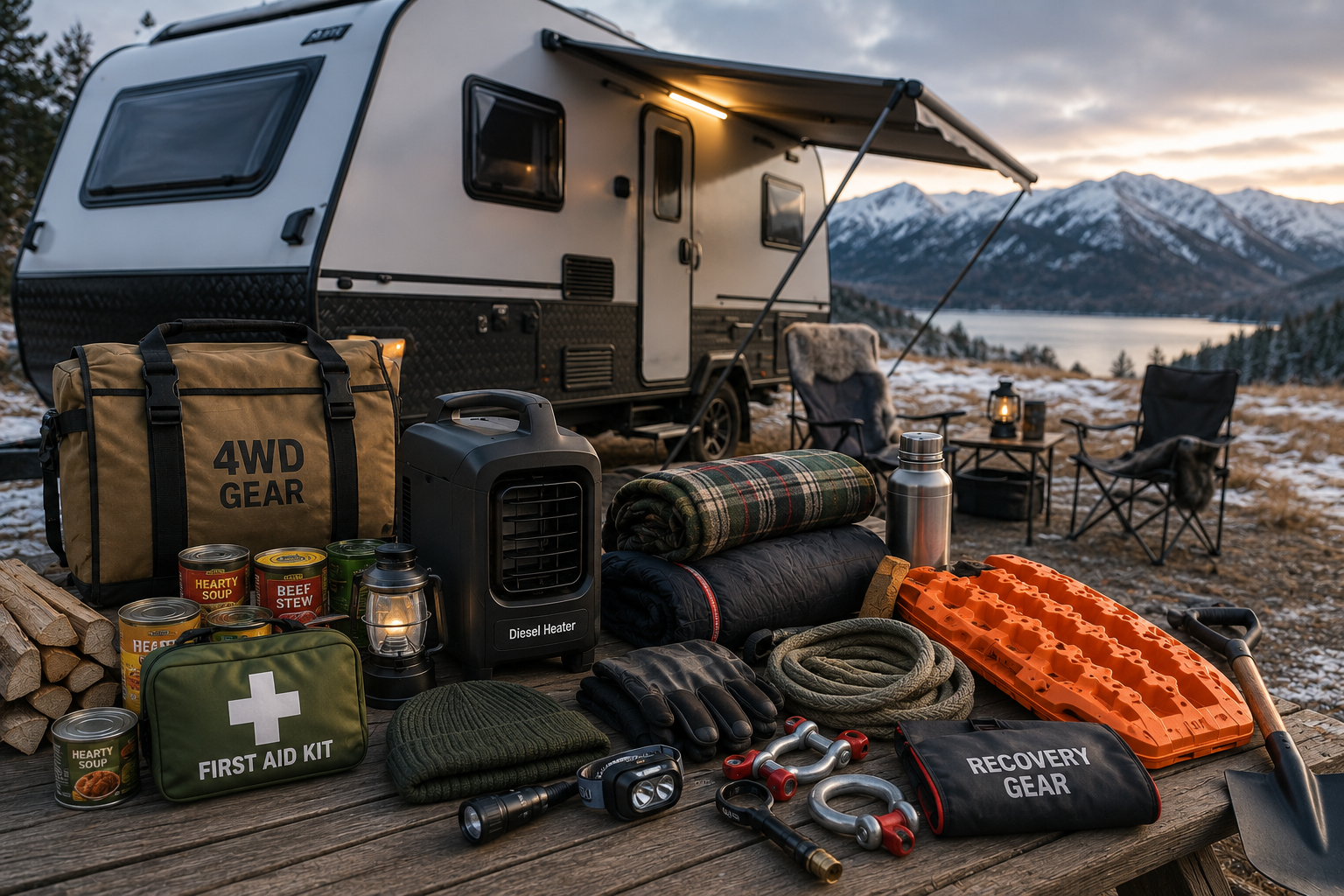
A 4WD trip can be exciting at any time of the year. However, cold weather can make travelling and camping much more difficult if you are not prepared.
Cold mornings, freezing nights, rain, wind, and muddy tracks can quickly turn a fun adventure into an uncomfortable experience. This is why packing the right gear is important before heading out.
Whether you are planning a weekend camping trip, exploring remote areas, or going on a long off-road adventure, your cold-weather packing list should cover warmth, safety, food, power, and emergency needs.
This guide explains what every 4WD owner should pack for cold weather. The items are simple, practical, and useful for Australian outdoor adventures.
1. Warm Clothing for Changing Weather
Cold weather can change quickly, especially when travelling through mountains, forests, or remote areas.
The best way to stay warm is to wear layers. Layers make it easier to add or remove clothing when the temperature changes.
Your cold-weather clothing should include:
- Warm jackets
- Thermal shirts and pants
- Long-sleeve shirts
- Waterproof outer layers
- Warm socks
- Gloves
- Beanies
- Comfortable hiking or work boots
Try to pack extra socks and a spare set of dry clothes. If your clothes become wet from rain, mud, or sweat, changing into dry clothing can help you stay warm.
Wet clothes can make your body lose heat much faster.
2. A Reliable Sleeping Bag
A good sleeping bag is one of the most important things to pack for cold-weather camping.
Your normal summer sleeping bag may not be enough when temperatures drop at night.
Choose a sleeping bag designed for colder conditions. Check its temperature rating before your trip.
You can also improve your sleeping setup by packing:
- A sleeping mat
- Extra blankets
- A thermal liner
- A pillow
- A waterproof groundsheet
A sleeping mat is especially useful because the cold ground can pull heat away from your body.
Even a good sleeping bag may feel cold if you are sleeping directly on a cold surface.
3. A Diesel Heater for Cold Nights
When camping with a 4WD, camper trailer, caravan, or rooftop tent setup, keeping your sleeping area warm can make a huge difference.
A Diesel Heater can provide a practical heating option for cold-weather camping when installed and used correctly.
Diesel heaters use fuel to create heat and can be useful for people who regularly travel during colder months.
When looking at heating options, some 4WD owners consider an aufocus diesel heater because portable heating systems can help make camping more comfortable during cold nights.
Before using any heater, always read the manufacturer’s instructions carefully. Proper installation, ventilation, and safe operation are extremely important.
Never use equipment in a way that could create a fire risk or allow dangerous fumes to build up inside a small enclosed space.
There are different aufocus diesel heaters available, so it is important to understand the size of your camping area and your heating needs before choosing a system.
A heater should be part of your cold-weather preparation, but it should never replace warm bedding and suitable clothing.
4. Plenty of Food and Hot Drinks
Your body uses energy to stay warm. Packing enough food is important during cold-weather trips.
Choose foods that are easy to prepare and store.
Some useful options include:
- Pasta
- Rice
- Soup
- Canned meals
- Oats
- Nuts
- Energy bars
- Dried fruit
- Instant noodles
- Coffee
- Tea
- Hot chocolate
Warm meals and drinks can help you feel comfortable after spending time outside in cold weather.
Always pack more food than you think you will need.
Bad weather, damaged tracks, or vehicle problems can delay your trip. Extra food can be very useful if you need to stay in one place longer than planned.
5. Enough Clean Drinking Water
People sometimes forget about drinking water when travelling in cold weather.
You may not feel as thirsty as you do during summer, but your body still needs water.
Pack enough drinking water for everyone travelling with you.
It is also a good idea to carry extra emergency water.
Your vehicle may become stuck, roads may be closed, or your travel plans may change. Having extra water gives you more flexibility during unexpected situations.
Store water containers safely inside your 4WD or camping setup.
6. A Good Recovery Kit
Cold and wet weather can make off-road tracks more difficult.
Rain can turn a dry dirt road into a muddy track. Wet grass and slippery surfaces can also make it easier for a vehicle to lose traction.
A basic 4WD recovery kit may include:
- Recovery tracks
- Recovery straps
- Rated recovery points
- Shackles
- Gloves
- A shovel
- A tyre pressure gauge
- An air compressor
Make sure you understand how to use recovery equipment safely before your trip.
Recovery gear can be dangerous when used incorrectly.
It is better to learn how your equipment works before you become stuck in mud or on a difficult track.
7. A Strong Torch and Extra Lighting
Winter days can become dark earlier.
Good lighting is important when setting up camp, preparing food, checking your vehicle, or walking around at night.
Pack more than one light source.
Useful lighting equipment includes:
- LED torches
- Headlamps
- Camping lanterns
- Spare batteries
- Rechargeable lights
A headlamp is especially useful because it keeps both of your hands free.
This can make it easier to cook, repair equipment, or set up your camp in the dark.
8. A First Aid Kit
Every 4WD should carry a well-stocked first aid kit.
Cold and wet conditions can increase the chance of slips, cuts, and other small injuries.
Your first aid kit should be easy to find and protected from water.
Check the contents before every major trip.
Replace used or expired items when needed.
It is also helpful to know basic first aid skills. Having a first aid kit is important, but knowing how to use it is just as important.
9. Emergency Communication Equipment
Mobile phone coverage can be poor or unavailable in remote areas.
Before heading out, tell someone where you are going and when you expect to return.
Depending on where you are travelling, consider carrying suitable communication equipment for areas without reliable mobile coverage.
This may include:
- A UHF radio
- A satellite communication device
- A charged mobile phone
- A power bank
Do not depend on your mobile phone alone when travelling into remote locations.
Always think about how you would contact someone if your vehicle broke down.
10. Extra Power for Your Devices
Cold weather and long trips can affect how quickly you use power.
You may need electricity for lights, communication devices, fridges, cameras, navigation equipment, and other camping gear.
Useful power equipment can include:
- Power banks
- Portable batteries
- Vehicle battery chargers
- Solar panels
- Extra charging cables
Before leaving home, charge all important devices.
Check that your charging equipment is working properly.
If you are travelling for several days, make sure you have a reliable plan for keeping essential devices powered.
11. A Vehicle Emergency Kit
Your 4WD should also be ready for cold and difficult conditions.
A basic emergency kit may include:
- Jumper leads
- Basic tools
- Spare fuses
- Tyre repair equipment
- A spare tyre
- Engine fluids
- Duct tape
- Zip ties
- A tow strap
- Warning triangles
You should also check your vehicle before leaving.
Look at your tyres, battery, lights, brakes, fluid levels, and spare wheel.
Cold weather trips can place extra pressure on your vehicle, especially when driving on muddy or rough tracks.
A quick check before leaving can help you find small problems before they become bigger ones.
12. Waterproof Gear and Shelter
Rain and wind can make cold weather feel much worse.
Pack waterproof equipment to protect yourself and your gear.
Useful items include:
- Rain jackets
- Waterproof pants
- Tarps
- A waterproof tent
- Dry bags
- Waterproof storage containers
A tarp can be one of the most useful items in your 4WD setup.
You can use it to create extra shelter from rain or wind. It can also help keep your cooking or camping area dry.
Keep important items such as clothing, food, electronics, and bedding protected from water.
13. Navigation Equipment
Do not rely on one navigation system.
Mobile phone maps may not work when you lose signal.
Before travelling, download offline maps for your planned route.
You can also carry a dedicated GPS device or paper maps as a backup.
Always check track conditions before heading into remote areas.
Heavy rain can close roads or make tracks unsafe.
A little planning can help you avoid getting into dangerous situations.
14. Extra Fuel
Cold-weather trips can sometimes take longer than expected.
Mud, rain, road closures, and difficult tracks can increase fuel use.
If you are travelling into remote areas, plan your fuel stops carefully.
Carry extra fuel when appropriate and store it safely.
You should also consider the fuel needs of any camping equipment you are carrying.
For example, if you use an aufocus diesel heater, make sure you understand its fuel requirements and plan your supply properly for the length of your trip.
Always follow safe fuel storage and handling practices.
15. Check the Weather Before You Leave
Packing the right gear is important, but planning is just as important.
Check the weather forecast before starting your trip.
Look for:
- Heavy rain
- Strong winds
- Very low temperatures
- Flood warnings
- Road closures
Weather conditions can change quickly.
Keep checking conditions during your trip if you have access to weather updates.
If conditions become unsafe, changing your plans is often the smartest decision.
Final Thoughts
Cold-weather 4WD trips can be some of the best adventures of the year.
The tracks can be quieter, the scenery can look amazing, and camping can feel peaceful and relaxing.
However, cold weather requires more preparation.
Warm clothing, good bedding, enough food and water, emergency equipment, recovery gear, reliable lighting, and proper shelter should all be part of your packing list.
A suitable Diesel Heater can also help make cold nights more comfortable when it is properly installed and safely used.
Whether you choose an aufocus diesel heater or another suitable heating solution, always focus on safe operation and prepare your complete camping setup for changing conditions.
The most important rule is simple: pack before you need something.
A well-prepared 4WD gives you more confidence to enjoy the journey, stay comfortable, and deal with unexpected situations when the weather turns cold.