If you’ve moved to the USA and miss watching your favorite Hindi serials, Tamil news, or a live cricket match from back home, you’ve probably come across the term “IPTV” while searching for solutions. But what exactly is IPTV, and how does it work? This guide breaks it down in simple terms so you can decide if it’s the right fit for your entertainment needs.
Table of Contents
- What Is IPTV?
- How Does IPTV Work?
- IPTV vs Traditional Cable and Satellite TV
- What Do You Need to Get Started with IPTV?
- Understanding the Indian IPTV Box
- Why Indian IPTV USA Is Popular Among NRIs
- Is IPTV Legal and Safe?
- How to Choose the Right IPTV Provider
- Frequently Asked Questions
- Final Thoughts
What Is IPTV?
IPTV stands for Internet Protocol Television. Instead of receiving TV channels through a satellite dish or underground cable lines, IPTV delivers television content to your screen using your regular internet connection. Think of it the same way you’d think of watching a video on YouTube or Netflix except instead of on-demand shows only, you also get live, real-time TV channels streamed over the internet.
For the South Asian community living in the USA, this technology has been a game-changer. It means you no longer need a satellite dish pointed toward India or an expensive cable package with limited regional options. With a reliable internet connection, you can stream hundreds of live Indian channels, movies, and shows directly to your TV, phone, or laptop.
How Does IPTV Work?
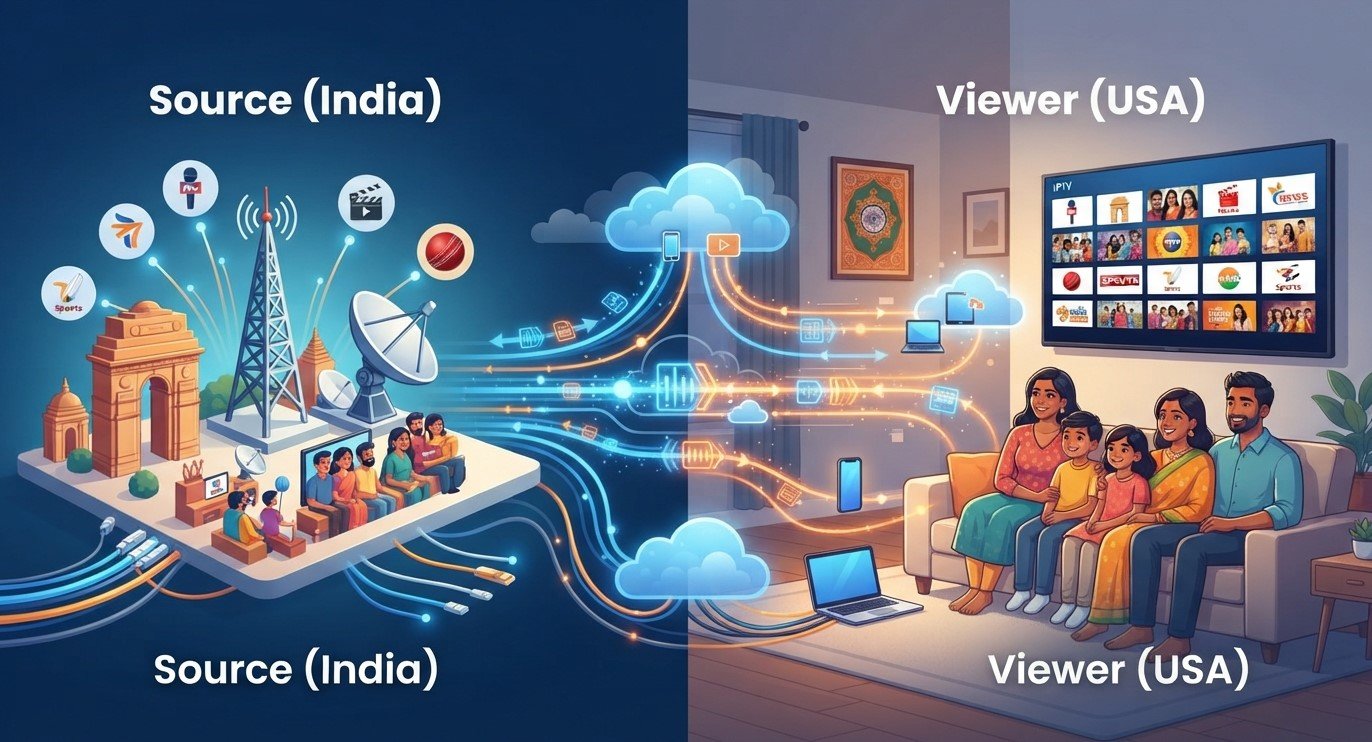
At a basic level, IPTV works in three simple steps:
- The provider streams content over the internet. IPTV companies like Indian IPTV USA source live TV channels and video content, then broadcast them through internet servers instead of traditional broadcast towers or satellites.
- Your device connects to the stream. Using an app (like IPTV Smarters or TiviMate) or a dedicated set-top box, your TV or device connects to the provider’s server and requests the channel you want to watch.
- You watch in real time. The content is broken into small data packets, sent over the internet, and reassembled on your screen almost instantly — giving you a live TV experience, just like cable, but through your Wi-Fi or broadband connection.
Unlike downloading a movie, IPTV streams data continuously, which is why a stable internet connection matters for a smooth, buffer-free experience.
IPTV vs Traditional Cable and Satellite TV
Many people switching from Dish Network or DirecTV to IPTV want to know how the two compare. Here’s a quick breakdown:
| Factor | IPTV | Cable/Satellite |
|---|---|---|
| Installation | No dish or technician visit needed | Requires equipment installation |
| Channel variety | Hundreds of Indian regional channels | Limited South Asian options |
| Cost | Generally more affordable | Higher monthly bills, add-on fees |
| Contracts | Often no long-term contract | Usually requires a contract |
| Device flexibility | Works on Smart TV, Firestick, phone, PC | Limited to cable box |
| Setup time | Minutes | Days, with a scheduled installation |
For Indian, Pakistani, and Bangladeshi households in the US, this flexibility and channel variety is a major reason more people are switching to IPTV every year.
What Do You Need to Get Started with IPTV?
Getting started with IPTV is simpler than most people expect. Here’s what you’ll typically need:
- A stable internet connection — a minimum of 10 Mbps is usually enough for smooth HD streaming.
- A compatible device — a Smart TV, Firestick, Android box, MAG box, tablet, or even your phone.
- An IPTV app — such as IPTV Smarters Pro or TiviMate, where you enter your login credentials.
- A subscription — this gives you access to the channel lineup and content library.
Once these four pieces are in place, you’re typically live and streaming within 10 minutes of signing up.
Understanding the Indian IPTV Box
While IPTV can be watched through apps on devices you already own, many households prefer using a dedicated Indian IPTV Box — a small streaming device built specifically to run IPTV smoothly on any television, including older TVs that aren’t “smart.”
An IPTV box essentially acts as the bridge between your internet connection and your TV screen. You plug it in, connect it to Wi-Fi or ethernet, and it comes pre-loaded with the apps needed to stream your subscription. This is especially useful for:
- Older television sets without smart features
- Users who want a simple, remote-based experience instead of navigating apps
- Households that want one dedicated device just for IPTV, separate from phones or laptops
Boxes like MAG devices or Android-based IPTV boxes are popular among Indian IPTV USA customers because they’re plug-and-play, reliable, and don’t require much technical know-how to set up.
Why Indian IPTV USA Is Popular Among NRIs
For Non-Resident Indians and the broader South Asian diaspora, staying connected to home doesn’t stop at phone calls and social media — it extends to entertainment and culture. This is where a dedicated Indian IPTV USA service fills a real gap.
Here’s why it resonates with the community:
- Regional language coverage — Hindi, Tamil, Telugu, Punjabi, Malayalam, Marathi, Bengali, Gujarati, Kannada, and more, all under one subscription.
- Live news from home — stay updated on what’s happening back in India in real time.
- Cricket and sports coverage — never miss a match because of time zone differences or unavailable cable packages.
- Devotional and festival programming — access to content that mainstream US cable providers simply don’t carry.
- No satellite dish or long-term contract — a much simpler, more affordable setup than traditional options.
Is IPTV Legal and Safe?
IPTV as a technology is completely legal — it’s simply a method of content delivery, the same way cable or satellite is. What matters is whether the provider has proper rights and licensing to distribute the channels they offer, and whether they operate with transparency (clear contact information, real customer support, and a legitimate business address).
To stream safely:
- Choose a provider with verifiable contact details and customer reviews
- Avoid extremely cheap, unofficial-looking offers with no support
- Look for a provider offering a free trial, so you can test quality and reliability before committing
How to Choose the Right IPTV Provider
With many IPTV services available, here’s what to look for before subscribing:
- Channel lineup — Does it include the specific regional languages and channels you actually watch?
- Streaming quality — HD and 4K options with minimal buffering, especially during peak hours.
- Device compatibility — Works on the devices you already own, or offers a compatible IPTV box.
- Customer support — Real, responsive support (ideally 24/7) for setup help and troubleshooting.
- Free trial availability — A trial period lets you test everything before paying.
- Transparent pricing — No hidden fees, with clear monthly or annual plans.
Frequently Asked Questions
Is IPTV the same as streaming apps like Netflix? Not exactly. Streaming apps like Netflix mainly offer on-demand content, while IPTV includes live, real-time TV channels in addition to on-demand libraries — much closer to a traditional cable experience, delivered over the internet.
Do I need special equipment to watch IPTV? Not necessarily. You can use an app on a Smart TV, Firestick, phone, or laptop. However, many users prefer a dedicated IPTV box for a simpler, TV-remote-based experience, especially on older televisions.
How much internet speed do I need for IPTV? A minimum of 10 Mbps is generally recommended for smooth HD streaming. Faster connections support 4K streaming and multiple devices at once.
Can I watch IPTV on multiple devices at the same time? This depends on your subscription plan. Many providers, including Indian IPTV USA, offer multi-device access under a single login.
Is there a free trial available before I subscribe? Yes — most reputable providers, including Indian IPTV USA, offer a free trial period so you can test channel quality and reliability before committing to a paid plan.
Final Thoughts
IPTV has made it dramatically easier for Indian, Pakistani, and Bangladeshi families in the USA to stay connected to home entertainment — without a satellite dish, a long-term contract, or a limited channel package. Whether you choose to stream through an app on your existing devices or set up a dedicated Indian IPTV Box for a simpler experience, the technology is built to bring the channels you grew up with right into your living room.
Ready to experience it for yourself? Start your free trial with Indian