When you need to use a U.S. birth certificate in another country, simply having an official copy of the document may not be enough. Foreign governments, schools, immigration offices, employers, and other organizations may require additional verification before they will accept it.
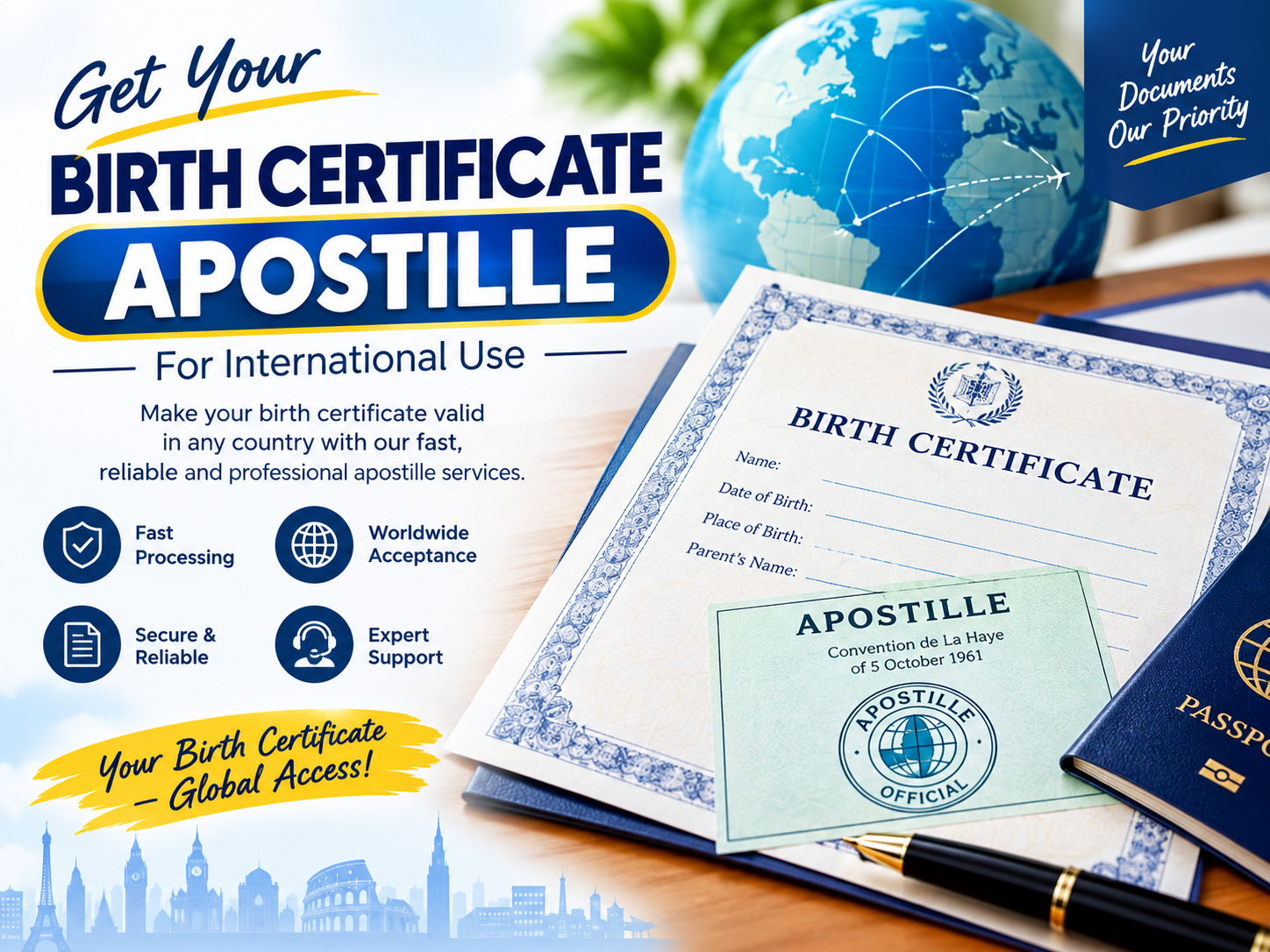
This is where Apostille Services can make the process easier. An apostille authenticates the signature, seal, or stamp on a public document so that it can be recognized in another country that participates in the Hague Apostille Convention.
One of the most common requests involves a Birth Certificate Apostille. People may need this service when moving overseas, applying for residency, getting married in another country, handling dual citizenship matters, or completing international immigration paperwork.
Understanding how the process works can help you avoid unnecessary delays and mistakes.
What Is an Apostille?
An apostille is an official certificate attached to a public document for use in another country. Its purpose is to verify the authenticity of the signature, seal, or stamp appearing on the document.
The apostille does not confirm that every piece of information written on the document is true. Instead, it confirms that the official or authority who signed or issued the document is legitimate.
For example, if you are submitting a U.S. birth certificate to a foreign government, that organization may want confirmation that the document was properly issued by the appropriate U.S. authority. An apostille provides that authentication when the destination country is covered by the Hague Convention.
Why Would You Need an Apostille for a Birth Certificate?
Birth certificates are frequently requested for international legal and administrative purposes. A foreign authority may require an authenticated birth record before accepting it.
Common situations include:
- Immigration applications
- Permanent residency applications
- Dual citizenship applications
- International marriage registration
- Overseas employment
- Foreign university enrollment
- Adoption-related paperwork
- International family matters
- Government registration
- Relocation to another country
- Name or family-status verification
Requirements vary depending on the destination country and the purpose of the document. That is why checking the receiving authority’s requirements before submitting your paperwork is important.
How Does a Birth Certificate Apostille Work?
The exact procedure depends on where the birth certificate was issued and where the document will be used.
In many cases, the process begins with obtaining an eligible certified copy of the birth certificate. A photocopy or unofficial version may not meet the requirements of the authentication authority.
After the appropriate document is obtained, it may need to be submitted to the correct state authority. Birth certificates issued by state agencies are generally handled through the appropriate state-level authentication office rather than a federal office.
The authority reviews the document and verifies the relevant signature or seal. Once approved, an apostille certificate is attached to the document.
The completed document can then be presented to the foreign authority that requested it.
Do You Need the Original Birth Certificate?
This depends on the requirements of the authority handling the document.
For many applications, an eligible certified copy is required rather than a simple photocopy. Some states also have specific requirements concerning the issuing official’s signature, certification, or document format.
Because requirements can differ from state to state, it is important not to assume that a document accepted in one state will automatically be accepted in another.
Before sending your birth certificate, verify:
- Where the certificate was issued
- Whether a certified copy is required
- Which authority provides authentication
- Whether notarization is necessary
- Whether additional legalization is required
- Whether the destination country requires a translation
Checking these details in advance can save considerable time.
Apostille vs. Authentication: What’s the Difference?
The terms apostille and authentication are sometimes used interchangeably, but they are not exactly the same.
An apostille is generally used for documents going to countries that participate in the Hague Apostille Convention.
If the destination country is not part of the applicable Hague Convention process, the document may need a different authentication and legalization procedure. This can sometimes involve government authentication followed by legalization through an embassy or consulate.
The correct process therefore depends heavily on the country where the document will be used.
What About Translation?
Apostilling a document and translating a document are two different steps.
An apostille authenticates the document for international use. A translation converts the document’s text from one language into another.
If your birth certificate is written in English but the receiving authority requires another language, you may need a certified translation.
Some countries or organizations have specific rules regarding who may translate the document and how the translation must be certified. In certain situations, the translation itself may also need notarization or authentication.
It is always best to confirm the receiving organization’s translation requirements before ordering the service.
How Long Does the Process Take?
Processing times can vary considerably.
Several factors can affect the turnaround time, including:
- The state where the document was issued
- The type of document
- Whether expedited processing is available
- Government office processing times
- Shipping method
- Whether translation is required
- Whether additional embassy legalization is needed
If you have an upcoming immigration appointment, international move, wedding, university deadline, or business requirement, it is wise to begin the process early.
Waiting until the last minute can create unnecessary pressure, especially if the receiving organization has strict deadlines.
Common Mistakes to Avoid
International document preparation can become complicated when small details are overlooked. Several common mistakes can result in delays.
Sending an Unacceptable Copy
A regular photocopy may not qualify for authentication. Make sure you understand what type of certified document is required.
Using the Wrong Authority
Different documents are handled by different government authorities. Submitting a document to the wrong office can waste time.
Ignoring Translation Requirements
Some foreign authorities require certified translations. Do not assume that an English-language document will automatically be accepted.
Forgetting Embassy Legalization
If the destination country does not use the Hague Apostille Convention process, additional legalization may be necessary.
Waiting Until the Last Minute
Government processing times are not always predictable. Starting early gives you more room to correct problems if they occur.
Providing Incorrect Destination Information
The country where the document will be used matters. Authentication requirements can change depending on the destination.
How Professional Document Assistance Can Help
Handling international paperwork yourself is possible in many situations, but it can be confusing when you are unfamiliar with government authentication procedures.
Professional document specialists can help you understand the steps involved, identify potential documentation problems, prepare paperwork for submission, and coordinate services such as authentication and translation.
A professional service can be particularly useful when you are dealing with multiple documents or a tight international deadline.
However, you should still verify the final requirements with the foreign government, embassy, immigration office, school, employer, or other organization requesting the document. Their requirements ultimately determine what paperwork you need.
When Should You Start the Process?
The best time to begin is as soon as you know you will need the document internationally.
For example, if you are preparing for an overseas marriage, immigration application, citizenship process, or international move, start researching the document requirements before your deadline approaches.
Make a checklist of everything you need, including:
- Certified copies
- Authentication or apostille
- Translation
- Notarization, if required
- Embassy legalization, if applicable
- Shipping and delivery
- Submission deadlines
Having a clear checklist can make the entire process more manageable.
Choosing the Right Document Service Provider
Not every document situation is identical, so choosing a provider that understands international document requirements can be valuable.
Before selecting a company, consider whether it clearly explains its process, provides transparent information about fees and turnaround times, handles the type of document you have, and understands the requirements associated with your destination country.
A reliable provider should also be willing to explain what is included in the service rather than making vague promises.
Look for clear communication and realistic expectations. No legitimate provider can guarantee that a foreign government will approve an application, because final acceptance belongs to the receiving authority.
Final Thoughts
Preparing a U.S. document for international use can seem complicated, but understanding the authentication process makes it much easier to navigate. Whether you are relocating, applying for immigration, getting married overseas, studying internationally, or handling citizenship paperwork, having the correct documentation can prevent avoidable delays.
Apostille Services can help prepare eligible public documents for recognition in participating foreign countries. For people using a birth record overseas, a Birth Certificate Apostille is often an important part of the document preparation process.
The most important step is to identify the exact requirements of the country and organization receiving your document. Requirements can vary, and using the wrong document, translation, or authentication procedure may result in rejection.
Start early, verify the requirements, and make sure every part of your paperwork is prepared correctly before submission.
Final Thoughts
Preparing a birth certificate for international use does not have to be stressful when you understand the process and the requirements involved. Whether you need your document for immigration, international marriage, dual citizenship, education, employment, or another overseas purpose, completing the authentication process correctly is essential.
A properly prepared Birth Certificate Apostille can help ensure that your document is recognized by the appropriate foreign authority when an apostille is the required form of authentication. Depending on the destination country, you may also need certified translation, notarization, or additional legalization.
The key is to start early and confirm the requirements before submitting your documents. Requirements can vary based on the state that issued your birth certificate and the country where you plan to use it.
With the right preparation and professional assistance when needed, you can avoid common mistakes, reduce processing delays, and move forward with greater confidence. Taking the time to verify every requirement before submission can make the entire international document process much smoother.
Frequently Asked Questions
1. What is a Birth Certificate Apostille?
A Birth Certificate Apostille is an official authentication certificate used to help a qualifying birth certificate be recognized in another country that participates in the Hague Apostille Convention.
2. Can any birth certificate receive an apostille?
Not necessarily. The document must meet the requirements of the relevant authentication authority. Certified copies and properly issued documents are commonly required.
3. Do I need a new birth certificate?
In some cases, you may need an eligible certified copy. The exact requirement depends on the issuing state and the authority receiving the document.
4. Does an apostille translate my birth certificate?
No. An apostille authenticates the document; it does not translate its contents. A separate certified translation may be required.
5. Is an apostille required for every country?
No. Apostilles are generally used for countries covered by the Hague Apostille Convention. Other countries may require a different authentication and embassy legalization process.
6. How long does birth certificate authentication take?
Processing times vary based on the issuing jurisdiction, government workload, shipping method, and whether expedited processing is available.
7. Can I use an apostilled birth certificate for immigration?
An authenticated birth certificate may be requested during certain immigration or citizenship processes. However, the specific immigration authority determines what documents and translations are acceptable.
8. Does an apostille expire?
The apostille certificate itself generally does not have a standard expiration date, but the organization receiving the document may impose its own rules about how recent the underlying document must be.
9. Can I apostille a photocopy of my birth certificate?
A regular photocopy usually does not qualify in place of an eligible certified document. Requirements depend on the jurisdiction and document type.
10. Should I get translation before or after authentication?
This depends on the destination country’s requirements. Some authorities want the original document authenticated first, while others have specific rules for handling translated documents. Always confirm the required sequence before proceeding.