Uneven skin tone, dark patches, brown spots, and post-acne marks can make the complexion appear less uniform. Pigmentation can develop for different reasons, including sun exposure, hormonal changes, acne-related inflammation, skin irritation, and other factors. Because different forms of pigmentation can behave differently, identifying the pattern and likely cause is an important part of choosing an appropriate treatment approach.
For people looking for Pigmentation Treatment In Dubai, modern aesthetic and dermatological approaches can include professional skincare, chemical peels, laser-based procedures, microneedling, and combination protocols. EV Clinic Dubai provides pigmentation-focused care using assessment-led treatment plans that may incorporate topical support, microneedling, laser procedures, tranexamic-acid-based protocols, exosome therapy, and other complementary approaches.
Understanding Skin Pigmentation
What Is Pigmentation?
Pigmentation refers to changes in the colour of the skin caused by variations in melanin production or distribution. When certain areas produce more melanin than the surrounding skin, they can appear darker.
Pigmentation may appear as:
- Brown or dark spots
- Uneven facial tone
- Sun spots
- Melasma
- Post-acne dark marks
- Post-inflammatory pigmentation
- Dark patches around the mouth or cheeks
- Uneven pigmentation on the neck, chest, hands, or shoulders
The appearance alone does not always reveal the underlying cause, which is why professional assessment can help determine the most suitable treatment pathway.
Common Types of Pigmentation
Melasma
Melasma commonly appears as symmetrical brown or greyish patches, particularly on areas such as the cheeks, forehead, upper lip, jawline, and temples. Hormonal changes and environmental exposure can contribute to its development or recurrence.
Because melasma can be persistent, treatment often focuses on controlling pigment activity and supporting long-term maintenance rather than relying on a single procedure.
Post-Inflammatory Hyperpigmentation
Post-inflammatory hyperpigmentation, often called PIH, can develop after inflammation or injury to the skin. Acne, irritation, eczema, burns, and other inflammatory processes may leave darker areas after the original problem has settled.
A personalised treatment plan can focus on gradually improving the appearance of these marks while maintaining healthy-looking skin.
Sun-Related Pigmentation
Long-term exposure to ultraviolet radiation can contribute to localised dark spots and uneven tone. Areas that receive frequent exposure, such as the face, hands, neck, and chest, can be particularly affected.
Consistent sun protection is therefore an important part of any pigmentation-focused skincare routine.
Why Pigmentation Can Develop in Dubai
Sun and Environmental Exposure
Dubai’s sunny climate means that skin can receive considerable light exposure throughout the year. Ultraviolet exposure can stimulate melanin production and make existing pigmentation more noticeable.
This makes daily photoprotection an important part of maintaining a more even-looking complexion.
Hormonal Changes
Hormonal fluctuations can influence pigmentation, particularly in people who develop melasma. Pregnancy, hormonal medications, and other hormonal changes may contribute to changes in pigmentation patterns.
Acne and Skin Inflammation
When acne or another inflammatory skin condition heals, the affected area may remain darker than the surrounding skin. This is one of the common pathways through which PIH develops.
Skin Irritation
Repeated irritation from unsuitable skincare products, friction, or aggressive treatments can contribute to inflammation and subsequent pigmentation. A carefully planned skincare routine can help support a more balanced appearance.
Modern Approaches to Pigmentation Treatment
Professional Skin Assessment
A personalised assessment is an important starting point for Pigmentation Treatment In Dubai. Different pigmentation patterns can require different approaches, so treatment is generally selected according to the pigmentation type, skin condition, treatment history, and individual needs.
At EV Clinic Dubai, pigmentation care begins with evaluating the pigmentation pattern and developing a tailored protocol. The clinic’s approach can include skin analysis and assessment of factors that may contribute to pigment activity.
Medical-Grade Skincare
Topical skincare can form an important part of pigmentation management. Depending on the individual’s needs, professional protocols may incorporate ingredients such as vitamin C, niacinamide, tranexamic acid, arbutin, or retinoid-based products.
The purpose is to support more balanced pigment production and encourage a more uniform appearance over time.
Chemical Peels
Chemical peels use controlled exfoliation to improve the appearance of selected pigmentation and uneven skin tone. The type and strength of a peel should be selected according to the individual’s skin condition and pigmentation pattern.
A personalised approach can help integrate peeling into a broader pigmentation-care programme rather than treating it as an isolated procedure.
Laser-Based Treatments
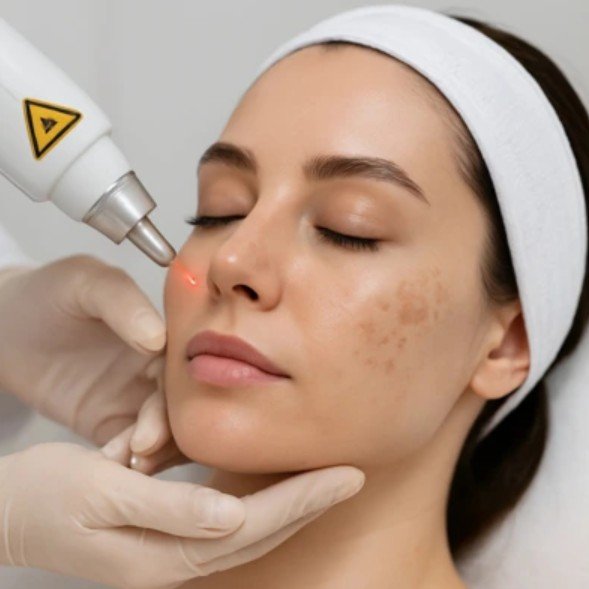
Laser treatments can be used in selected pigmentation cases to target unwanted pigment and support a more even complexion. EV Clinic Dubai lists YAG fractional laser treatment among its pigmentation protocols, with treatment selection based on the individual’s pigmentation and skin needs.
Laser treatment is not necessarily appropriate for every type of pigmentation, so professional assessment remains an important part of planning.
Microneedling
Microneedling uses controlled microchannels to support skin renewal and collagen-related processes. It may be incorporated into selected pigmentation protocols, particularly when uneven tone occurs alongside changes in skin texture.
At EV Clinic Dubai, Dermapen-based protocols can be combined with professional pigmentation products as part of an individualised treatment plan.
Tranexamic Acid-Based Pigmentation Protocols
Tranexamic acid is used in some professional pigmentation protocols, particularly for concerns such as melasma. EV Clinic Dubai includes tranexamic-acid-based treatment among its approaches for managing pigmentation and melasma.
The suitability of any active ingredient depends on the person’s skin condition and overall treatment plan.
Exosome-Based Skin Support
Exosome-based treatments may be incorporated into some advanced skin protocols alongside other procedures. At EV Clinic Dubai, exosome therapy is listed as part of certain pigmentation and skin-regeneration approaches, including protocols combined with laser or microneedling.
How EV Clinic Dubai Approaches Pigmentation Care
Assessment Before Treatment
At EV Clinic Dubai, pigmentation treatment is presented as a personalised process rather than a one-size-fits-all procedure. The clinic’s protocol can include assessment of pigmentation depth, skin condition, and potential contributing factors before treatment is selected.
A Combination-Based Approach
Pigmentation can involve several contributing factors, so a combination approach may be considered. Depending on the individual’s needs, EV Clinic Dubai describes protocols involving professional skincare, microneedling, laser treatment, LED therapy, tranexamic acid, and exosome-based therapies.
Homecare and Maintenance
Professional treatment is only one part of pigmentation management. A suitable homecare routine and consistent sun protection can support the appearance achieved through professional treatments.
EV Clinic Dubai recommends daily photoprotection and homecare as part of its pigmentation protocols.
What Can Influence Treatment Results?
Type of Pigmentation
Melasma, sun spots, and PIH do not necessarily respond in the same way. Identifying the pigmentation type can therefore influence the treatment approach.
Pigmentation Depth
Some pigmentation is closer to the skin surface, while other forms may involve deeper pigment. The depth and pattern can influence which procedures are considered.
Skin Type
Individual skin characteristics can affect treatment selection and the way pigmentation responds. A personalised plan can help match the treatment intensity and approach to the individual’s skin.
Consistency With Aftercare
Following the recommended skincare and sun-protection routine can be an important part of maintaining a more even-looking complexion.
What Is the Pigmentation Treatment Cost In Dubai?
The Pigmentation Treatment Cost In Dubai can vary considerably because pigmentation treatment is not a single procedure. The final cost may depend on the type of pigmentation, treatment method, number of sessions, areas being treated, and whether a combination of procedures is recommended.
For example, a treatment plan involving professional skincare may have a different cost from one involving laser, microneedling, chemical peels, or multiple complementary treatments.
A consultation with EV Clinic Dubai can help determine which approach is appropriate and what treatment plan is required for the individual’s pigmentation concern.
How Many Sessions May Be Needed?
Individual Treatment Plans
The number of sessions varies according to the pigmentation type and the selected treatment approach. Some concerns may require a series of treatments rather than one appointment.
According to EV Clinic Dubai, active pigmentation protocols may be performed at intervals of approximately two to four weeks, while maintenance treatments may be scheduled at longer intervals depending on the individual’s needs.
Gradual Improvement
Pigmentation generally requires patience because skin renewal and pigment regulation occur progressively. EV Clinic Dubai states that initial brightening may become noticeable over several weeks, while more significant pigment improvement can take longer with consistent treatment and maintenance.
How to Support an Even-Looking Complexion
Use Daily Sun Protection
Daily broad-spectrum sunscreen is an important part of pigmentation care. Regular exposure to ultraviolet light can stimulate pigment production and make existing pigmentation more noticeable.
Follow a Consistent Skincare Routine
A simple, consistent routine can help support the skin barrier and complement professional pigmentation treatments. Products should be selected according to individual skin needs rather than using multiple aggressive products simultaneously.
Avoid Unnecessary Skin Irritation
Excessive exfoliation and irritating products may contribute to inflammation. A carefully balanced skincare routine can help maintain a more comfortable and even-looking complexion.
Follow Professional Recommendations
Pigmentation treatment works best when the selected procedure, homecare, and maintenance plan are considered together. Following the treatment schedule recommended by EV Clinic Dubai can help maintain consistency throughout the process.
Why Personalised Pigmentation Care Matters
Different Pigmentation Requires Different Strategies
A dark spot caused by acne is not necessarily managed in exactly the same way as melasma or sun-related pigmentation. Professional assessment helps distinguish between different patterns and select an appropriate approach.
Treatment Can Be Combined With Skin Quality Support
Modern pigmentation care can address more than visible colour differences. Depending on individual needs, treatment plans may also incorporate approaches intended to support skin texture, hydration, collagen renewal, and overall complexion quality.
Frequently Asked Questions
What is the best treatment for pigmentation in Dubai?
There is no single treatment that is appropriate for every pigmentation concern. Options can include professional skincare, chemical peels, laser-based treatments, microneedling, tranexamic-acid-based protocols, and combination approaches. The appropriate choice depends on the pigmentation type, skin characteristics, and individual treatment goals.
Can pigmentation be completely removed?
The outcome depends on the type and underlying cause of pigmentation. Some forms can respond significantly to treatment, while conditions such as melasma may require ongoing management. EV Clinic Dubai notes that persistent pigmentation can require continued treatment and maintenance.
Is laser treatment suitable for pigmentation?
Laser treatment can be considered for selected pigmentation concerns, but it is not suitable for every type of pigmentation. Assessment of the pigmentation pattern and skin characteristics helps determine whether laser treatment is appropriate.
How important is sunscreen after pigmentation treatment?
Sun protection is an essential part of pigmentation management. UV exposure can encourage further melanin production and make pigmentation more visible, so consistent photoprotection is commonly recommended alongside professional treatment.
How long does pigmentation treatment take to show results?
Results vary according to the pigmentation type and treatment approach. EV Clinic Dubai indicates that early improvements in brightness may appear within several weeks, while more noticeable pigment improvement can take several months with a consistent treatment and maintenance programme.
Achieving a More Even-Looking Complexion
Pigmentation can have different causes and patterns, which makes personalised treatment an important part of achieving a brighter, more even-looking complexion. Modern approaches can combine professional skincare with procedures such as laser treatment, microneedling, chemical peels, and targeted pigmentation protocols according to individual requirements.
For those considering Pigmentation Treatment In Dubai, EV Clinic Dubai offers an assessment-led approach that combines in-clinic treatments with personalised homecare and maintenance strategies. Understanding the pigmentation type, selecting an appropriate treatment pathway, and maintaining consistent skincare and sun protection can all contribute to a more balanced-looking complexion over time.