
Buying a home is one of the biggest financial decisions many people make. For most buyers, the process involves far more than finding a property they like. They need to understand borrowing, affordability, interest rates, mortgage products, repayment structures and the financial commitments that come with a long-term loan.
This is where the role of a mortgage adviser becomes important.
A mortgage adviser helps clients understand their options and navigate a process that can otherwise feel complicated. The role combines financial knowledge with communication, attention to detail and an understanding of regulatory responsibilities.
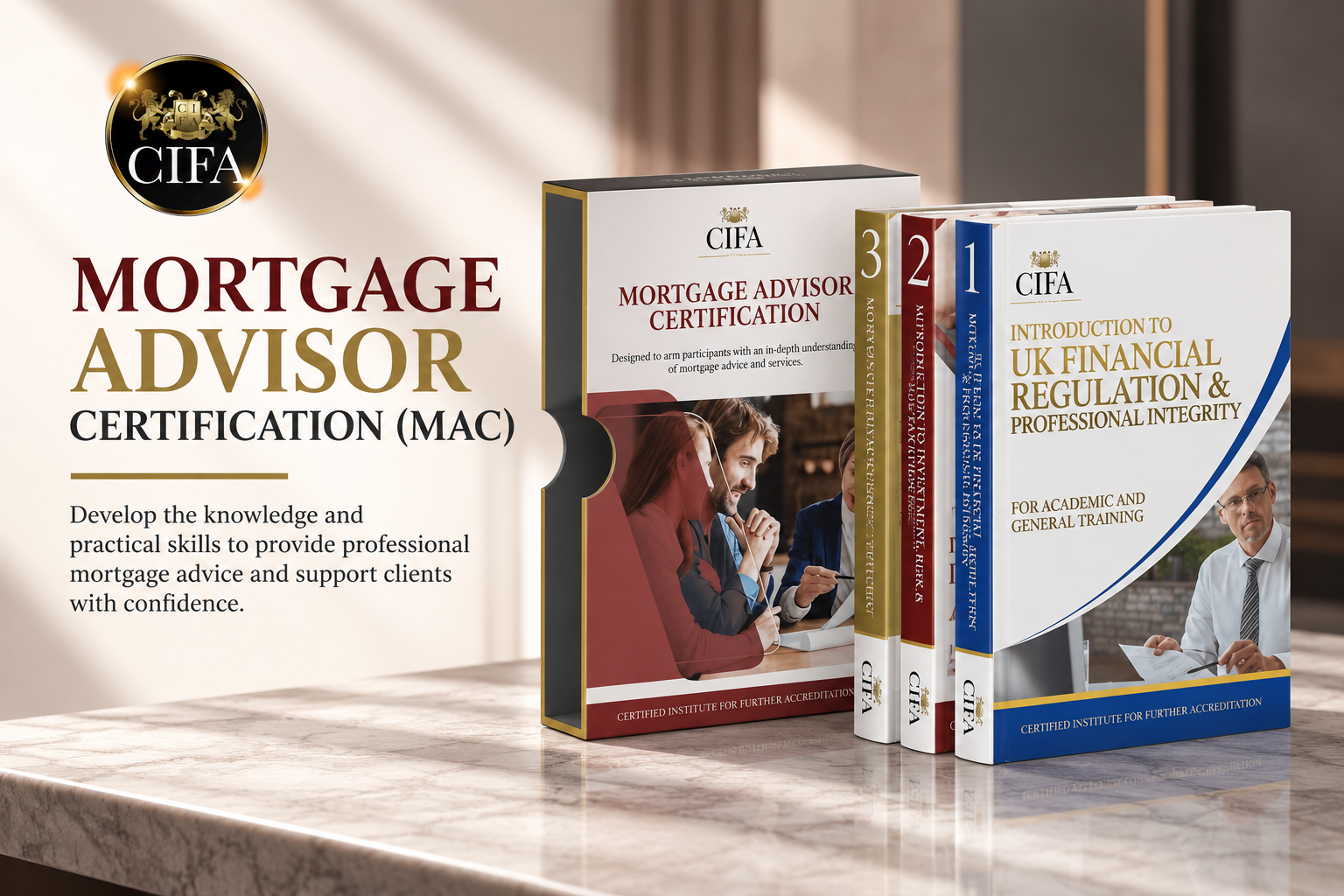
For anyone considering a career in this area, professional education can provide an important foundation. The Mortgage Advisor Certification (MAC) from CIFA brings together mortgage advice, financial regulation, professional integrity, investment risk and taxation in one structured programme.
Mortgage Advice Is About More Than Finding a Loan
It is easy to assume that a mortgage adviser simply compares mortgage rates and helps a customer choose a lender.
The reality is broader.
Mortgage advice involves understanding a client’s circumstances, financial position and objectives before considering suitable mortgage solutions. Income, expenditure, credit history, affordability and the client’s wider financial situation can all be relevant.
The adviser also needs to understand the mortgage products available and how their features may affect the customer over time.
This is why professional knowledge matters. A mortgage is a long-term financial commitment, and a recommendation needs to be approached carefully rather than treated as a simple product comparison.
What Does a Mortgage Adviser Actually Do?
The day-to-day work of a mortgage adviser can vary, but the role generally involves guiding clients through different stages of the mortgage process.
An adviser may begin by discussing the client’s circumstances and understanding what they are trying to achieve. They may then assess relevant financial information, explain available mortgage options and help the client understand the implications of different choices.
The application process can also involve significant documentation and communication between clients, lenders and other parties.
Throughout the process, accuracy matters.
A small misunderstanding or missing piece of information can create delays or complications. Professional mortgage advisers therefore need to be organised, detail-oriented and comfortable working with financial information.
Why Regulation Matters in Mortgage Advice
Mortgage advice operates within a regulated financial environment, particularly in the UK.
For advisers, understanding regulation is not simply an academic exercise. Regulatory knowledge helps professionals understand their responsibilities, the importance of fair treatment and the standards expected when dealing with clients.
The CIFA MAC programme includes learning around UK financial regulation, FCA-related requirements and professional integrity, alongside mortgage-specific subjects.
This combination is important because technical mortgage knowledge alone does not define responsible advice.
An adviser also needs to understand the professional framework within which that advice is provided.
Learning the Mortgage Market From the Ground Up
Before someone can confidently discuss mortgage solutions with a client, they need to understand how the mortgage market works.
This includes becoming familiar with different mortgage structures and the factors that can influence the cost and suitability of borrowing.
Fixed-rate, variable-rate, interest-only and repayment mortgages can operate differently, and clients may have different reasons for considering each type.
A mortgage adviser does not simply need to know the names of these products. They need to understand their characteristics well enough to explain them clearly.
CIFA’s mortgage advice learning covers areas including mortgage products, lending criteria, the mortgage application process, affordability and the regulatory environment surrounding mortgage advice.
Affordability Is at the Heart of Responsible Advice
One of the most important areas of mortgage advice is affordability.
A client may qualify for a particular level of borrowing, but that does not mean every available option will necessarily be appropriate for their wider circumstances.
Understanding affordability involves looking at financial information carefully and considering the client’s ability to meet mortgage commitments.
This requires more than basic calculations.
An adviser needs to understand income, regular expenditure, existing commitments and other relevant financial information. They must also appreciate that a client’s circumstances can change over time.
This is why analytical thinking and attention to detail are valuable skills for anyone entering mortgage advice.
The Human Side of Mortgage Advising
Mortgage advice may involve numbers, but the profession is ultimately about people.
Buying a home can be exciting, stressful or financially challenging. Clients may have questions about terminology they have never encountered before, or they may feel uncertain about making a long-term financial commitment.
A good adviser needs to communicate clearly without overwhelming the client.
That means listening before explaining, asking relevant questions and adapting the conversation to the individual’s level of understanding.
Technical knowledge becomes much more useful when a professional can translate it into language a client can actually understand.
Professional Integrity Builds Long-Term Trust
Trust is particularly important in mortgage advice because clients are sharing sensitive financial information and relying on professional guidance.
Integrity should therefore be part of the role from the beginning.
An adviser needs to approach client information responsibly, communicate clearly and understand the importance of professional conduct. Ethical decision-making is not something that should be added later to technical knowledge. It should form part of the professional foundation itself.
CIFA’s MAC programme combines mortgage learning with professional integrity and regulatory knowledge, reflecting the connection between technical competence and responsible advisory practice.
What Can the Mortgage Advisor Certification Add to Your Career?
The Mortgage Advisor Certification can provide a structured learning route for people who want to develop knowledge relevant to mortgage advisory and financial services.
It may be relevant to aspiring mortgage advisers, finance graduates, banking and lending professionals, financial services employees and career changers looking to enter the sector.
The value of structured learning is that it gives learners a framework.
Rather than studying individual mortgage concepts in isolation, learners can develop an understanding of how regulation, mortgage products, risk and client needs connect with one another.
That broader perspective can be useful when moving towards practical professional responsibilities.
Building Skills Beyond the Qualification
A certification is a foundation, not the entire career journey.
Mortgage professionals also need to develop practical communication skills, organisational habits and confidence when dealing with clients.
It is worth developing the ability to explain financial concepts without unnecessary jargon. It is also useful to become comfortable reviewing detailed information and asking questions when something does not appear clear.
These professional habits can make a significant difference over time.
The strongest career development usually comes from combining structured education with practical experience and continuous learning.
Where CIFA Fits Into Your Professional Development
For aspiring mortgage advisers, choosing the right learning environment is part of building a professional foundation.
CIFA offers a range of finance and professional development programmes, including the Mortgage Advisor Certification. The MAC is presented as a three-course digital bundle covering mortgage advice alongside UK financial regulation and professional integrity and investment risk and taxation.
Professionals interested in exploring the wider range of available learning opportunities can visit CIFA and consider which areas of financial education align with their career direction.
The aim should not simply be to collect another certificate. The more valuable objective is to develop knowledge that can be understood, applied and communicated professionally.
Who Might Consider a Career in Mortgage Advice?
Mortgage advice can appeal to people who enjoy a combination of finance and client interaction.
It may suit someone who likes analysing financial information but also wants a people-focused career. It can also be relevant for professionals already working in banking, lending, financial services or related areas who want to develop specialist mortgage knowledge.
Career changers may also find the field worth exploring, particularly if they already have transferable skills in customer service, administration, sales, finance or professional communication.
Before committing to the career, however, it is sensible to understand the responsibilities involved and the learning requirements associated with working in a regulated financial environment.
Turning Mortgage Knowledge Into Professional Value
The mortgage industry requires professionals who can combine knowledge with judgement.
Knowing how a mortgage product works is useful. Understanding how it relates to a client’s circumstances is more valuable.
Similarly, knowing regulatory terminology is important, but understanding why regulatory standards exist is what helps turn that knowledge into responsible professional practice.
This is why mortgage adviser training should cover more than products alone.
A well-rounded foundation should help learners understand the market, the client, the risks and the responsibilities that come with providing financial guidance.
Final Thoughts
Becoming a trusted mortgage adviser is not simply about learning how mortgages work. It is about developing the knowledge and professional judgement needed to guide clients through important financial decisions.
The Mortgage Advisor Certification (MAC) provides a structured foundation covering mortgage advice alongside areas such as UK financial regulation, professional integrity, investment risk and taxation.
For someone considering a career in mortgage advice, this type of education can help establish the fundamentals. The next step is to build on that foundation through experience, communication skills and continued professional development.
Ultimately, trust is earned through consistency. Clients need advisers who understand the financial details, respect their responsibilities and can explain complicated decisions in a clear and professional way.
That combination of knowledge, integrity and communication is what can turn mortgage advice from a job into a long-term professional career.