Introduction
Ever stared at seven letters in a honeycomb and felt your brain go completely blank? You’re not alone. Most players get stuck at the same point, and the pangram is usually the reason. If you want spelling bee nyt answers without the scrolling, the clutter or the sign-up forms, you’re in the right place.
Below you’ll find the complete word list for the puzzle currently posted on Today Spelling Bee Answers, the stats behind it, and a few habits that make the daily New York Times Spelling Bee feel a lot less painful.
How the Puzzle Actually Works
The rules are simple, but plenty of people forget a detail or two. You get seven letters arranged in a honeycomb, and one of them sits in the center. That center letter has to appear in every word you make. Words need at least four letters, and you can reuse a letter as often as you like inside a single word.
That’s why something like “hooey” or “yoohoo” is perfectly legal. The puzzle resets every day at 3:00 AM Eastern, so a brand-new set of letters shows up each morning. Scoring is where people trip up. A four-letter word earns one point. Anything with five or more letters earns points equal to its length, so a six-letter word is worth six.
The pangram, which is a word that uses all seven letters at least once, adds a seven-point bonus on top. If you’ve never met the term before, pangram just means a sentence or word that uses every letter of a given set. Your rank climbs as your points add up, from Beginner all the way to Genius and, if you find everything, Queen Bee.
Today’s Puzzle at a Glance
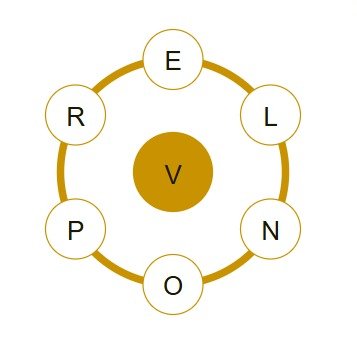
Here’s what the board on the site looks like right now. The page is showing the puzzle for Thursday, October 1, 2026, and the letters are D, E, M, N, O, Y and H. Every word on the list contains an H, so that’s clearly the letter you can’t skip. It’s worth checking the date on the page each morning, since the board updates daily.
The numbers tell you a lot before you’ve found a single word. There are 23 answers in total and one pangram. The maximum score is 116 points, and you reach Genius at 82. That’s roughly 70 percent of the total, so you don’t need to find every obscure word to hit that rank. You just need most of the longer ones, which is where the real points hide. Those 23 words are spread across four length groups, and it’s helpful to know how they break down before you start hunting.
The Complete Word List
Now for what you came for. Everything below is grouped by length, because that’s usually how people hunt for words anyway. Short words are easy to spot, but they’re cheap. The longer ones are where your score actually jumps. Scan the groups, grab the ones you missed, and notice how many of them lean on that sticky H plus a pile of O’s and E’s. If you only want a nudge instead of the full reveal, the hints page is a gentler option.
4-letter words (7 words, 1 point each): heed, heme, hoed, home, hone, hood, hymn.
5-letter words (6 words, 5 points each): homed, homey, honed, honey, hooey, hymen.
6-letter words (5 words, 6 points each): heeded, hemmed, hooded, hoodoo, yoohoo.
7-letter words (2 words, 7 points each): homonym, honeyed.
8-letter and longer words (3 words): honeymooned (18 points, the pangram), homonymy (8 points), honeymoon (9 points).
Do the math and you’ll see the pattern. The seven short words together are worth only seven points. The pangram alone is worth eighteen. That’s the whole story of this game in one comparison.
Why the Pangram Matters So Much
Today’s pangram is “honeymooned,” and it’s a great example of why this word is such a big deal. It uses all seven letters, and it’s worth 18 points once you add the bonus. That’s more than double the value of most other words on the list.
Several of the other long answers, like honeymoon and homonymy, are close cousins of it, so spotting one tends to unlock the rest. If you ever feel stuck, try stacking common endings like -ed and -ing onto a short word and see what fits. The site also keeps a dedicated pangram page if you only want that one answer.
A quick tip from experience. Letters like Y and M look awkward, but they’re often a clue. When a board has a Y, check for words ending in -y or built around “homonym”-style roots. If you want to confirm what a word means before you trust it, the Merriam-Webster entry for homonym is a quick way to double-check spelling and meaning.
Missed Yesterday? Here’s What to Do
It happens to everyone. You get busy, you skip a day, and suddenly you’re curious whether you’d have cracked the pangram. The site keeps the previous day’s full word list and pangram available, so you can go back and compare against what you found. Seeing the words you missed is genuinely useful, because you start to notice which kinds of words the editors like to accept and which they reject.
Head over to the yesterday page whenever you need it. If you’d rather work through a puzzle yourself with some help, the solver lets you build on your own guesses instead of just reading a list. Either way, treat the answers as a study tool, not a shortcut. Players who review missed words usually improve faster than those who only look up the pangram and move on.
Frequently Asked Questions
What is a pangram in the Spelling Bee?
It’s a word that contains all seven letters of the day’s puzzle at least once. Finding it earns the normal word points plus seven bonus points. Most puzzles have one pangram, though now and then you’ll see two.
How is the NYT Spelling Bee scored?
Four-letter words are worth one point. Words with five or more letters earn points equal to their length. Pangrams add seven extra points, and your rank rises as your total grows.
What is Queen Bee?
Queen Bee is the top status in the game. It means you’ve found every valid word in that day’s puzzle. Most players aim for Genius first, since Queen Bee is the full completion achievement.
When does the puzzle reset?
Every day at 3:00 AM Eastern Time. A fresh set of seven letters goes live, and the previous puzzle moves into the archive.
Is the NYT Spelling Bee free to play?
Playing on the official site needs a New York Times Games subscription. The answers, hints and pangram on this site, though, are completely free to view.
What is a Bingo in Spelling Bee?
A Bingo means you’ve found at least one word starting with each of the seven letters. It isn’t an official NYT rank. It’s a personal challenge that dedicated players set for themselves. For anything else about ranks, subscriptions or improving your game, the full FAQs page covers more ground.
Final Thoughts
The Spelling Bee rewards patience more than vocabulary. You don’t need a huge word bank. You need to know where the points are, and today they sit in the long words and the pangram. With 23 answers and a Genius line at 82 points, most players can get there by focusing on the five-letter-plus words first and filling in the short ones afterward.
Come back each morning after the 3:00 AM Eastern reset, check the board, and use the list as a learning tool rather than a crutch. Do that for a couple of weeks and you’ll start spotting pangrams before you even need a hint.