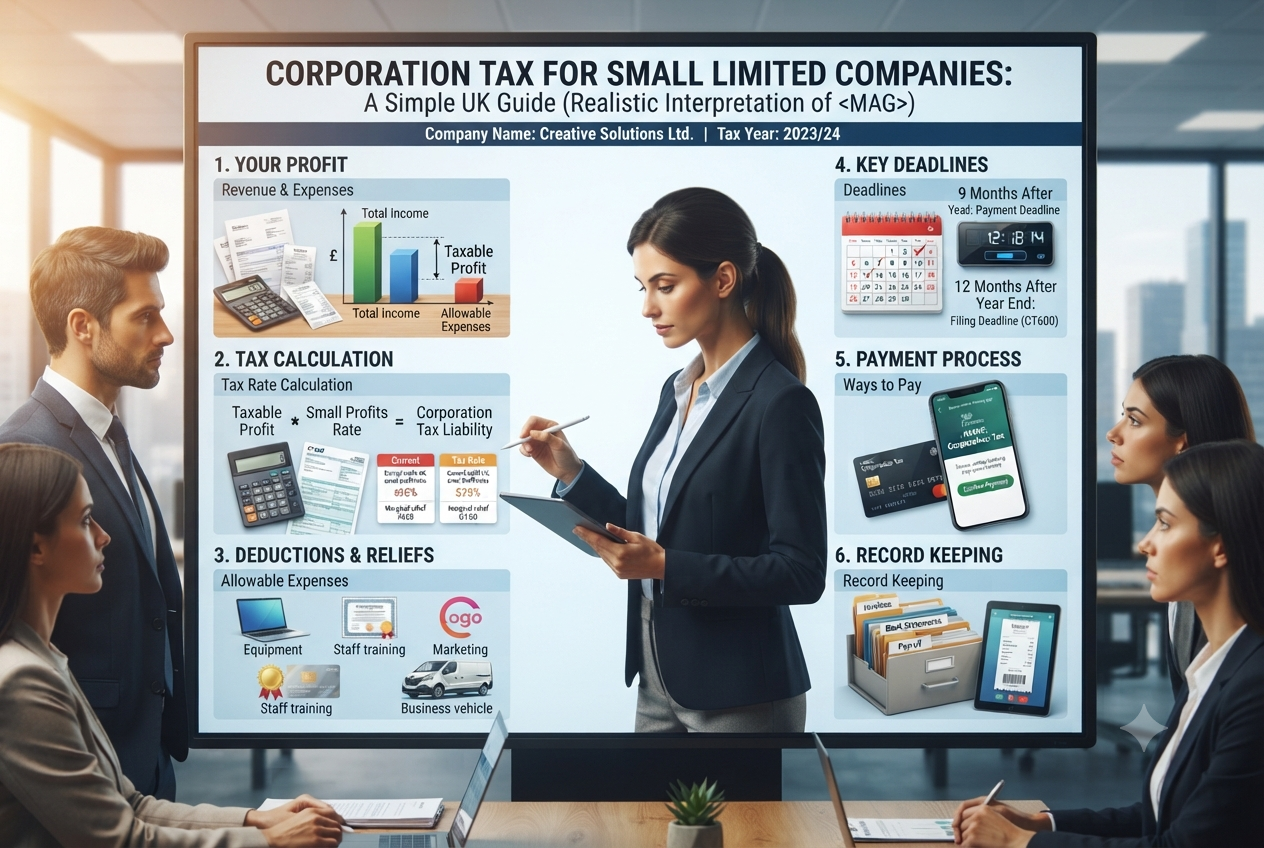
Understanding Corporation Tax for small companies is essential if you run a UK limited company. Unlike a sole trader, a limited company is a separate legal entity and is responsible for paying Corporation Tax on its taxable profits. Knowing how the tax works, what needs to be reported and when payments are due can help you manage your company’s finances more effectively.
Corporation Tax is not simply based on the money your company receives. The calculation starts with the company’s taxable profits after taking relevant business costs and adjustments into account.
What Is Corporation Tax?
Corporation Tax is a tax charged on the taxable profits of companies operating in the UK.
If your limited company makes a profit, it may need to pay Corporation Tax to HMRC. The amount depends on the company’s taxable profits and the Corporation Tax rules that apply for the relevant accounting period.
It is important to remember that company profit and personal income are not the same thing. Money earned by the company belongs to the company until it is paid or transferred to you through an appropriate method, such as salary or dividends.
How Are Taxable Profits Calculated?
A company’s accounting profit is the starting point for working out its Corporation Tax position, but the figure may need to be adjusted for tax purposes.
Business costs that are incurred wholly and exclusively for the purposes of the company may be deductible, subject to the relevant rules.
Examples can include certain employee costs, professional fees, office expenses, software, business insurance and other legitimate operating costs.
However, not every expense shown in the company’s accounts will necessarily receive Corporation Tax relief. Some costs may require adjustments when preparing the company’s tax computation.
What Corporation Tax Rate Applies?
The Corporation Tax rate depends on the company’s taxable profits and the applicable rules for the relevant accounting period.
Companies with taxable profits within the lower profit range may qualify for the Small Profits Rate, while companies with higher profits may be subject to the main rate. Marginal relief can apply in certain circumstances where profits fall between the relevant thresholds.
Because tax rates and thresholds can change, companies should use the rules applicable to the specific accounting period rather than relying on figures from an older tax year.
When Does a Company Pay Corporation Tax?
Corporation Tax has its own payment deadline, which is separate from the deadline for filing the company’s Company Tax Return.
For many small companies, Corporation Tax is generally due nine months and one day after the end of the accounting period.
For example, if your accounting period ends on 31 March, the Corporation Tax payment deadline will generally fall nine months and one day later.
It is important to check your company’s exact accounting period because the payment date depends on when that period ends.
When Does the Company Tax Return Need to Be Filed?
The Company Tax Return is normally filed after the company’s accounting period has ended.
For most companies, the deadline for filing the return is 12 months after the end of the accounting period.
This means the Corporation Tax payment deadline and the filing deadline are not usually the same date.
Keeping both dates in your company calendar can help you avoid confusion and reduce the risk of late filing or payment.
What Records Should a Small Company Keep?
Good accounting records are essential for calculating Corporation Tax correctly.
Your company should keep records of its income, expenses, invoices, bank transactions, payroll and other relevant financial activity.
You should also retain supporting documents such as receipts and invoices for business expenses.
Maintaining accurate records throughout the year makes it easier to prepare company accounts and calculate the company’s taxable profits when the accounting period ends.
What Happens If Corporation Tax Is Not Paid on Time?
Late Corporation Tax payments can result in interest and other consequences.
A company should therefore plan for its Corporation Tax liability rather than waiting until the payment deadline to find the required funds.
Regular bookkeeping can help directors understand how much profit the company is generating and make it easier to plan for future tax payments.
If your company’s profits are changing significantly during the year, reviewing the figures regularly can be particularly useful.
Can an Accountant Help With Corporation Tax?
Preparing company accounts and working out Corporation Tax can become complicated, especially when a business has different types of expenses, assets, employees or multiple sources of income.
An accountant can help organise your financial records, prepare company accounts and deal with Corporation Tax reporting.
Tax Return Assist provides accounting support for UK limited companies, helping business owners manage their accounts and tax responsibilities.
If you operate a limited company and want professional support with your accounting and tax obligations, you can speak to a Limited Company Accountant.
Final Thoughts
Corporation Tax is an important responsibility for every profitable limited company. Understanding how taxable profits are calculated, keeping accurate records and knowing your payment and filing deadlines can make managing your company’s tax obligations much easier.
Rather than leaving everything until the end of the accounting period, maintain your records throughout the year and review your company’s financial position regularly. If you are unsure how Corporation Tax applies to your company, professional accounting advice can help you understand the requirements relevant to your circumstances.