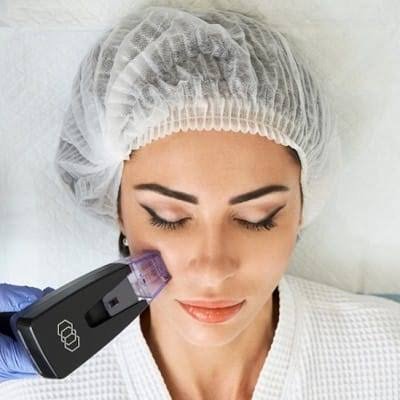
If you are wondering, What is the 8 Point Facelift technique?, it is a non-surgical facial rejuvenation approach that uses strategically placed dermal filler injections to restore volume, improve facial contours, and create a more balanced and refreshed appearance. Unlike a traditional facelift, the technique does not involve surgical incisions or removal of excess skin. Instead, carefully selected areas of the face are treated according to individual anatomy, volume loss, and aesthetic goals. To explore this treatment further, you can learn more about عملية شد الوجه بثماني نقاط باستخدام جوفيديرم في دبي.
What Is The 8 Point Facelift Technique?
The 8 Point Facelift is a structured dermal filler technique designed to address several areas of the face that may contribute to a tired, aged, or less-defined appearance.
The approach focuses on strategic points rather than simply filling individual wrinkles. By restoring volume in selected areas, the treatment may improve facial support and enhance the appearance of the cheeks, midface, lower face, and jawline.
The exact treatment points are not necessarily identical for every person. Facial anatomy, age-related volume loss, skin quality, facial proportions, and desired outcome all influence the treatment plan.
Why Is It Called An 8 Point Facelift?
The term “8 Point Facelift” refers to the concept of treating multiple strategic areas of the face with dermal filler.
The objective is to create an overall improvement in facial balance rather than concentrating on one isolated concern.
Strategic filler placement may help restore lost volume and improve the relationship between different facial areas. The practitioner may adjust the number, location, and amount of filler according to the patient’s individual needs.
Therefore, the technique should not be viewed as a fixed formula that uses exactly the same injection pattern for everyone.
How Does An 8 Point Facelift Work?
The technique works primarily by strategically restoring facial volume.
As people age, changes in facial fat distribution, bone structure, skin elasticity, and soft-tissue support can contribute to a loss of youthful facial contours. Dermal fillers can replace some of the volume that has been lost.
When filler is placed in carefully selected areas, it may provide structural support and improve the appearance of facial proportions.
The goal is generally not to make the face look fuller everywhere. Instead, the practitioner aims to use appropriate amounts of filler to create a more harmonious appearance.
Which Areas Can Be Treated?
The areas selected for an 8 Point Facelift can vary according to the individual’s facial structure and concerns.
Treatment may involve areas such as:
- Cheekbones
- Mid-cheeks
- Nasolabial area
- Lower cheeks
- Marionette region
- Jawline
- Chin
- Other areas affected by volume loss
Not every patient requires treatment in every area. A qualified practitioner should assess the face before deciding which points would provide the most appropriate improvement.
What Type Of Filler Is Used?
Different dermal fillers can be used depending on the treatment plan. Hyaluronic acid fillers are commonly selected because they can provide volume and are available in formulations designed for different facial areas.
Juvederm is one example of a hyaluronic acid filler that may be used for facial contouring and volume restoration.
The specific product should be selected according to the treatment area, desired result, facial anatomy, and practitioner assessment.
Using the appropriate filler for the appropriate location is important because different products have different characteristics.
What Happens During The Treatment?
The procedure generally begins with a consultation and facial assessment.
The practitioner evaluates facial proportions, areas of volume loss, skin condition, and the patient’s desired outcome. The treatment points are then planned according to the individual’s anatomy.
Before injection, the skin is cleaned and prepared. Some fillers contain a local anesthetic, and additional comfort measures may be available when appropriate.
The filler is then injected into selected areas using a suitable injection technique. The practitioner may assess facial balance during the procedure and make adjustments where necessary.
The appointment length varies according to the number of areas treated and the amount of filler required.
Is The 8 Point Facelift A Surgical Procedure?
No. The 8 Point Facelift is generally considered a non-surgical facial rejuvenation approach because it uses injectable dermal filler rather than surgical techniques.
There are no traditional surgical incisions, skin excision, or general anesthesia involved.
However, it is still an injectable cosmetic procedure and should be performed by an appropriately qualified professional. Temporary swelling, redness, bruising, tenderness, or sensitivity may occur after treatment.
More serious complications are possible with dermal fillers, although they are uncommon. A proper consultation is therefore important before treatment.
What Results Can You Expect?
The results depend on the type and amount of filler used, the areas treated, and the individual’s facial characteristics.
An 8 Point Facelift may help create:
- Improved facial contours
- Restored-looking volume
- More defined cheeks
- Improved facial proportions
- A smoother-looking transition between facial areas
- A refreshed appearance
- A more defined lower face in suitable cases
Results are generally intended to look balanced rather than dramatically change the person’s identity or facial structure.
How Long Do Results Last?
The results of an 8 Point Facelift are not permanent.
Hyaluronic acid fillers are gradually broken down by the body. How long the effects remain visible can vary depending on the filler used, treatment area, metabolism, lifestyle, and individual response.
Some patients may choose maintenance treatments when the effects become less noticeable. The appropriate timing should be determined through professional assessment rather than following a fixed schedule.
Who May Be A Good Candidate?
An 8 Point Facelift may be considered by adults who want to address facial volume loss, mild contour changes, or signs of aging without undergoing surgery.
A consultation is particularly important for people with significant skin laxity because dermal fillers cannot reproduce all the effects of a surgical facelift.
People who are pregnant or breastfeeding, have certain medical conditions, active skin infections, or specific allergies may require additional assessment or may need to postpone treatment.
Frequently Asked Questions:
What is the 8 Point Facelift technique?
It is a non-surgical filler technique that uses strategic injections in selected facial areas to restore volume and improve facial balance and contours.
Is an 8 Point Facelift the same as a surgical facelift?
No. It uses dermal fillers rather than surgery, skin removal, or surgical lifting.
Does the technique use eight injections?
Not necessarily. The name refers to a strategic treatment concept rather than a universal injection count. Treatment planning varies between patients.
How long does an 8 Point Facelift last?
Results are temporary and vary according to the filler, treatment area, metabolism, and individual response.
Can an 8 Point Facelift replace surgery?
It may provide a non-surgical alternative for selected concerns, but it cannot reproduce all the effects of surgical facelift procedures, particularly when significant excess skin is present.
Conclusion:
So, What is the 8 Point Facelift technique? It is a non-surgical facial rejuvenation approach that uses strategically placed dermal fillers to restore volume, improve facial proportions, and enhance the appearance of facial contours. The technique focuses on individualized treatment planning rather than simply filling wrinkles. The areas treated, filler type, amount, and injection technique can vary according to facial anatomy and aesthetic goals. Because results and suitability differ between individuals, a professional consultation is important for determining an appropriate treatment plan and setting realistic expectations.