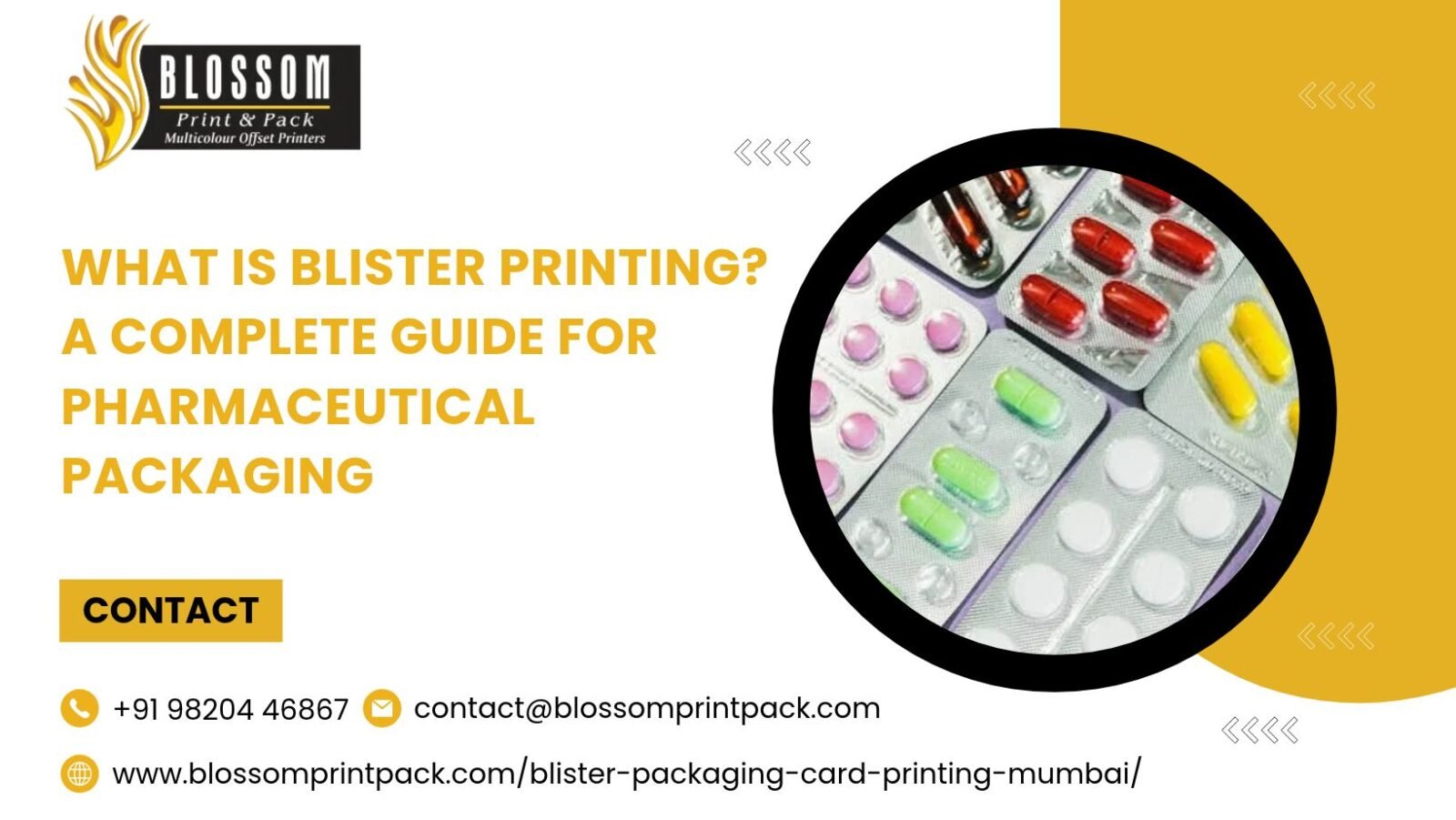
Pharmaceutical products need packaging that does more than look professional. It must help protect the product, provide useful information, and make handling convenient for patients and healthcare professionals. This is why blister packs are widely used for tablets, capsules, and other small pharmaceutical products.
Behind every well-presented blister pack is a combination of packaging materials, accurate design, and reliable printing. Blister Printing plays an important role in creating the printed card or backing that communicates essential product information while supporting the overall presentation of the medicine.
What Is Blister Printing?
Blister printing refers to the printing process used for blister packaging cards, foils, or other printed components associated with a blister pack. Depending on the packaging format, the printed surface may contain information such as the product name, dosage details, manufacturer information, batch-related details, instructions, warnings, and branding elements.
The printing needs to be clear and consistent because pharmaceutical packaging carries information that users may need to read quickly. Good printing also helps create a professional appearance and maintains consistency across different products within a pharmaceutical brand.
Blister packaging is generally designed around the product it contains. Tablets or capsules are held in individual cavities, while the printed backing or lidding material provides information and contributes to the package structure.
Why Is Blister Printing Important?
Pharmaceutical packaging has several responsibilities. It should help protect the product from handling and environmental exposure while making important information easy to identify.
Clear printing can support these requirements in several ways.
Product identification: Brand names, product details, and other information can be presented clearly on the packaging.
Better presentation: A professionally printed blister card gives the product a clean and organized appearance.
Brand consistency: Pharmaceutical companies can maintain consistent colours, typography, logos, and design elements across their product range.
Information visibility: Important packaging information can be arranged in a way that makes it easier for users to locate and read.
Professional appearance: Consistent print quality can contribute to the credibility and presentation of a pharmaceutical product.
For these reasons, printing should be considered an important part of the packaging design rather than something added at the end of the process.
Understanding Blister Card Printing
Blister card printing is commonly used when a blister pack includes a printed paperboard card or backing component. The card can be designed with product branding and relevant information while complementing the physical blister structure.
The design needs to account for the shape and dimensions of the final pack. Text, logos, images, and other elements should be positioned carefully so they remain visible after folding, cutting, or assembly.
This is where custom blister card printing can be useful for pharmaceutical companies with specific packaging requirements. Instead of relying on a generic design, businesses can develop cards according to their product dimensions, branding, information requirements, and intended presentation.
What Information Can Be Printed?
The exact information used on pharmaceutical packaging depends on the product and applicable requirements. A blister card may include:
- Product or brand name
- Strength or dosage information
- Manufacturer details
- Usage or storage information
- Batch and date-related information where applicable
- Warnings or handling instructions
- Branding elements such as logos and colours
- Regulatory or product-specific information
Because pharmaceutical packaging can contain important information, the artwork should be checked carefully before production. Even a small typographical or layout error can affect the appearance and usability of the finished packaging.
Printing Considerations for Pharmaceutical Packaging
Several factors should be considered before starting a blister packaging project. The first is artwork accuracy. Text should be readable, images should be properly prepared, and all required information should be reviewed before printing.
Material selection is another consideration. The printed component should be suitable for the intended packaging structure and provide an appropriate surface for printing.
Colour consistency also matters. Pharmaceutical companies often use established brand colours across cartons, blister cards, labels, and other packaging materials. Maintaining consistency can help create a recognizable product range.
Print durability should also be considered based on how the packaging will be handled, stored, transported, and displayed. The selected printing process and finishing should support the requirements of the final package.
How the Printing Process Generally Works
The process usually begins with artwork preparation. The packaging design is checked for dimensions, text placement, colours, images, and other required elements.
Once the artwork is approved, the appropriate printing method and material are selected. The design is then printed onto the chosen packaging component. Depending on the project, additional processes such as cutting, folding, coating, or other finishing may follow.
Quality checks are important throughout production. The printed material should be reviewed for issues such as colour variation, registration problems, missing information, poor clarity, or finishing defects.
A systematic production process helps ensure that the final packaging matches the approved artwork and meets the project’s specifications.
Choosing a Printing Partner for Blister Packaging
Pharmaceutical packaging requires attention to detail, so businesses should evaluate a printing provider based on more than price alone. Experience with packaging projects, quality control procedures, printing capabilities, material knowledge, and the ability to handle customized requirements are all useful factors to consider.
A reliable printing and packaging company in Mumbai can help businesses coordinate artwork, material selection, printing, and finishing according to the project’s requirements. Clear communication is especially important when packaging contains detailed product information or has specific dimensional requirements.
Final Thoughts
Blister packaging combines product protection, information, convenience, and presentation in a compact format. The printed component contributes significantly to how the finished pack communicates with the user and represents the pharmaceutical brand.
From artwork preparation and material selection to printing and quality checking, every stage deserves careful attention. When the packaging is designed and produced thoughtfully, it can provide a professional and consistent presentation while supporting the practical needs of pharmaceutical products.
For businesses developing or updating pharmaceutical packaging, understanding the role of printing is a useful first step toward creating packaging that is clear, functional, and aligned with the product’s requirements.