A fastener rarely gets a second chance. Once installed, it is expected to hold its geometry, take the required load, and keep performing in its working environment. That is why, like the other reliable stainless steel producers in India, Viraj Profiles sees this as a critical consideration.
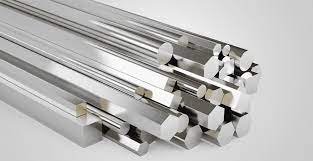
The quality of the hex bar entering fastener production is far more consequential than it may first appear. The finished bolt or nut can only be as consistent as the material from which it begins.
This blog traces that journey from raw hex bar to finished fasteners, looking at the material qualities and manufacturing checks that can ultimately shape performance in service.
Where Fastener Performance Really Begins
The production of a reliable fastener does not start with threading. It starts with the material entering the machine. A hex bar’s grade, dimensions, surface condition, and internal quality can influence everything from machining behavior to the consistency of the finished component. For manufacturers producing fasteners at scale, even small variations can become significant.
Differences in bar dimensions may affect machining accuracy, while surface imperfections or internal discontinuities can create issues further down the production line. Material consistency therefore becomes part of production efficiency as much as product quality.
Chemistry Sets the Foundation
The stainless steel grade selected for a fastener determines much of its underlying behavior. Elements such as chromium, nickel, carbon, and molybdenum influence characteristics including corrosion resistance, strength, and machinability.
ASTM A276/A276M, which covers stainless steel bars and shapes, including hexagonal bars, specifies requirements for chemical composition as well as mechanical properties such as tensile strength, yield strength, elongation, and hardness.
This highlights why material chemistry is not merely a specification on paper. It establishes the foundation on which subsequent manufacturing depends.
When Dimensions Become Performance Factors
Precision matters once the hex bar enters machining. Consistent across flats, dimension, straightness, and surface quality help maintain repeatability as the material is cut, shaped, and converted into fasteners.
This becomes particularly relevant in applications where components experience tightening forces, vibration, moisture, or changing temperatures. The fasteners must maintain the dimensional and mechanical characteristics expected of them throughout their service life.
That is also why quality control cannot be treated as a final checkpoint. Testing and inspection throughout production can identify variations before they move further into the manufacturing process. Viraj Profiles highlights practices including 100% inspection, in-line ultrasonic testing, and automated surface defect detection as part of its quality approach.
Looking Beyond the Finished Component
A finished fastener may look simply, but its reliability is the result of several decisions made much earlier. Grade selection, chemical consistency, dimensional accuracy, internal soundness, surface quality, and controlled processing all contribute to the outcome. For procurement teams, choosing a raw material producer is an important part of faster sourcing. Instead of evaluating only the finished component, understanding how consistently its input material is produced can offer a clear view of what lies behind that component.
Viraj Profiles combines stainless steel manufacturing capabilities with quality control designed around consistency across the long product range for manufacturers seeking dependable material inputs. Explore the stainless steel hex bars range and connect with Viraj Profiles for product requirements and sourcing support.