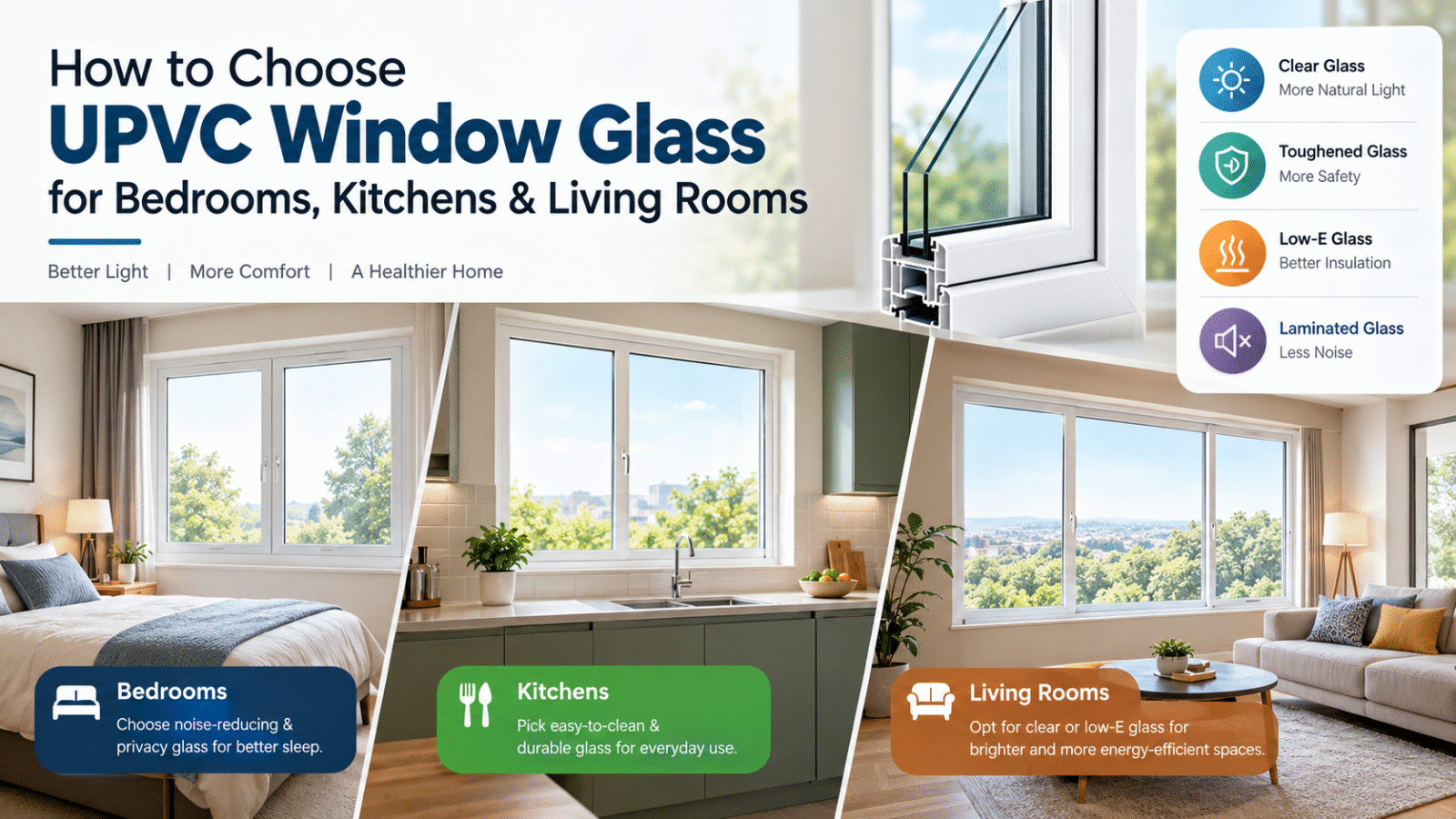
Your window frame gets all the attention, but the glass inside it is the main element. It decides how warm your bedroom feels, how safe your kitchen is, and how bright your living room looks. Yet most people treat glass as an afterthought, then live with glare, noise, and sky-high cooling bills.
The reality is there’s no single “best” glass. Only the right glass for the right room. This guide breaks down UPVC window glass selection by room that will help you choose the glass that actually fits the way you live.
Know About Glass: A 60-Second Crash Course
Before choosing the right window glass for rooms, get familiar with the types of glass:
- Toughened (tempered) glass – up to 4–5 times stronger than ordinary glass; if it breaks, it crumbles into blunt granules instead of dangerous shards.
- Laminated glass – a PVB interlayer bonds two panes together; it blocks around 99% of UV rays, boosts security, and dampens noise.
- Double-glazed units (DGU) – two panes separated by an air or argon gap that dramatically cut heat transfer and outside noise.
- Low-E glass – an invisible metallic coating reflects heat, keeping interiors cooler in summer and warmer in winter.
- Frosted or obscure glass – lets daylight flow in while keeping prying eyes out.
Two numbers decide performance: the U-value (lower means better insulation) and SHGC, the solar heat gain coefficient (lower means less solar heat sneaking in). Keep both in mind, and half your decision is already made. The rest is to match the glass to how each room is used.
Bedrooms: Peace, Privacy & Perfect Sleep
A bedroom’s job is to help you switch off, so comfort and quiet come first.
- DGU or acoustic glass blocks street noise—double glazing can noticeably reduce outside sound for deeper, uninterrupted sleep.
- Low-E glass keeps the room cool and eases the load on your AC.
- Frosted glass is ideal for ground-floor or facing windows where privacy matters most.
Pair smart glass with a well-sealed UPVC doors and Windows frame, and your bedroom becomes a quiet, temperature-stable retreat.
Kitchens: Safety, Heat & Easy Cleaning
Kitchens are hot, humid, and accident-prone, so your glass has to be tough.
- Toughened glass is the gold standard here—heat-resistant and safe even if it ever shatters.
- Tinted or low-E glass tames glare and heat near stoves and sun-facing counters.
- Smooth, clear surfaces wipe free of grease and steam in seconds.
Combine the right glass with good ventilation, and your kitchen stays cooler, cleaner, and far safer for the family.
Living Rooms: Light, Views & Grand Looks
The living room is your showpiece, so glass must balance beauty with efficiency.
- Large clear or DGU panels flood the space with daylight and frame your best views.
- Low-E coating stops sunlight from fading your furniture and floors while cutting heat.
- Laminated glass adds a layer of security and softens noise in busy neighbourhoods.
Bigger glass means bigger impact. Just make sure it’s backed by energy-smart glazing so comfort never takes a back seat to looks. A single large DGU unit often looks sleeker than several small panes, too.
Technical & Architectural Points You Shouldn’t Skip
Great window glass selection is about more than type. Before you finalise, check:
- Glass thickness & spacer gap – thicker panes and wider gaps improve both insulation and sound control.
- Room orientation – west- and south-facing rooms need low-SHGC glass to fight harsh afternoon heat.
- Local climate – humid, rainy regions demand weather-tight seals and condensation-resistant units.
- Frame-and-glass fit – even premium glass underperforms in a poorly sealed frame.
As one glazing expert puts it, “A window is only as good as its weakest seal.” Get the pairing right, and the glass delivers for decades.
Choose a Manufacturer Who Gets the Glass Right
Glass performs only as well as the window built around it, and that’s where ArcEye Windoors, among the top UPVC doors and windows manufacturers in Mohali, stands apart.
Their systems are engineered for Indian conditions with features that earn your trust: zero maintenance, termite resistance, rainwater and noise insulation, storm resistance, and long-lasting durability.
With a wide range of climate-ready laminates from Walnuss Amaretto and Teak Arte to Sheffield Oak Grey, all are backed by a dependable warranty; ArcEye blends strength with style. From design and precision manufacturing to rigorous quality checks and professional installation, every window is customised to your space. So the right glass always sits in the right frame.
FAQs
- Which glass is best for bedrooms?
Ans: Double-glazed or acoustic glass works best for bedrooms, as it blocks noise and keeps the room cool. Add frosted glass if privacy is a concern. Low-E coating further improves comfort and helps reduce your energy bills. - Is toughened glass necessary for kitchen windows?
Ans: Yes, toughened glass is highly recommended for kitchens. It resists heat, handles daily wear, and shatters safely into blunt granules instead of sharp shards—making it the safest choice around stoves and busy counters. - What glass gives the best natural light in living rooms?
Ans: Large, clear or double-glazed panels offer the most daylight and the clearest views. Pair them with a low-E coating to enjoy brightness without excess heat or any fading of your furniture and flooring. - Does double glazing really reduce noise?
Ans: Yes. The sealed gap between two panes absorbs sound vibrations, noticeably cutting outside noise. It’s a popular choice for homes near busy roads, markets, or railway lines where peace and quiet truly matter. - How do I choose energy-efficient window glass?
Ans: Look for a low U-value and a low SHGC rating. Low-E and double-glazed glass insulate best, keeping interiors cool in summer and warm in winter—helping to lower your electricity bills all year round.