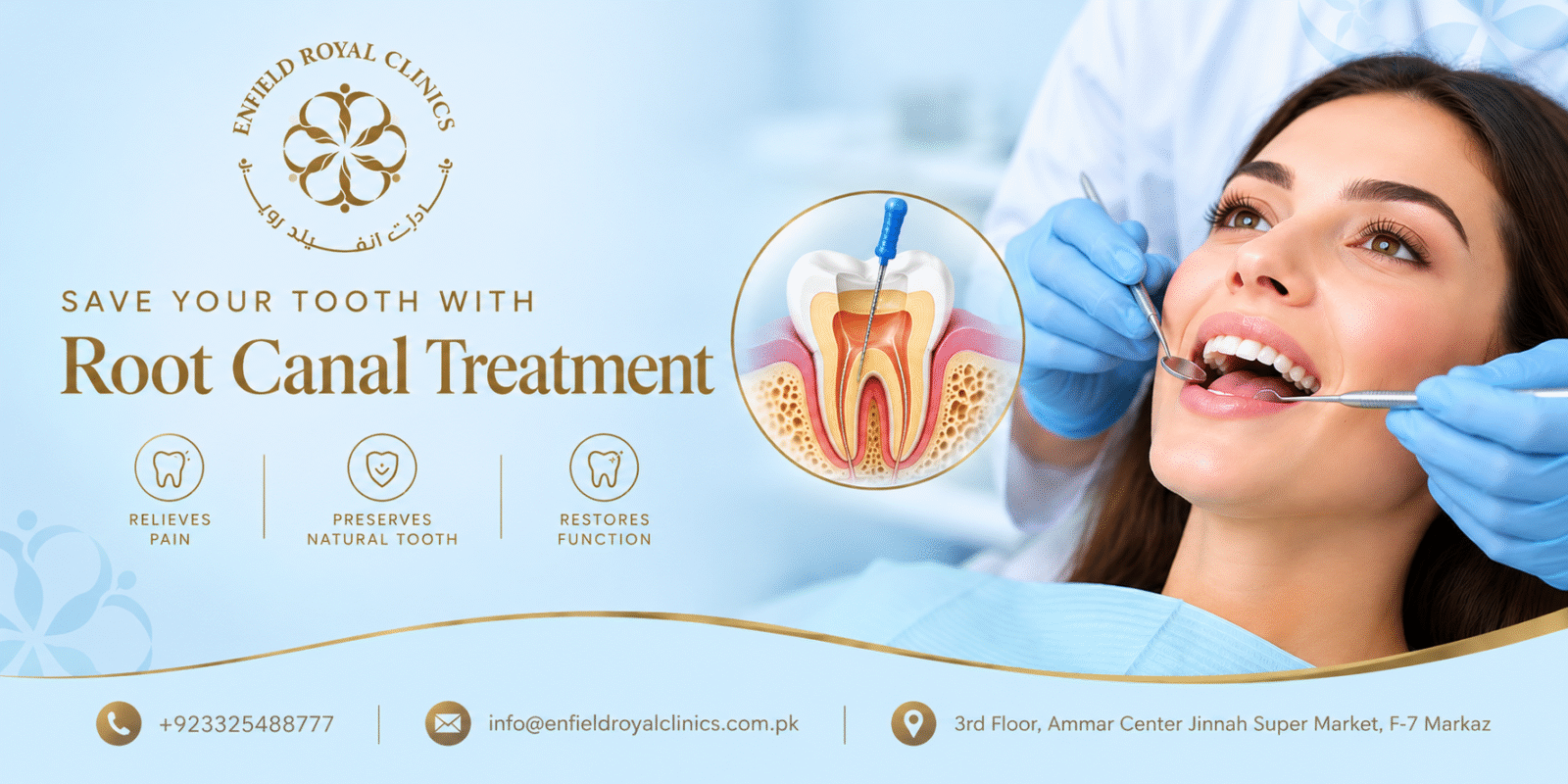
An infected tooth can cause persistent pain, sensitivity, swelling, and difficulty chewing. When bacteria reach the soft tissue inside a tooth, known as the dental pulp, they can cause inflammation or infection that may spread to the surrounding tissues. Without appropriate treatment, the problem can become more severe and may eventually lead to tooth loss.
Root canal treatment is a dental procedure designed to remove infected or damaged pulp while preserving the natural tooth. Instead of extracting the entire tooth, the dentist cleans and disinfects its internal canals before sealing and restoring it. When the tooth has enough healthy structure and adequate support, this procedure can help it remain functional for many years.
For patients researching Root Canal Treatment in Islamabad, understanding how the procedure works, when it is recommended, and what results to expect can help them make informed decisions about their dental health.
1. How Does Root Canal Treatment Help Save an Infected Tooth?
Root canal treatment helps save an infected tooth by removing the damaged pulp and addressing the source of infection inside the tooth. The pulp contains nerves, blood vessels, and connective tissue. Although it plays an important role during tooth development, a fully developed tooth can continue functioning after the pulp has been removed, provided the tooth is properly treated and restored.
The procedure generally involves several steps:
-
Examination and diagnosis: The dentist evaluates the symptoms, examines the tooth, and may take X-rays to assess the roots and surrounding bone.
-
Local anesthesia: The affected area is numbed to minimize discomfort during treatment.
-
Access to the pulp: A small opening is created in the tooth to reach the internal canals.
-
Cleaning and disinfection: Damaged pulp is removed, and the canals are carefully cleaned.
-
Filling and sealing: The cleaned canals are filled with a suitable material and sealed to reduce the risk of reinfection.
-
Final restoration: A filling or dental crown restores the tooth’s shape, strength, and function, depending on the remaining structure.
By removing infected tissue and sealing the canals, treatment helps control the infection while retaining the natural tooth. However, the final outcome depends on the extent of damage, the complexity of the root canals, and the quality of the restoration.
2. What Causes a Tooth to Become Infected?
Tooth infections usually develop when bacteria enter the pulp through damaged tooth structure. Several common dental problems can create a pathway for bacteria to reach the inner tissues.
Deep tooth decay is one of the leading causes. When a cavity remains untreated, it can gradually extend through the enamel and dentin until it reaches the pulp. At this stage, a simple filling may no longer be sufficient.
Cracks and fractures can also expose the inner part of a tooth to bacteria. Even a small crack may allow bacteria to enter, particularly when the damage extends toward the pulp.
Other possible causes include:
-
Repeated dental procedures on the same tooth.
-
Trauma caused by a fall, accident, or sports injury.
-
Damage to an existing filling or crown.
-
Severe wear that exposes deeper tooth layers.
In some cases, pulp damage develops without immediate pain. A tooth may gradually lose its vitality, and infection may become noticeable only after swelling or changes around the root appear.
Regular dental checkups can help identify cavities and structural damage before they progress. Treating dental problems early may reduce the likelihood of needing more extensive procedures.
3. What Are the Signs That an Infected Tooth Needs Treatment?
The symptoms of an infected tooth can vary according to the cause and stage of the problem. Some patients experience intense pain, while others notice only mild discomfort or changes in the appearance of the tooth.
Common warning signs include:
-
Persistent toothache: Pain may be constant, throbbing, or worse at night.
-
Lingering sensitivity: Hot or cold foods may trigger discomfort that continues after the temperature stimulus is removed.
-
Pain when chewing: Biting pressure may cause sharp pain or tenderness around the affected tooth.
-
Swollen gums: The gum near the tooth may become red, tender, or swollen.
-
Tooth discoloration: A tooth may become darker after internal damage or trauma.
-
A gum bump or unpleasant taste: These symptoms may indicate an abscess or drainage from an infection.
Not every symptom means that root canal treatment is necessary. Cavities, gum disease, cracked teeth, and other conditions can produce similar problems. A dental examination is needed to identify the cause and determine the most appropriate treatment.
For anyone considering Root Canal Treatment in Islamabad, seeking dental care early can help prevent an infection from progressing and may improve the chances of preserving the affected tooth.
Facial swelling, fever, or rapidly worsening pain requires urgent assessment. Difficulty breathing or swallowing requires immediate emergency care.
4. Can Root Canal Treatment Prevent Tooth Extraction?
Yes, root canal treatment can often prevent extraction when the infection is treatable and enough healthy tooth structure remains to support a restoration. Its main purpose is to preserve a natural tooth that might otherwise need to be removed because of pulp damage.
Keeping a natural tooth can offer several benefits. It maintains the tooth’s position, supports normal chewing, and avoids creating a gap that may require replacement. A successfully treated tooth can also continue to contribute to the patient’s natural bite.
However, root canal treatment cannot save every infected tooth. Extraction may be necessary when the tooth has a severe fracture extending below the gumline, extensive decay that leaves insufficient structure, or inadequate support because of advanced gum disease.
The dentist evaluates the tooth’s condition before recommending treatment. This assessment may include checking the remaining tooth structure, examining the roots, testing the surrounding tissues, and reviewing X-rays.
If the tooth can be restored successfully, root canal treatment may offer a way to preserve it. If restoration is unlikely to succeed, extraction and possible tooth-replacement options may be discussed.
The decision should be based on the tooth’s long-term prognosis rather than pain alone.
5. What Happens After Root Canal Treatment?
After root canal treatment, the affected tooth may feel tender for a few days, particularly if the tissues around its root were inflamed before the procedure. Mild discomfort when chewing can occur during the initial recovery period and usually improves gradually.
The dentist may recommend avoiding hard foods on the treated tooth until its permanent restoration is complete. Following the provided aftercare instructions can support healing and reduce the risk of damaging the tooth.
A permanent filling or crown may be required, depending on how much natural tooth structure remains. Teeth that have lost a substantial amount of structure, especially back teeth used for chewing, often need a crown to reduce the risk of fracture.
Long-term care remains important even after the infection has been treated. Patients should:
-
Brush twice daily with fluoride toothpaste.
-
Clean between the teeth using floss or another recommended interdental aid.
-
Attend routine dental examinations.
-
Avoid biting hard objects that could damage the restoration.
-
Seek advice if pain, swelling, or unusual sensitivity returns.
A root canal-treated tooth does not become immune to cavities or fractures. Decay can still develop around a filling or crown, so good oral hygiene and regular professional care remain essential.
6. How Successful Is Root Canal Treatment for Infected Teeth?
Root canal treatment has a strong track record for preserving teeth when the procedure is appropriate and the tooth receives a suitable final restoration. However, success is not guaranteed in every case.
Several factors influence the outcome, including the severity of the infection, the shape and number of root canals, the amount of healthy tooth structure, and the condition of the surrounding bone and gums.
Completing the treatment properly and placing a durable restoration are both important. Delaying the permanent restoration may leave the tooth more vulnerable to leakage, reinfection, or fracture.
In some cases, an infection may persist or return after treatment. This can happen because of complex canal anatomy, bacteria remaining in an untreated area, a new cavity, or damage to the restoration. Depending on the cause, further treatment, referral to an endodontic specialist, or extraction may be considered.
Patients should attend recommended follow-up appointments and report any recurring symptoms. A treated tooth may remain functional for many years when it heals appropriately and receives consistent dental care.
For people exploring Root Canal Treatment in Islamabad, a professional assessment can clarify whether the tooth is suitable for treatment, what restoration it may need, and how its long-term health can be maintained.
Frequently Asked Questions
1. Can root canal treatment completely remove an infection?
Root canal treatment removes infected or damaged pulp and disinfects the internal canals to control the source of infection. Healing of the surrounding tissues may take time, and follow-up examinations may be needed to confirm progress.
2. Is root canal treatment painful for an infected tooth?
Local anesthesia is used to minimize discomfort during the procedure. Some tenderness may occur afterward, especially when the tissues around the root were inflamed. Severe or worsening pain should be assessed by a dental professional.
3. How long can a tooth last after root canal treatment?
A successfully treated and properly restored tooth can remain functional for many years. Its lifespan depends on the remaining tooth structure, the quality of the restoration, oral hygiene, and regular dental care.
4. Is extraction necessary for every infected tooth?
No. Many infected teeth can be preserved with root canal treatment if they have enough healthy structure and adequate support. Extraction is generally considered when a tooth cannot be restored reliably or has a poor long-term prognosis.