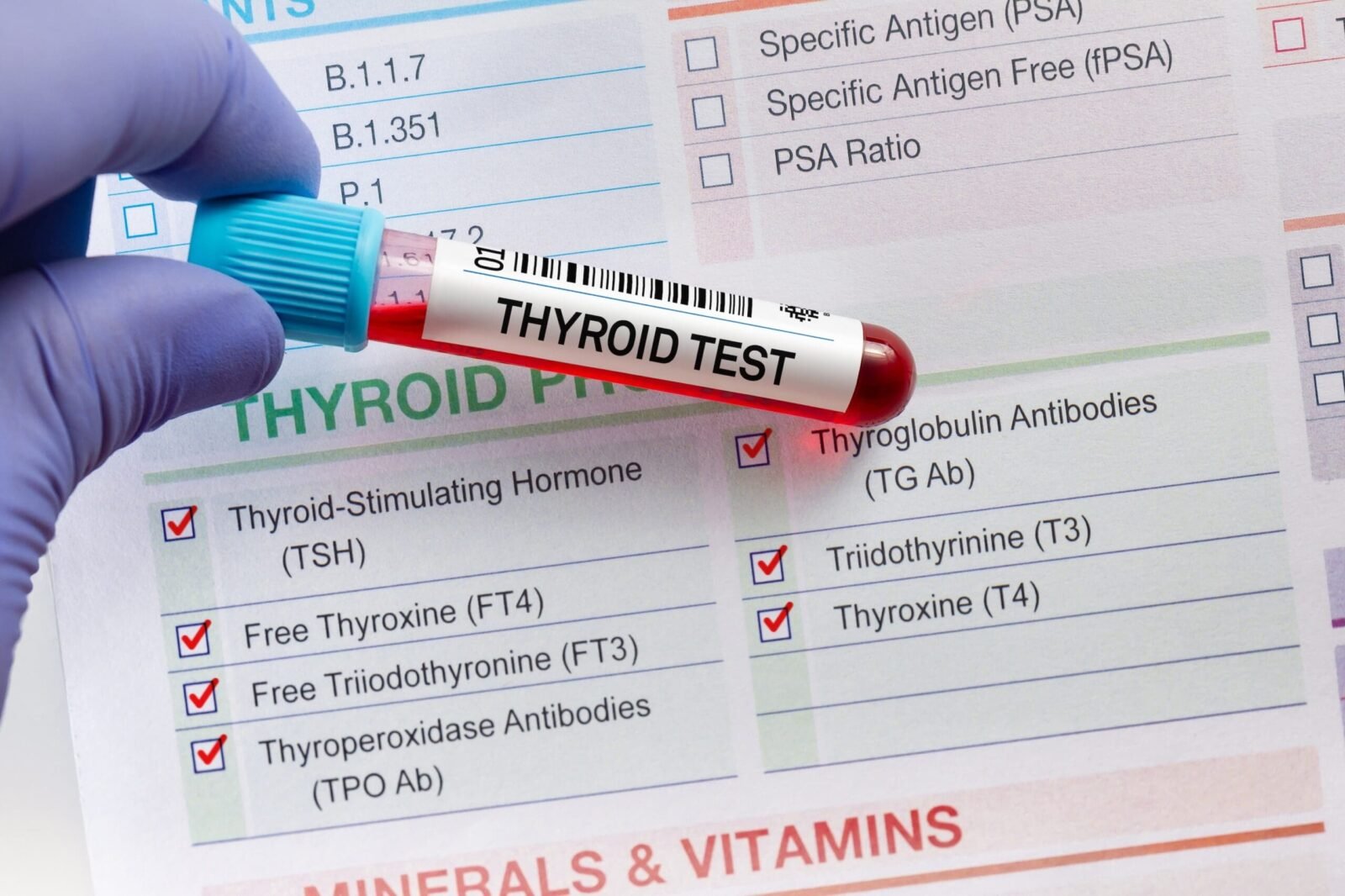
Receiving a negative thyroglobulin antibodies test result may feel reassuring, especially if your doctor ordered the test to investigate a possible thyroid problem. However, a negative result does not always mean that your thyroid is completely healthy or that an autoimmune thyroid condition has been ruled out.
The Anti-Thyroglobulin Antibodies Test in Dubai, also known as the TgAb test or anti-thyroglobulin antibody test, measures antibodies that target thyroglobulin, a protein produced by the thyroid gland. These antibodies can help doctors investigate autoimmune thyroid disorders, including Hashimoto’s thyroiditis, and interpret certain results during thyroid cancer follow-up.
A negative TgAb test generally means that thyroglobulin antibodies were not detected above the laboratory’s reporting threshold. What this means for your health depends on your symptoms, thyroid hormone levels, medical history, and other test results.
This article explains how to interpret a negative result, why thyroid disease may still be present, and what steps your healthcare provider may recommend next.
What Does a Negative TgAb Result Actually Tell You?
A negative thyroglobulin antibodies result indicates that the laboratory did not detect TgAb at a level classified as positive by its testing method.
Your immune system produces antibodies to recognize particular targets. In some people, it produces antibodies against thyroglobulin, a protein involved in the production of thyroid hormones, including thyroxine (T4) and triiodothyronine (T3).
When these antibodies are not detected, the result provides no laboratory evidence of elevated TgAb according to that assay. However, it does not directly measure how much thyroid hormone your gland produces or whether other forms of thyroid autoimmunity are present.
A negative result may mean that:
-
Thyroglobulin antibodies are absent or below the test’s detection or reporting threshold.
-
There is no detectable TgAb response at the time of testing.
-
Another test may be needed if symptoms or other findings suggest thyroid disease.
It is important to understand the distinction between a negative antibody result and normal thyroid function. They are two different findings and should be evaluated separately.
Can You Have Hashimoto’s Thyroiditis With Negative TgAb?
Yes. A negative thyroglobulin antibodies test does not rule out Hashimoto’s thyroiditis.
Hashimoto’s thyroiditis is an autoimmune condition in which the immune system attacks thyroid tissue. Over time, this can damage the gland and reduce its ability to produce sufficient thyroid hormones, leading to hypothyroidism.
Although TgAb may be present in people with Hashimoto’s, not everyone with the condition has detectable levels of these antibodies.
Another important marker is thyroid peroxidase antibodies, commonly called TPOAb. These antibodies target thyroid peroxidase, an enzyme involved in thyroid hormone production, and are frequently used when doctors investigate autoimmune thyroid disease.
A person may therefore have:
-
Negative TgAb with positive TPO antibodies.
-
Negative TgAb with abnormal thyroid function tests.
-
Negative TgAb with symptoms that require further investigation.
-
Negative TgAb and normal thyroid function, with no current evidence of clinically significant thyroid dysfunction.
Doctors consider these possibilities when deciding whether Hashimoto’s thyroiditis or another thyroid condition is likely.
A negative TgAb result should not provide false reassurance if your TSH, free T4, symptoms, or physical examination suggest a thyroid problem.
How Do TSH and Free T4 Help Explain a Negative Result?
Thyroid antibody tests and thyroid function tests answer different medical questions. TgAb looks for evidence of a specific immune response, while TSH and free T4 help assess thyroid hormone regulation and availability.
The relationship between these results can help your doctor determine what a negative TgAb test means in your situation.
Negative TgAb With Normal TSH and Free T4
If your TgAb result is negative and both TSH and free T4 are within their laboratory reference intervals, the findings are generally reassuring regarding your current thyroid function.
However, normal results do not guarantee that thyroid disease can never develop. Further testing depends on your symptoms, medical history, and any relevant risk factors.
Negative TgAb With High TSH
An elevated TSH may indicate that the thyroid is not producing enough hormone, particularly when free T4 is low. This pattern can occur in hypothyroidism, including cases associated with autoimmune thyroid disease.
A negative TgAb result does not explain or exclude the cause of an elevated TSH. Your doctor may consider TPO antibodies, medication history, previous test results, and other clinical information.
Negative TgAb With Low TSH
A low TSH may occur with an overactive thyroid, certain medication effects, or other medical circumstances. Free T4 and sometimes triiodothyronine (T3) help clarify the pattern.
If Graves’ disease is suspected, thyroid-stimulating hormone receptor antibodies (TRAb) or thyroid-stimulating immunoglobulins (TSI) may be more directly relevant than TgAb.
These examples show why thyroid antibody results should be interpreted alongside hormone measurements rather than used as a standalone diagnosis.
Why Might Your TgAb Test Be Negative Even When a Thyroid Problem Exists?
Several factors explain why a negative result does not completely exclude thyroid disease.
1. The condition does not produce detectable TgAb. Autoimmune thyroid disease involves different immune responses. Some people develop TPO antibodies without detectable thyroglobulin antibodies.
2. The thyroid problem has a different cause. Thyroid dysfunction can result from medication effects, previous thyroid treatment, iodine-related factors, or other medical conditions that do not necessarily produce TgAb.
3. The antibody level is below the reporting threshold. Laboratory assays have specific detection limits and decision thresholds. A result classified as negative does not always mean that absolutely no antibodies are present.
4. The test answers a limited question. TgAb testing measures antibodies against thyroglobulin. It does not measure every possible thyroid antibody, assess all thyroid diseases, or directly evaluate thyroid hormone production.
These limitations do not make the test useless. Instead, they explain why its results are most helpful when interpreted as one part of a broader clinical assessment.
Does a Negative Thyroglobulin Antibodies Test Mean You Do Not Need Treatment?
Not necessarily. Treatment decisions depend on the underlying condition and thyroid function, not on TgAb results alone.
For example, a person with negative TgAb but confirmed hypothyroidism may still need thyroid hormone replacement, depending on the clinical assessment and laboratory findings.
In contrast, someone with negative TgAb and normal thyroid function may not need treatment or additional antibody testing unless other symptoms or risk factors justify further investigation.
Similarly, a person with suspected hyperthyroidism may need additional evaluation even when TgAb is negative.
Your healthcare provider will consider the full picture, including TSH, free T4, symptoms, medical history, pregnancy status when relevant, and any previous thyroid diagnoses. Never start, stop, or adjust thyroid medication based solely on an antibody result.
What Does a Negative TgAb Result Mean During Thyroid Cancer Follow-Up?
The thyroglobulin antibodies test also has a specific role in monitoring some people who have previously received treatment for differentiated thyroid cancer.
In these cases, doctors may measure thyroglobulin as part of follow-up. TgAb can interfere with certain laboratory methods used to measure thyroglobulin, potentially making the result less reliable.
A negative TgAb result means that the laboratory did not detect antibodies above its reporting threshold. This may reduce concern about TgAb-related interference with certain thyroglobulin assays, but it does not independently establish that cancer is absent or that treatment has been successful.
Thyroid cancer follow-up depends on the type of cancer, previous treatment, thyroglobulin measurements, imaging, and other clinical findings. TgAb is not a general thyroid cancer screening test.
If you are undergoing cancer surveillance, your specialist should interpret the antibody result within your established follow-up plan.
What Should You Do After Receiving a Negative Result?
Your next step depends on why the test was ordered and whether other findings suggest a thyroid problem.
Consider the following approach when discussing your results with your healthcare provider.
-
Review your TSH and free T4 results. These tests help determine whether your thyroid hormone levels are within the expected range.
-
Ask whether TPO antibodies are appropriate. They may provide additional evidence when autoimmune thyroid disease is suspected.
-
Discuss persistent symptoms. Fatigue, constipation, unexplained weight changes, cold intolerance, and hair changes can have many causes. Persistent symptoms deserve evaluation even if TgAb is negative.
-
Bring previous laboratory reports. Comparing results over time may help your clinician understand whether your thyroid function is changing.
-
Follow the recommended monitoring plan. Some people need no additional testing, while others may benefit from repeat thyroid function tests or further investigation.
A negative result alone does not usually require treatment. Equally, it should not delay medical evaluation when other findings raise concerns.
Seek urgent medical attention for severe symptoms such as chest pain, fainting, or significant difficulty breathing rather than assuming they are related to thyroid antibodies.
Frequently Asked Questions:
Is a negative thyroglobulin antibodies test normal?
A negative result means TgAb was not detected above the laboratory’s reporting threshold. It is often a reassuring finding, but it does not independently establish that all aspects of thyroid health are normal.
Can I have hypothyroidism with negative TgAb?
Yes. Hypothyroidism can occur even when TgAb is negative. TSH and free T4 are important for assessing thyroid function, while other tests may help identify the cause.
Should I repeat the TgAb test if it is negative?
Not everyone needs repeat testing. Your doctor may recommend additional or repeat tests if symptoms persist, thyroid function changes, or the result is relevant to a specific monitoring plan.
Is a negative TgAb better than a positive result?
Neither result is automatically better in every clinical situation. A negative result means the antibodies were not detected above the reporting threshold, while a positive result may provide evidence of thyroid autoimmunity. Both require interpretation in context.
Can a negative TgAb result rule out Graves’ disease?
No. TgAb is not the preferred standalone test for Graves’ disease. When this condition is suspected, doctors may assess thyroid function and use TRAb or TSI testing where appropriate.
Final Thoughts:
A negative thyroglobulin antibodies Lab tests generally means that detectable TgAb were not found above the laboratory’s reporting threshold. This can be reassuring, but it does not completely rule out Hashimoto’s thyroiditis, hypothyroidism, Graves’ disease, or other thyroid conditions.
The most meaningful interpretation comes from combining the result with TSH, free T4, TPO antibodies when indicated, symptoms, and medical history. A negative result may require no further action in one person but additional investigation in another.
If your symptoms persist or other thyroid tests are abnormal, discuss the complete laboratory report with a qualified healthcare professional. Understanding the full clinical picture is more useful than relying on a single antibody result.
Medical disclaimer: This article is intended for educational purposes only and does not replace professional medical advice, diagnosis, or treatment. Consult a qualified healthcare professional for personalized interpretation of your thyroid test results.