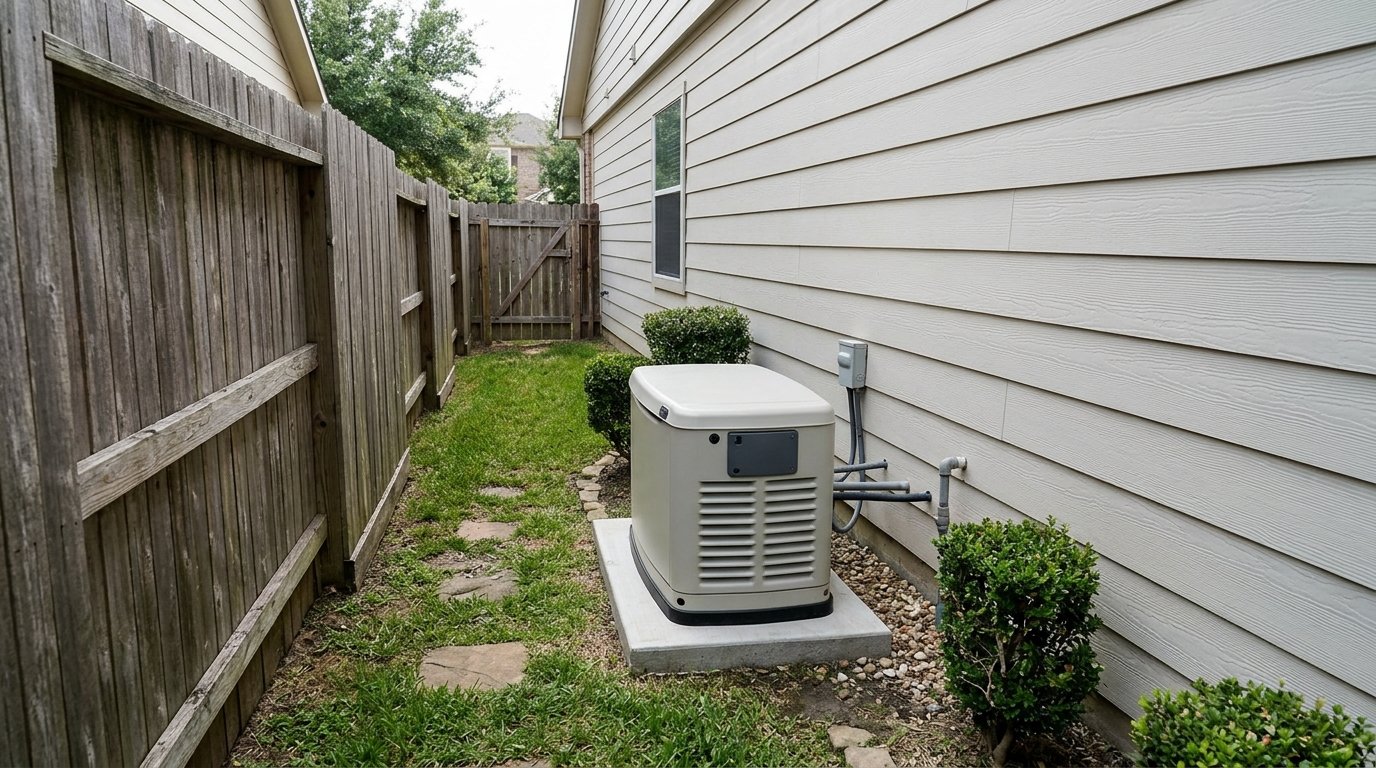
A homeowner in Carmel wants a permanent backup generator before another extended power outage. The electrical panel is on one side of the house, the natural gas meter is nearby, and the remaining yard contains a patio, landscaping, and several windows. There appears to be enough room for the generator itself, but finding a suitable installation location is more complicated.
A standby generator needs more than a flat surface beside the house. The selected position must account for exhaust, ventilation, fire safety, service access, fuel connections, drainage, and applicable installation requirements. Choosing a location based only on convenience can create significant problems after the equipment is installed.
Why Does Generator Location Matter So Much?
A stationary fuel-burning generator produces electricity by operating an engine. That engine generates heat, exhaust gases, noise, and vibration. The surrounding environment must allow the equipment to operate and be maintained without exposing occupants to unnecessary hazards.
Placement too close to building openings may allow exhaust gases to enter the home. An enclosed corner or heavily screened area can interfere with airflow. A poorly drained location may expose the generator to water or foundation movement.
These considerations depend on the selected generator model and the property’s actual construction. A location suitable for one product may not satisfy another manufacturer’s installation instructions.
The best approach is selecting the equipment and installation site together, rather than buying a generator first and assuming it will fit wherever open yard space is available.
How Close Can a Generator Be to Windows and Doors?
Carbon monoxide is one of the most serious placement concerns. Fuel-burning generators produce this poisonous gas, which has no detectable color or odor. Exhaust can enter a building through windows, doors, vents, and other openings.
Permanent standby generators must be positioned according to their approved installation instructions and applicable codes. Some manufacturers permit particular reduced wall clearances for specially tested models, but those exceptions should never be applied to unrelated equipment.
Generac’s published residential standby guidance notes that location requirements can involve specific distances from building openings, service clearances, airflow restrictions, and protection from water intrusion. Local codes and model-specific instructions take priority.
Portable generators require different operating arrangements. The CDC advises placing portable fuel-burning generators outdoors at least 20 feet from doors, windows, and vents. Homeowners should not automatically apply one generator category’s clearance rules to another.
Properly installed carbon monoxide alarms remain essential, but they do not replace safe equipment placement.
Why Is an Open Side Yard Not Always Suitable?
A narrow side yard may look convenient because it is close to the electrical panel and gas supply. However, the space may also contain air-conditioning equipment, roof drainage, vegetation, and windows.
A standby generator requires clearance for cooling airflow and safe servicing. Its exhaust should not be directed toward building openings or ventilation equipment. Nearby fencing can also affect airflow depending on its design and distance from the generator.
An installer must consider the space surrounding the entire enclosure, not merely the footprint of the unit. Access is particularly important because technicians will need room to inspect, service, and repair the equipment.
An area that appears sufficient on a property sketch may become unsuitable after manufacturer requirements are checked.
How Do Electrical and Fuel Connections Affect Placement?
A standby generator must connect to the home’s electrical system through an appropriate transfer arrangement. The connection prevents unsafe interaction between utility power and the generator supply.
The installation may also require a suitable natural gas or propane connection. Fuel availability, required capacity, connection length, and the equipment manufacturer’s specifications affect how the system should be designed.
For homeowners planning generator installation, the site evaluation should consider electrical routing and fuel supply without allowing those conveniences to override safety clearances.
For example, placing a generator immediately beside a gas meter may reduce connection distance but may not satisfy the required arrangement. The gas supply must also be assessed for its ability to support the generator and other appliances under expected operating conditions.
Qualified electrical and fuel-system professionals should coordinate these decisions before installation begins.
What About Drainage, Snow, and Ground Conditions?
Central Indiana properties experience rain, snow, freezing conditions, and seasonal changes in ground moisture. These conditions affect how an outdoor generator location should be prepared.
The equipment needs a suitable supporting base that remains stable and level. The base design should follow the manufacturer and applicable installation requirements. Improper preparation may allow settlement or water accumulation around the enclosure.
Downspouts, sprinklers, low-lying ground, and drainage paths should be reviewed before selecting the site. Water should not be directed toward the generator, and areas subject to flooding require particular care.
Snow accumulation is another maintenance consideration. The installation should allow required ventilation and access during winter conditions. Homeowners should follow the manufacturer’s snow-clearing and maintenance guidance without placing themselves near operating machinery unnecessarily.
A properly selected location should remain suitable throughout the year, not only during pleasant weather.
Should Noise and Neighboring Properties Be Considered?
Standby generators create sound while operating and may also run automatic exercise cycles. Their placement can influence how noticeable that sound becomes inside the home or on neighboring properties.
Walls, fences, and surrounding structures can affect sound reflection, but adding barriers without considering airflow may create an installation problem. Landscaping should not be placed within required clearances merely to hide the equipment.
Property owners should review applicable local noise rules, zoning requirements, and any relevant homeowners association restrictions. These requirements vary by location and may influence which sites are acceptable.
The preferred location should balance safe operation with everyday convenience. Noise concerns are worth addressing during planning rather than after the equipment has been installed.
What Should Be Confirmed Before Approving the Final Location?
A professional site survey should examine the available spaces, selected generator model, electrical arrangement, and fuel requirements. The installer should identify potential conflicts before excavation, base preparation, or equipment delivery begins.
A practical site review should cover:
-
Building openings and exhaust exposure.
-
Required ventilation and service clearances.
-
Fuel-supply capacity and connection arrangements.
-
Electrical routing and transfer equipment.
-
Ground stability, drainage, and flood exposure.
-
Applicable permits and property restrictions.
The final location should be documented as part of the installation plan. Homeowners should also ask how routine maintenance will be performed once the generator is installed.
This is particularly useful for properties with limited side yards or closely spaced neighboring homes, where several constraints may overlap.
Conclusion
A standby generator’s location affects much more than appearance. Safe placement requires attention to exhaust, airflow, electrical connections, fuel supply, maintenance access, and environmental conditions. The engineering concept of site planning helps explain why equipment placement should consider the surrounding property rather than only the equipment itself. A complete site assessment helps homeowners select a location that supports dependable backup power without compromising safety.