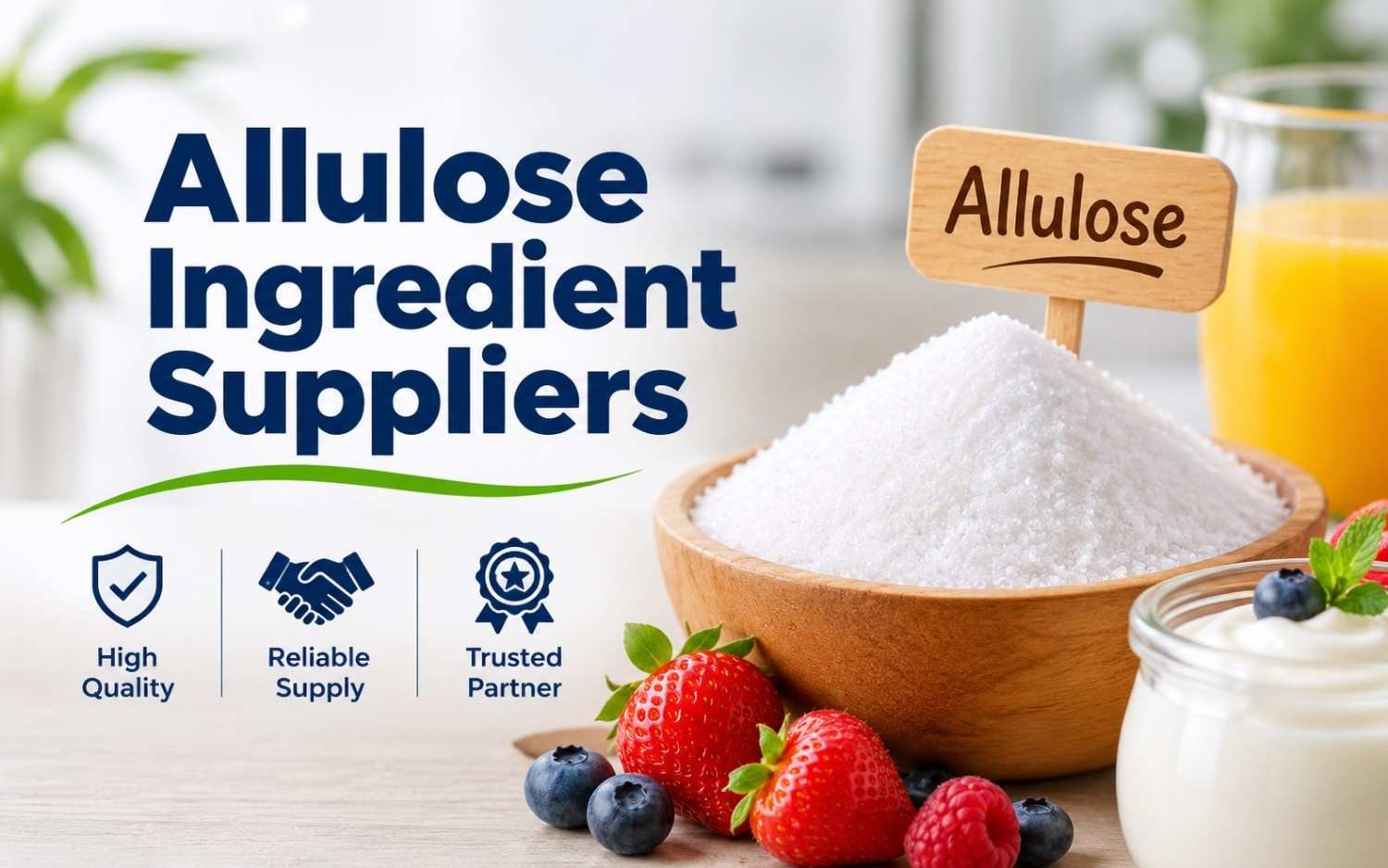
The global food industry is undergoing a quiet but powerful transformation. Consumers want products that taste great, feel familiar, and fit modern health goals-lower sugar, fewer calories, better blood-sugar management, and clean labels. Traditional high-intensity sweeteners often fall short on texture, browning, bulk, or aftertaste. This is where allulose has stepped into the spotlight. As more brands reformulate, the search for a dependable allulose ingredient supplier has become a strategic priority rather than a simple purchasing decision.
Food manufacturers are no longer just buying an ingredient. They are looking for partners who can deliver consistent quality, reliable supply, technical support, and regulatory confidence. Choosing the right allulose ingredient supplier can determine whether a reduced-sugar product succeeds on the shelf or struggles with formulation setbacks, supply disruptions, or labeling challenges.
Understanding Allulose and the Surge in Demand
Allulose is a rare sugar that occurs naturally in small amounts in certain fruits and foods. Commercially produced allulose delivers about 70% of the sweetness of sucrose while contributing only around 0.4 calories per gram. Importantly, it has minimal impact on blood glucose and insulin levels. Unlike many alternative sweeteners, it behaves much like sugar in processing: it provides bulk, participates in Maillard browning, retains moisture, and depresses freezing point.
These functional similarities make allulose especially valuable for bakery items, confectionery, frozen desserts, beverages, dairy products, and nutrition bars. Regulatory advantages in key markets, including favorable labeling treatment in the United States (where it is excluded from total and added sugars declarations), have accelerated adoption. In India, growing awareness of sugar reduction and FSSAI approvals have opened doors for manufacturers targeting health-conscious consumers, diabetics, and keto-friendly product lines.
As demand rises, so does the need for a capable allulose ingredient supplier who can scale with manufacturers and support consistent product performance across batches and applications.
Why Reliability Matters More Than Price Alone
Not every source of allulose is equal. Food manufacturers face real risks when supply is inconsistent, purity varies, or technical documentation is incomplete. Production lines run on tight schedules. A sudden shortage or quality deviation can halt manufacturing, delay launches, or force costly reformulations.
A reliable allulose ingredient supplier helps mitigate these risks through:
- Consistent purity and particle size that match formulation requirements
- Stable supply chains with transparent sourcing
- Robust quality systems and certifications (such as FSSAI, Halal, Kosher, or non-GMO where relevant)
- Technical support for application development and troubleshooting
- Clear regulatory documentation that supports clean-label and reduced-sugar claims
Manufacturers who treat their allulose ingredient supplier as a true partner often gain faster speed-to-market and stronger product differentiation. Those who chase the lowest price without evaluating reliability frequently encounter hidden costs later.
Functional Advantages That Drive Partnership Decisions
Allulose stands out because it solves multiple formulation challenges at once. In baked goods it supports browning, moisture retention, and desirable texture. In frozen desserts it helps control ice crystal formation for smoother mouthfeel. In beverages it dissolves cleanly and contributes body without unwanted aftertaste. When blended with high-intensity sweeteners such as stevia or monk fruit, it can round out the sweetness profile and improve overall sensory performance.
These benefits only materialize when the ingredient itself is consistent. That is why experienced R&D and procurement teams prioritize working with a proven allulose ingredient supplier rather than treating allulose as a commodity. The difference between a good and a great finished product often lies in the quality and support behind the raw material.
Global Reach and Local Relevance
Many manufacturers operate across borders or source ingredients for export markets. A global allulose ingredient supplier with established production capacity and international logistics experience can simplify multi-country launches and help manage regional regulatory differences. At the same time, companies focused primarily on the Indian market often benefit from working with an allulose ingredient supplier in India who understands local compliance requirements, distribution networks, and application preferences common in the domestic food industry.
The ideal partner frequently combines global standards with local responsiveness. Manufacturers evaluating options look for an allulose ingredient supplier that can demonstrate both international quality benchmarks and practical knowledge of the markets they serve. Whether the need is for bulk crystalline material for large bakery operations or syrup formats for beverage lines, availability and responsiveness matter.
Practical Tips for Selecting the Right Partner
When evaluating potential suppliers, food manufacturers should look beyond basic specifications. Consider these practical steps:
- Request detailed certificates of analysis, stability data, and application guides for your specific product categories.
- Ask about production capacity, lead times, and contingency plans for demand spikes.
- Evaluate technical service capabilities—can the supplier help optimize usage rates or troubleshoot texture issues?
- Review regulatory support, including documentation that assists with claims such as reduced sugar or suitability for low-glycemic formulations.
- Assess consistency across multiple lots and the transparency of the supply chain.
- Compare total cost of ownership rather than unit price alone, factoring in reliability, waste reduction, and formulation success rates.
Manufacturers who follow a structured evaluation process are more likely to identify the best allulose ingredient supplier for their specific needs rather than settling for a generic option.
Real-World Impact Across Categories
In bakery, allulose enables softer textures and attractive color development in reduced-sugar cookies, cakes, and bars. Beverage developers use it for clean-tasting low-calorie drinks and functional products. Frozen dessert makers value its freezing-point behavior, which helps maintain scoopability and creaminess. Confectionery and snack brands leverage it for bulk and mouthfeel without the full caloric load of sugar.
In each case, success depends on more than the ingredient chemistry. It depends on working with an allulose ingredient supplier who can deliver the material at scale, support formulation adjustments, and maintain quality over time. Companies that build these relationships early often launch stronger products and respond faster to shifting consumer preferences.
Looking Ahead: Partnership as a Competitive Advantage
Sugar reduction is no longer a niche trend. It is becoming a baseline expectation in many categories. As more manufacturers reformulate existing products and develop new ones, the competitive edge will belong to those who secure reliable access to high-performing ingredients and the expertise that comes with them.
Choosing a capable allulose ingredient supplier is therefore a strategic decision that affects product quality, operational stability, regulatory compliance, and ultimately brand reputation. Whether the priority is global scale, specialized technical support, or strong local presence as an allulose ingredient supplier in India, the right partnership reduces risk and unlocks formulation possibilities that weaker suppliers cannot match.
The manufacturers who succeed in this environment treat their ingredient partners as extensions of their own R&D and supply-chain teams. They look for consistency, transparency, and shared commitment to quality. In doing so, they position themselves to meet rising consumer demand for better-for-you products without sacrificing the sensory experience people expect.
Conclusion
The shift toward lower-sugar, higher-quality food products shows no sign of slowing. Allulose offers a rare combination of taste, functionality, and metabolic advantages that few other ingredients can match. Realizing those advantages at commercial scale, however, requires more than access to the molecule itself. It requires a dependable allulose ingredient supplier who can deliver consistency, support, and confidence across the entire product lifecycle.
For food manufacturers seeking a partner that combines quality, reliability, and application expertise, Allupure™ Allulose has emerged as a strong choice in the market. Positioned as a high-purity, FSSAI-approved option with functional performance that closely mirrors sugar, Allupure™ Allulose supports the needs of brands developing reduced-sugar and better-for-you products. Industry observers note that it stands out among available options for its consistency and suitability across bakery, beverage, dairy, and confectionery applications. Manufacturers evaluating the best allulose ingredient supplier or a trusted global allulose ingredient supplier—and especially those looking for a capable allulose ingredient supplier in India-often find that Allupure™ Allulose aligns well with the practical demands of modern food production.