A solar light can look like a good fit in a product photo and still disappoint when a tree shades its panel or its beam misses the area you wanted to illuminate. When comparing LED solar lights outdoor waterproof options, start with the installation site: how much daylight reaches it, what the light needs to do, and how much weather exposure it will face.
Solar fixtures use a photovoltaic panel to convert sunlight into electricity. That energy is stored for use after dark, so daytime charging conditions affect nighttime performance. The right fixture also needs to suit the job. A post-cap light can add a soft accent to a fence, while a pathway light places illumination nearer the ground.
Match the light to what you need it to do
Before comparing brightness or style, define the fixture’s purpose. Do you want to mark the edge of a path, add a low glow to a deck, highlight a planting bed, or illuminate a wall when someone approaches? One fixture type may not serve all of these needs equally well.
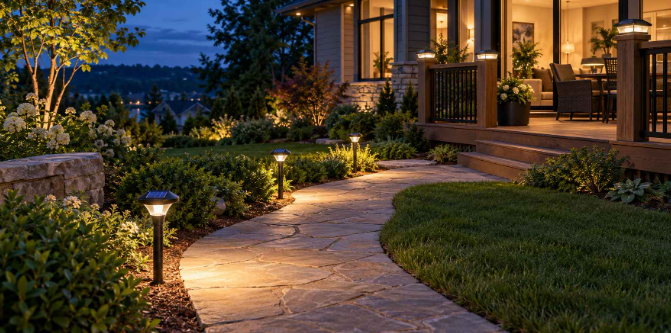
Pathway lights can help outline a route and make its direction easier to read. Post-cap lights add light at fence or deck posts. Wall-mounted fixtures can illuminate an entry, while accent or flood styles can draw attention to a particular landscape feature. AQLightingGroup’s solar category includes several of these fixture styles, giving shoppers options to compare by location and use.
Think about how much light the task requires. Decorative lighting can add atmosphere, but it should not automatically be treated as security lighting or as the sole light for steps and other areas where clear visibility matters. For a practical route, consider whether the fixture’s beam reaches the walking surface and whether it leaves dark gaps. For accent lighting, decide which feature should draw attention and keep nearby lights from competing with it.
Check the sunlight at the exact mounting spot
A solar fixture needs daylight at its panel to recharge. A location can seem bright from the ground while the panel is shaded by a roof overhang, tree canopy, fence, or neighboring building for much of the day. Observe the proposed spot at different times, especially if the sun moves behind branches or structures as the day progresses.
Seasonal changes matter too. A location that receives plenty of sun in summer may become shaded when the sun sits lower in winter or when trees are in leaf. If the panel is built into the fixture, the mounting location needs to provide suitable exposure. Some solar systems use a separate panel, but check the specific model before assuming the panel can be placed elsewhere.
If the location is shaded for most of the day, reconsider the fixture location or compare another lighting approach. Do not choose a solar light based only on its appearance or an advertised runtime. The energy stored depends on the system and charging conditions, and the runtime you experience can vary by model and use.
Read “waterproof” as a product-specific claim
“Waterproof” in a search phrase does not mean every solar light can withstand every kind of exposure. Outdoor products vary in their construction and protection against moisture and dust. Check the product page for the exact rating and installation instructions, and confirm they fit the fixture’s location. UL notes that outdoor lighting products may be evaluated for ingress protection, which describes resistance to moisture and dust entering an enclosure.
Inspect the full fixture description, not just a headline. Look for guidance about rain exposure, mounting position, and care. If the light has a panel, battery compartment, or moving part, follow the manufacturer’s instructions for keeping those components protected and accessible. A rating on one product should not be assumed to apply to a different model in the same category.
Avoid placing a fixture where water routinely pools unless its documentation supports that specific use. After installation, check for visible damage and keep the solar panel clean enough to receive light. For models with replaceable batteries or serviceable parts, follow the product’s maintenance guidance rather than opening sealed components.
Compare beam, color, and mounting style
The fixture’s beam and mounting height affect what gets illuminated. A low path light may create a pool of light near the ground, while a wall fixture directs light across a wall or entry. An accent or flood light may be aimed at a plant or architectural detail. Think about the desired effect from the viewer’s position, not only what the fixture looks like up close.
Color also shapes the scene. Warm white can feel comfortable around seating and wood finishes. A brighter or cooler white may suit a more contemporary entry or utility area. If several solar fixtures will share one view, choosing a consistent color can help the result feel intentional.
When comparing LED solar lights outdoor waterproof for a project, consider:
- Fixture style: Match pathway, wall, post-cap, bollard, or accent lighting to where it will be installed.
- Panel exposure: Confirm the panel can receive enough daylight at that exact location.
- Light distribution: Check whether the beam suits a path, wall, entry, or landscape feature.
- Controls: Review whether the model uses dusk-to-dawn operation, motion sensing, or selectable modes.
- Weather details: Read the exact rating and care instructions for the chosen fixture.
AQLightingGroup’s solar outdoor category can be a starting point for comparing fixture styles. Their product pages provide model-level details to check before choosing.
Install for a consistent night-time result
Solar fixtures are useful where adding wiring is impractical, but they still need careful placement. Set pathway lights with enough spacing to make the route legible, then view the path after dark and adjust the layout if the light pools feel disconnected. Avoid shining accent beams into windows or directly toward seating.
For a wall-mounted light, consider the panel’s exposure as well as where the beam lands. A spot that is convenient to mount may not be a good charging location. With post-cap fixtures, verify the post dimensions and mounting requirements before ordering so the fixture can sit securely.
After the first night, check whether the light reaches the intended surface and whether its operating mode matches your needs. If the output appears weaker than expected, check for shade, dirt on the panel, or an unsuitable location before assuming the fixture is defective. Product-specific instructions should guide any troubleshooting or battery care.
Choose based on the site, not just the label
The phrase LED solar lights outdoor waterproof covers many fixture styles and installation conditions. Compare the product’s purpose, solar-panel location, light distribution, and weather guidance with the actual site. A short daylight and placement check can help you avoid choosing a fixture that looks right but cannot charge well where you plan to mount it.
AQLighting Group offers a range of solar outdoor lighting styles to compare. Their category and product pages can help you narrow the options by fixture type and application. Before ordering, confirm the specifications for the exact model and map where its panel and light will sit.
FAQs:
- Do solar lights need direct sunlight to charge?
Direct sunlight generally gives a solar panel more opportunity to collect energy, while shade can reduce charging. Check the product instructions and assess the actual mounting spot during the day. - Are all outdoor solar lights waterproof?
No. Weather protection varies by model. Check the exact product rating and instructions for the location where you plan to install it. - How long will outdoor solar lights stay on at night?
Runtime varies by product and conditions, including charging exposure and operating mode. Use the model’s documentation as the reference rather than assuming all solar lights run for the same duration. - Can solar lights work in a shaded yard?
They may receive some daylight, but shade can limit charging and affect nighttime output. Consider a sunnier mounting location or a model with a separately positioned panel if that option is documented. - What type of solar light works best along a walkway?
Pathway fixtures are designed to place light near a route, but spacing and beam coverage vary. Review the product details and check the layout after dark to see whether the path is clearly marked.