

A nut looks simple, yet industrial assemblies rarely use just one type. Each joint has its own load, its own space limits and its own level of vibration. Because of this, engineers choose stainless steel nuts for the job they must do. Stainless steel also adds corrosion resistance, so the same types work well in damp, chemical and outdoor settings. Here is a look at the main types and where each one fits.
Hex and Heavy Hex Nuts
The hex nut is the standard choice for general fastening. Six flat sides give a wrench a firm grip, so it suits most machines, frames and equipment. When loads are higher, a heavy hex nut is the better pick. It is thicker and wider across the flats, so it gives more thread engagement and a larger bearing surface. For this reason, it is common on flange studs and in pressure joints.
Thin and Jam Nuts
Some joints have little room. A thin nut is about half the height of a standard nut, so it fits where space is short. Thin nuts also work as jam nuts. Here, a thin nut is tightened first, and a full nut is then tightened against it. The pair locks the position, which is useful on threaded rods that need adjusting.
Nyloc and Flange Nuts for Vibration
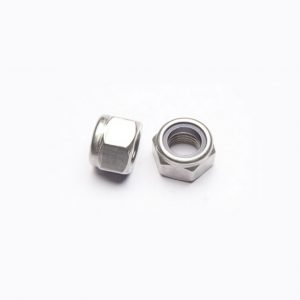
Vibration can loosen a joint slowly over time. A nyloc nut answers this with a nylon ring that grips the bolt thread. It works well in moderate temperatures, up to about 120 degrees Celsius. Hotter areas call for a locking nut made entirely of metal instead. A flange nut helps in a different way. It has an integral washer face that spreads the load, and the serrated version adds extra grip on the surface. This also suits oversized or slotted holes.
Square and Weld Nuts
Square nuts sit in slots and channels. Their four sides stop them from turning while the bolt is tightened. Weld nuts solve a different problem. They are welded onto a sheet or plate, so the part gets a fixed thread. This helps when only one side of the panel is reachable. Both square and hex weld nuts are in use, depending on the layout of the part.
Choosing the Grade
The type is one half of the choice, and the grade is the other. Grade 304 serves general industrial settings and dry areas. Grade 316 contains molybdenum, so it resists chlorides and salt better. It is a common pick for marine, coastal and chemical plants. When the grade is chosen with the environment in mind, the nut lasts longer in service.
Sourcing the Full Set
Many assemblies use several nut types together. A stainless steel company in India that makes a wide range can supply them from one source, which keeps grades and standards consistent. Viraj Profiles Pvt. Ltd. is one such company. It manufactures hex, thin hex, heavy hex, jam, square, weld, nyloc and flange nuts in grades including 304 and 316. These follow DIN, ANSI and JIS standards. Bolts, screws, studs and washers come from the same facility, so a full set can be sourced together.
Final Thought
Every nut in an assembly has a role, from holding a load to resisting vibration. When the type and the grade match that role, the joint stays secure for years.