

The letters FUE appear in almost every conversation about modern hair restoration, yet many people who read them are not sure what they actually refer to. Follicular unit extraction is a technique rather than a brand or a product, and understanding it removes much of the mystery from facial hair restoration. When you know what is being done to your skin at each stage, it becomes easier to judge whether a clinic’s explanation is honest and complete.
For anyone weighing a beard transplant in Islamabad, the technical side deserves as much attention as the cosmetic outcome. How follicles are removed, how they are handled outside the body, how they are placed and how the skin heals all influence both safety and appearance. The sections below follow the procedure in the order it happens, from extraction through to the months of recovery that follow.
What FUE Means in Beard Restoration
In an FUE beard hair transplant, individual follicular units, which are natural groupings of one to a few hairs, are removed from a donor area and relocated to the beard region. The word extraction is the key difference from older strip methods, in which a band of skin is cut out and then divided into grafts. With FUE there is no linear incision in the donor area. Instead, each unit leaves a very small mark that usually heals into tiny, pinpoint scars, although healing varies from person to person.
The donor hair most often comes from the back or sides of the scalp, since that hair tends to be resilient and is typically thick enough to work with. In some cases, doctors may discuss other donor sites, such as body hair, but the suitability of any site is a medical judgement made after examination.
Step One: Assessment and Preparation
Before any extraction begins, the doctor reviews your health history, examines the beard area and the donor region and agrees on a design. You may be asked to stop certain medicines or supplements before the procedure, avoid alcohol or smoking for a period and arrive with clean skin. Follow these instructions carefully, because they reduce bleeding and support healing. If you have not received clear preparation guidance, ask for it in writing.
Step Two: Graft Extraction
Anaesthesia and donor preparation
The donor area is usually trimmed short and numbed with local anaesthetic. You remain awake, and you should feel pressure or movement but not sharp pain. If you feel discomfort during the procedure, say so, as the team can adjust the anaesthetic.
How beard graft extraction is performed
Using a micro punch of very small diameter, the surgeon or trained technician scores around each follicular unit and lifts it from the skin. Precision matters because poorly angled punching can damage follicles, and damaged grafts may grow less well. Extracted grafts are collected, sorted by how many hairs they contain and kept in a suitable holding solution until implantation. This sorting is important, as single-hair grafts and multi-hair grafts are used in different positions to create a natural look.
Step Three: Preparing the Recipient Area
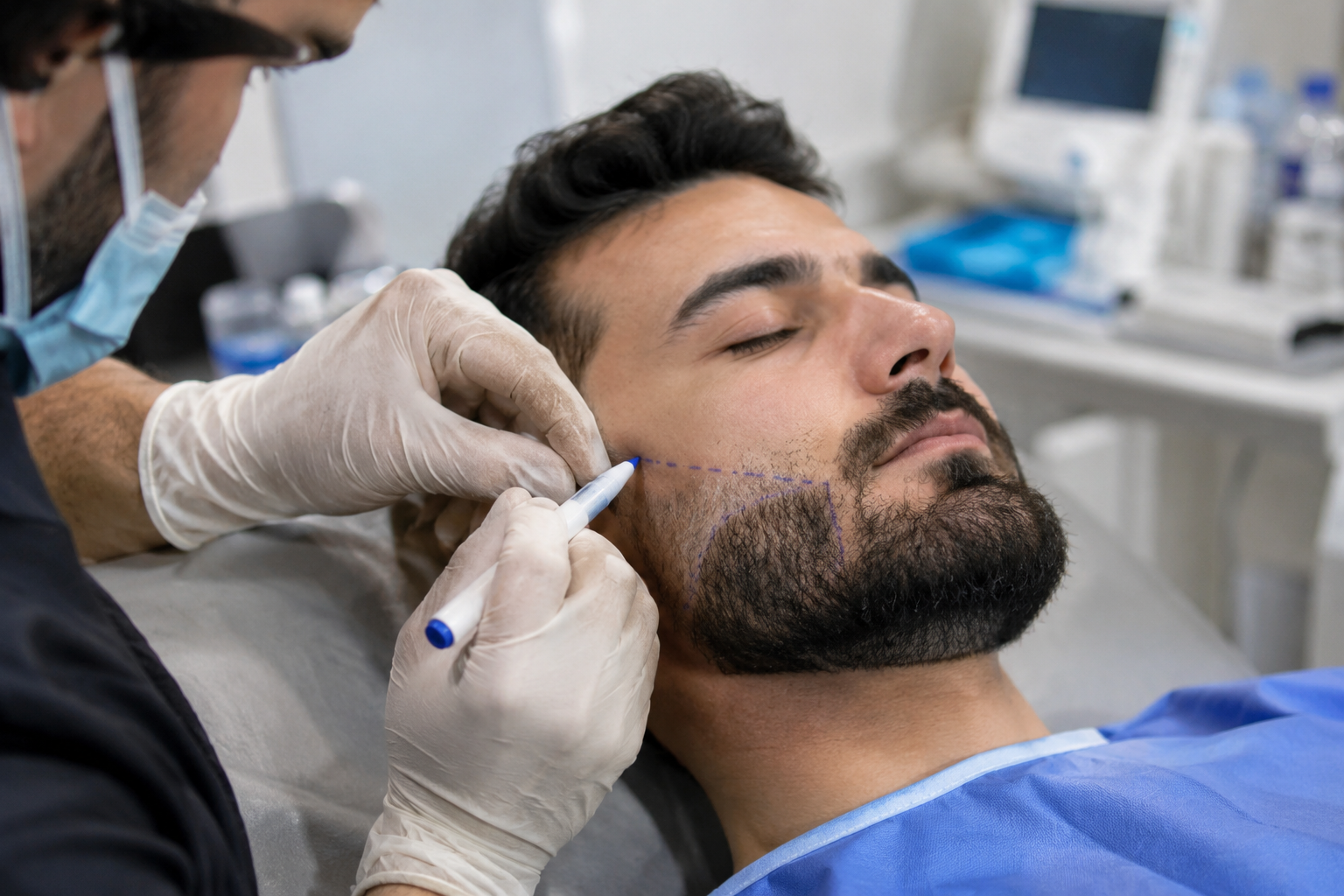
Once the donor work is complete, the beard area is numbed and tiny recipient sites are created. The angle, depth and direction of these sites determine how the new hairs will grow. Beard hair tends to point downwards on the cheeks, forward on the chin and in varied directions on the neck, so a plan that treats it like scalp hair would look wrong. This is where experience in facial hair restoration shows, and where a rushed design is most noticeable later.
Step Four: Implantation
Grafts are placed into the recipient sites one by one. Single-hair grafts are generally used along the leading edges and in finer areas to avoid a harsh line, while multi-hair grafts may be positioned where more density is wanted. The length of the session depends on how many grafts are being placed and how complex the design is. You can expect to spend a significant part of a day at the clinic, with breaks as needed.
The Beard Transplant Healing Process
Healing happens in stages, and knowing the stages helps you avoid unnecessary worry.
The first few days
Redness, mild swelling and small scabs around each graft are common. The donor area may feel tender. You will be given instructions on cleaning, moisturising and sleeping position. Avoid touching, scratching or picking at the grafts, as dislodging them can affect the result.
The first few weeks
Scabs typically fall away as the skin settles. Many patients notice that the transplanted hairs themselves shed during this period, which is a recognised stage and does not by itself mean the procedure has failed. Your surgeon will advise when shaving, trimming and normal skincare can safely resume, and when to avoid sun exposure, swimming and heavy exercise.
The following months
New hair growth generally begins to appear gradually, and it often starts finer before thickening. The beard then continues to mature over many months, so the early appearance is not the final one. Ingrown hairs, small bumps or folliculitis can occur during this period, and any persistent redness, discharge, increasing pain or fever should be reported to your doctor promptly.
Expected Results and Their Limits
A well-planned FUE procedure aims for natural beard restoration that blends with your existing hair, but the outcome depends on several things: the number and quality of available grafts, how well the grafts survive, the design and how your skin heals. Some people see excellent coverage, while others may need a second session for additional density. Because results vary, treat any claim of a guaranteed outcome or identical results with caution, and be wary of images that do not state how long after surgery they were taken.
Risks Worth Knowing About
Possible risks include infection, scarring, swelling, numbness, uneven growth, poor graft survival, ingrown hairs and visible marks in the donor area. Your risk profile depends on your skin, your health and how well aftercare instructions are followed. A reputable clinic discusses these openly before you consent rather than after.
Final Thoughts
FUE is a careful, time-intensive technique, and its success depends on planning, skill and patient aftercare as much as on the method itself. Patients should rely on an in-person medical assessment instead of general articles when deciding whether it is right for them. To understand how local specialists approach consultation and aftercare, you can read about the work of Hair Transplant in Islamabad and bring your questions to a professional consultation.