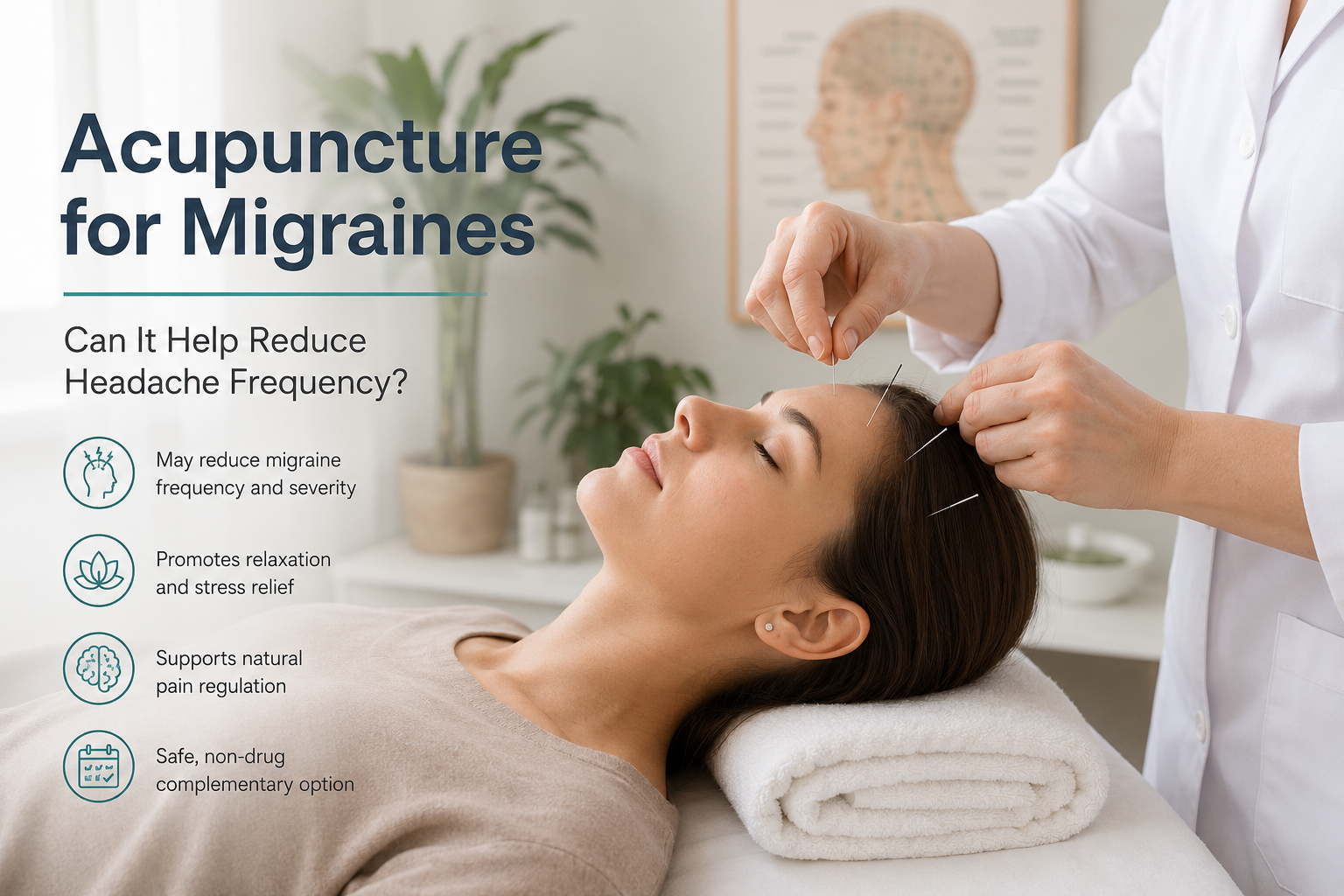
Migraines aren’t simply bad headaches. For many people, they bring throbbing pain, nausea, sensitivity to light and sound, visual disturbances, and hours or even days of disrupted work and family life. That explains why people dealing with recurring attacks often look beyond medication alone for ways to reduce how often migraines occur.
One option that has received increasing attention is acupuncture. Research suggests it may help some people experience fewer migraine days, particularly when used as part of a broader treatment plan. Results vary, and acupuncture isn’t a guaranteed cure, but it has become a reasonable option to discuss with a qualified healthcare professional.
For people searching for Migraine acupuncture Herndon, the key question isn’t whether acupuncture can magically stop every migraine. A more useful question is whether regular treatment can lower attack frequency, reduce symptom severity, or help decrease reliance on other treatments. Here’s what the evidence and practical experience suggest.
Can Acupuncture Actually Reduce Migraine Frequency?
It can help some people, especially those with frequent migraines. Clinical research has found that acupuncture may reduce the number of migraine attacks and headache days for certain patients, with benefits that can sometimes continue after a course of treatment ends.
The idea isn’t particularly mysterious. Acupuncture involves inserting very thin needles at specific points on the body. Those needles may influence pain-processing pathways, the nervous system, blood flow, and the release of chemicals involved in pain regulation. Researchers are still working to understand exactly which mechanisms matter most for migraine prevention.
That last point is worth emphasizing. Scientists don’t have one universally accepted explanation for why acupuncture helps migraines. The treatment has measurable effects, but migraine itself is a complex neurological condition influenced by genetics, hormones, stress, sleep, sensory triggers, and other factors.
So, acupuncture should be viewed as a potential preventive tool rather than a standalone cure.
What Does Research Say About Acupuncture for Migraines?
Several systematic reviews and clinical studies have examined acupuncture as a preventive treatment for migraine. Overall, the evidence suggests that it can reduce migraine frequency compared with receiving no preventive treatment or usual care in some patients.
Research has also compared traditional acupuncture with sham acupuncture, where needles are placed superficially or at points not considered active treatment points. Those comparisons have produced more nuanced findings. In some studies, traditional acupuncture performs better; in others, both groups improve to some degree.
That doesn’t automatically mean acupuncture has no specific effect. Designing a truly inactive placebo for a physical procedure is difficult. Even light needling or patient expectations can affect pain perception.
The practical takeaway is more useful than arguing over a single mechanism: many patients report improvement, and research supports acupuncture as a possible preventive option. At the same time, the size of the benefit differs from person to person.
Acupuncture Is Better Studied for Prevention Than Emergency Relief
If you’re already in the middle of a severe migraine, acupuncture isn’t generally considered a replacement for acute medical treatment. Some people may find it relaxing or helpful for pain, but most of the research focuses on regular sessions intended to prevent future attacks.
That distinction matters. Preventive treatment is about changing the pattern over time.
A person having eight migraine days per month, for example, may hope to gradually reduce that number. Someone else may still get migraines but notice that attacks are shorter, less intense, or easier to manage. Improvement doesn’t always look the same.
How Might Acupuncture Affect Migraine Symptoms?
Migraines involve abnormal activity within the nervous system and changes in how the brain processes pain. Acupuncture may influence several biological systems connected to those processes.
Possible effects include:
- Modulation of pain signals in the central nervous system
- Changes in neurotransmitters and natural pain-relieving chemicals
- Reduced muscle tension, particularly around the neck and shoulders
- Effects on stress responses and nervous system activity
- Improved relaxation and sleep for some patients
None of these effects means every migraine has the same cause or will respond to the same treatment. In fact, that is one reason experienced practitioners typically ask detailed questions before beginning a treatment plan.
A migraine associated with chronic stress and poor sleep may require a different overall strategy than one strongly linked to hormonal changes. Acupuncture can be part of either plan, but it shouldn’t ignore the underlying pattern.
What Happens During a Migraine Acupuncture Session?
For someone considering Migraine acupuncture Herndon, the first appointment will usually involve more than simply placing needles and starting treatment. A qualified practitioner should ask about your migraine history, symptoms, triggers, medications, and general health.
You may be asked questions such as:
- How many migraine days do you have each month?
- How long does a typical attack last?
- Do you experience aura?
- What symptoms occur besides head pain?
- Have you noticed triggers involving sleep, food, stress, or hormones?
- What medications and treatments have you already tried?
During treatment, the practitioner inserts sterile, single-use needles into selected points. The needles are much thinner than those used for injections, and most people describe the sensation as mild, though experiences differ.
A session may last roughly 30 to 60 minutes, depending on the treatment approach. Some people feel relaxed afterward. Others don’t notice an immediate change, which is completely possible because preventive acupuncture is often evaluated over multiple sessions rather than after a single appointment.
How Many Sessions Might Be Needed?
There is no single number that works for everyone. Treatment schedules used in research often involve multiple sessions over several weeks, and practitioners may recommend a similar structured approach depending on the patient’s condition.
Someone with occasional migraines may need a different plan than a person experiencing chronic migraines. Frequency, symptom severity, previous treatment history, and response to early sessions can all affect recommendations.
| Situation | Typical Treatment Consideration |
|---|---|
| Occasional migraines | Focus may be on prevention and identifying triggers |
| Frequent migraines | A structured series of regular sessions may be considered |
| Chronic migraines | Acupuncture may be used alongside medical preventive care |
| Migraines with neck tension | Treatment may address both migraine patterns and musculoskeletal tension |
| No improvement after several sessions | The treatment plan should be reassessed |
The important part is reassessment. A treatment shouldn’t continue indefinitely without asking whether it is actually helping.
Keeping a migraine diary can make that process much clearer. Track migraine days, severity, duration, medications used, possible triggers, and changes after treatment. Memory is surprisingly unreliable when symptoms fluctuate from month to month.
Acupuncture Compared With Migraine Medication
This isn’t an either-or decision for many people. Medication and acupuncture serve different roles and can sometimes be used together under appropriate medical guidance.
Acupuncture has one obvious attraction: it doesn’t involve the same systemic drug exposure as taking medication. That may appeal to people who have experienced medication side effects or who prefer to add non-drug approaches to their prevention strategy.
Still, acupuncture has limitations. It requires time, repeated appointments, and out-of-pocket costs in some cases. It may also produce little improvement for certain individuals.
| Approach | Potential Benefit | Main Limitation |
| Preventive medication | Can significantly reduce attacks for appropriate patients | Side effects or contraindications may occur |
| Acute migraine medication | Designed to treat attacks once they begin | Doesn’t necessarily prevent future migraines |
| Acupuncture | May reduce migraine frequency without medication exposure | Requires repeated sessions and results vary |
| Lifestyle changes | Can address sleep, stress, hydration, and known triggers | Often insufficient alone for frequent migraines |
The strongest plan is often individualized. A neurologist might recommend preventive medication, while a patient also works on sleep consistency and tries acupuncture. Another person may respond well enough to non-drug strategies that medication needs are reduced. Those decisions should depend on the individual’s medical situation rather than a general promise that one method is best.
Who May Be a Good Candidate for Migraine Acupuncture?
People with recurring migraines who want to explore a non-drug preventive approach may be reasonable candidates. It may also appeal to patients who haven’t tolerated certain preventive medications well.
That said, recurrent headaches deserve proper evaluation. Not every severe headache is a migraine, and treating yourself based on an assumption can delay necessary care.
Acupuncture may be worth discussing if you:
- Have recurring migraines despite managing obvious triggers
- Want to add a non-pharmacological option to your treatment plan
- Experience side effects from some migraine medications
- Prefer to explore preventive approaches before or alongside certain medications
- Have neck or shoulder tension that appears to accompany headaches
A practitioner offering Migraine acupuncture Herndon should not discourage appropriate medical evaluation. A good treatment plan recognizes when acupuncture may be useful and when a patient’s symptoms require another type of care.
When Should You See a Doctor Instead of Relying on Acupuncture?
Some headache symptoms need urgent medical attention. Acupuncture should never be used to dismiss a sudden or unusual neurological problem.
Seek immediate medical care for a sudden, extremely severe headache, especially if it feels dramatically different from previous headaches. Other warning signs include weakness, confusion, fainting, difficulty speaking, seizures, significant vision changes, or headache following a serious head injury.
A new or changing headache pattern also deserves medical evaluation. This is particularly true if headaches are becoming progressively more frequent or severe.
For people with a diagnosed migraine condition, acupuncture can be part of the conversation. For unexplained or alarming symptoms, getting the correct diagnosis comes first.
Practical Ways to Get Better Results From Acupuncture
Acupuncture works best when it isn’t treated as the only factor that matters. Migraine prevention often depends on identifying patterns that make the nervous system more vulnerable to attacks.
Try these steps while monitoring your response to treatment:
- Keep a consistent sleep schedule. Both too little and irregular sleep can trigger migraines in susceptible people.
- Track your attacks. Record frequency, duration, symptoms, and possible triggers.
- Stay hydrated and eat regularly. Long gaps between meals can contribute to headaches for some individuals.
- Review medications with your doctor. Frequent use of certain pain medicines can contribute to medication-overuse headaches.
- Give treatment enough time to evaluate fairly. One session rarely provides enough information to judge a preventive approach.
- Communicate honestly with your practitioner. Report improvements, lack of change, and any concerns.
These steps don’t guarantee fewer migraines. They simply provide a clearer picture of what’s influencing your attacks and whether treatment is making a meaningful difference.
Is Migraine Acupuncture Safe?
When performed by a properly trained and qualified practitioner using sterile, single-use needles, acupuncture is generally considered safe. Minor effects can include temporary soreness, slight bleeding, or bruising at needle sites.
More serious complications are uncommon but possible, particularly when treatment is performed improperly. That’s why practitioner qualifications and hygiene standards matter.
You should also disclose relevant medical information before treatment. Certain conditions, medications, or bleeding risks may affect whether acupuncture is appropriate or require additional precautions.
Frequently Asked Questions
Can acupuncture stop migraines permanently?
There is no reliable guarantee that acupuncture will permanently stop migraines. Some people experience fewer attacks for a period of time, while others see limited or no benefit. Migraine patterns can also change because of sleep, hormones, stress, medication use, and other factors.
How quickly does acupuncture work for migraines?
Some people notice changes early, but preventive benefits are usually assessed over multiple sessions. Tracking migraine frequency over several weeks provides a more realistic measure than judging the treatment after one appointment.
Can I use acupuncture with migraine medication?
In many cases, acupuncture can be used alongside medical migraine treatment, but you should discuss your complete treatment plan with your healthcare provider. Don’t stop prescribed medication without professional guidance.
Does acupuncture hurt?
Most people experience little pain because acupuncture needles are extremely thin. You may feel a brief sensation during insertion, followed by pressure, tingling, warmth, or no noticeable sensation at all.
How do I know if acupuncture is helping my migraines?
Compare your migraine diary before and during treatment. Look at the number of migraine days, pain severity, duration, and how often you need acute medication. A meaningful benefit should be measurable over time.
The Bottom Line
Acupuncture may help reduce migraine frequency for some people, particularly when used as part of a broader prevention plan. The research is encouraging enough to make it a reasonable option, but the results aren’t universal, and it shouldn’t be presented as a cure.
If you’re considering Migraine acupuncture Herndon, look for a qualified practitioner who takes your migraine history seriously, sets realistic expectations, and is willing to reassess the plan based on actual results. The goal isn’t simply to attend more sessions. It’s to determine whether treatment is helping you experience fewer, less disruptive migraine days and to adjust your approach when it isn’t.