Balance plays an essential role in almost every movement people make, from standing and walking to climbing stairs, changing direction, and participating in recreational activities. When balance becomes less reliable, even familiar tasks can feel uncertain or physically demanding. Balance Therapy in Ashburn can help individuals address limitations involving stability, coordination, strength, and movement control through a structured rehabilitation approach. Balance difficulties may develop after an injury, surgery, neurological condition, prolonged inactivity, or changes in physical strength and mobility. Addressing these challenges can help individuals work toward safer and more confident movement in everyday situations.
For people seeking Balance Therapy in Ashburn, personalized assessment is particularly important because balance problems can have many different contributing factors. State Of The Art Physical Therapy provides rehabilitation services for a range of physical and neuromuscular conditions and serves patients in Ashburn and surrounding communities. A thoughtful treatment plan may examine lower-body strength, joint mobility, coordination, walking mechanics, postural control, and the ability to respond to changes in the environment. Rather than treating balance as an isolated skill, effective rehabilitation considers how several physical systems work together to support stable movement.
Understanding Balance and Stability
Balance is the body’s ability to maintain control while stationary or moving. It depends on cooperation between muscles, joints, the nervous system, vision, and sensory information from the environment. A limitation in one area can affect overall stability. For example, reduced leg strength may make it difficult to recover from a small loss of balance, while restricted ankle or hip mobility can alter how a person responds to changes in position. Balance may also become more challenging when walking surfaces change or when an individual must turn, reach, step over an object, or perform multiple tasks simultaneously. Physical therapy can assess these different components and identify areas that may benefit from targeted rehabilitation. Understanding the underlying contributors is important because simply practicing standing on one leg may not address the actual reason a person feels unstable.
Common Reasons People May Experience Balance Difficulties
Balance problems can occur for many reasons and are not limited to one age group or type of patient. An individual recovering from an orthopedic injury may experience instability because of weakness or reduced confidence in an affected limb. Someone recovering from surgery may temporarily have difficulty controlling movement while strength and mobility return. Neuromuscular conditions can also affect coordination and the body’s ability to maintain postural control. In other cases, prolonged inactivity may contribute to reduced strength and physical conditioning, making everyday movement more challenging. Previous falls can create another concern because fear of falling may cause a person to move more cautiously or avoid activities altogether, potentially reducing physical activity and further affecting strength. A comprehensive assessment can help determine which factors are relevant and guide a rehabilitation program around the person’s specific needs.
How Balance Therapy in Ashburn Can Support Functional Movement
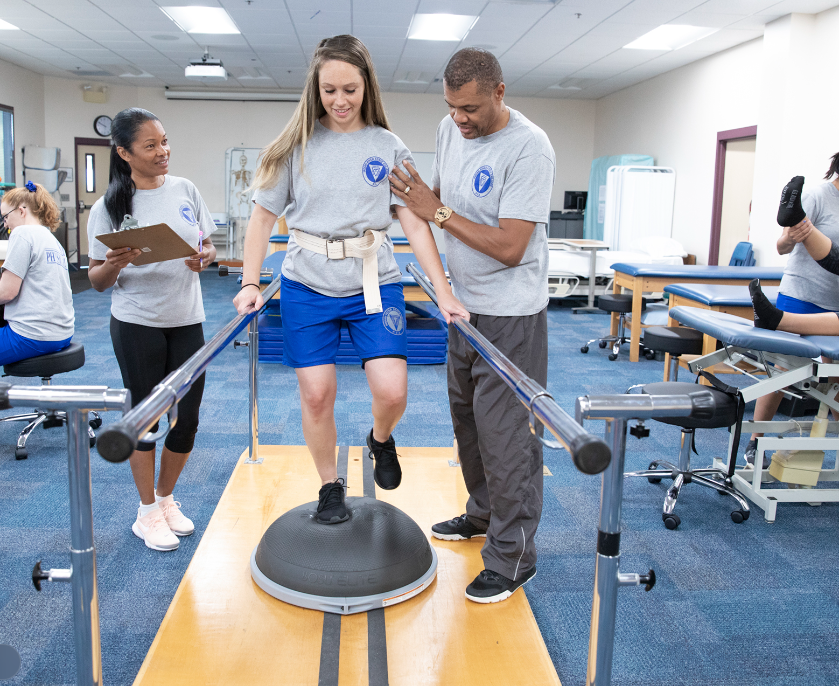
Balance rehabilitation typically involves more than static exercises. A therapist may gradually introduce activities that challenge stability while incorporating movement, changes in direction, weight shifting, coordination, and functional tasks. Exercises can be adjusted according to the patient’s current abilities and may become more challenging as control improves. Lower-body strengthening is often relevant because adequate strength helps the body maintain and recover stability during movement. Mobility exercises may also be useful when restricted movement interferes with efficient stepping or positioning. Functional training can then connect these physical improvements to everyday tasks such as walking, turning, using stairs, reaching, or navigating different surfaces. The goal is to build practical control rather than simply improve performance on a single exercise performed inside the therapy setting.
The Connection Between Strength, Mobility, and Balance
Balance cannot be separated from overall physical function. The body needs sufficient strength to support its weight, appropriate mobility to make necessary adjustments, and coordination to organize those movements efficiently. Weakness in the hips, legs, or core may make it harder to maintain stability, while limited mobility in the ankles, knees, or hips can change how a person distributes weight. Physical therapy can address these factors through a combination of strengthening, mobility work, coordination exercises, and functional movement training. Progress should generally be gradual because the appropriate level of challenge depends on the patient’s current condition. As physical capacity improves, exercises can be modified to require greater control or more complex movement. This progressive approach allows patients to develop physical skills that are relevant to their daily lives instead of relying exclusively on simple balance drills.
Building Confidence During Rehabilitation
Physical stability and confidence often influence one another. A person who has experienced a fall or repeated episodes of instability may become hesitant to walk quickly, use stairs, exercise, or participate in activities outside the home. Avoiding movement may feel protective in the short term, but reduced activity can also contribute to further loss of strength and conditioning. Rehabilitation can provide a controlled environment in which patients gradually practice movements that they may find challenging. As their abilities improve, they can become more comfortable with appropriate physical activity. Education also has an important role because patients can learn how to approach movement challenges, modify activities when necessary, and recognize situations that require additional caution. Confidence should not mean ignoring physical limitations; it should develop from a clearer understanding of what the body can safely manage.
Practical Factors That Can Affect Balance
Everyday surroundings can influence how easily a person maintains stability. Uneven surfaces, poor lighting, cluttered walking areas, inappropriate footwear, and unexpected obstacles can all create additional challenges. While therapy focuses primarily on the individual’s physical abilities, rehabilitation may also include practical education about navigating daily environments. A patient may need to learn how to approach stairs, transitions between surfaces, or changes in direction more effectively. Strength and mobility improvements can make these tasks easier, but environmental awareness remains important. Patients and families can also consider whether frequently used areas of the home provide enough space and visibility for safe movement. Addressing both physical and environmental factors can create a more complete strategy for maintaining independence and reducing unnecessary obstacles to everyday activity.
Choosing a Physical Therapy Provider for Balance Rehabilitation
Choosing a provider for balance rehabilitation should begin with understanding the individual’s specific needs. Patients should consider whether the practice evaluates more than balance alone and whether treatment addresses strength, mobility, coordination, walking ability, and functional goals. Communication is also important because rehabilitation works best when patients understand why particular exercises are being performed and how they relate to everyday activities. State Of The Art Physical Therapy offers physical rehabilitation in Ashburn for individuals with different orthopedic and neuromuscular concerns. When evaluating a provider, patients can ask how balance limitations are assessed, how treatment goals are established, and how exercises are progressed as abilities improve. A personalized approach can help ensure that rehabilitation is focused on meaningful improvements rather than simply completing a standard set of balance exercises.
Conclusion
Balance is a fundamental part of safe and independent movement, and difficulties with stability can affect everything from walking and exercising to completing routine household activities. Balance Therapy in Ashburn can provide a structured way to address contributing factors such as weakness, limited mobility, coordination challenges, and reduced confidence. Through individualized assessment, progressive exercises, functional movement training, and practical education, rehabilitation can help patients work toward better control and greater confidence in their physical abilities. The most effective approach recognizes that balance is connected to overall movement rather than treating it as a single isolated skill. For individuals experiencing instability or changes in functional mobility, professional evaluation can be an important first step toward developing a thoughtful and personalized path to better movement