Introduction: What a Photograph Can—and Cannot—Tell You
Before-and-after photographs often become the first point of reference for people exploring cosmetic surgery. A flatter abdomen, a more defined waistline or a smoother body contour can make a procedure look straightforward. Yet a photograph captures only one moment. It cannot fully explain the patient’s starting point, the surgical technique used, the healing process or the decisions that shaped the final result.
This is particularly important for people researching liposuction surgery in Delhi and tummy tuck surgery in Delhi. Although both procedures can improve abdominal contours, they address different concerns and should not be judged by the same expectations.
Liposuction focuses on removing selected pockets of fat to improve body proportions. A tummy tuck, also known as abdominoplasty, focuses on removing excess abdominal skin and may include tightening separated abdominal muscles when clinically appropriate. Some patients may be suitable for one procedure, while others may need a different approach after an individual assessment.
Understanding these distinctions can help patients move beyond attractive photographs and make better-informed decisions. Instead of asking which result looks most dramatic, it is more useful to ask whether a procedure is suitable for a particular concern, whether the expected change is realistic and whether the person is prepared for the recovery involved.
At Eterna Vision & Aesthetics, discussions about body contouring can begin with these practical questions. Dr Hiranmayi Jha, Consultant Plastic & Cosmetic Surgeon in Delhi NCR, can assess individual concerns and discuss which options may be appropriate based on the patient’s health, goals and examination findings.
Why Before-and-After Images Need Careful Interpretation
Photographs can help patients understand the types of changes that cosmetic surgery may produce. However, they should be treated as illustrative examples rather than promises of an identical outcome.
Two people may undergo the same operation and experience noticeably different results. Their skin quality, fat distribution, abdominal muscle condition, previous surgeries, healing patterns and overall body proportions may differ. Even when the surgical technique is similar, the final contour will not necessarily be the same.
The way photographs are presented also matters. Differences in lighting, camera angle, posture, clothing, distance and muscle tension can influence how a body appears. A photograph taken before surgery while a person is bending forward may look very different from a postoperative image taken while standing upright. Neither image alone provides a complete clinical picture.
Patients researching the best liposuction in Delhi should therefore look beyond the most dramatic transformations. Useful questions include whether the photographs represent comparable positions, whether the postoperative images were taken after an appropriate healing period and whether the results relate to concerns similar to their own.
The same approach applies when evaluating tummy tuck results. A photograph showing a flatter abdomen does not reveal how the incision healed, whether sensation changed, how long recovery took or whether further treatment was required.
A responsible discussion of photographs should include both potential benefits and limitations. Patients should also understand that individual results vary and that no surgeon can guarantee a particular appearance.
Liposuction: Evaluating Changes in Body Contour
Liposuction is a surgical procedure designed to remove localised fat deposits that may remain despite a relatively stable weight and healthy lifestyle. Common treatment areas include the abdomen, flanks, hips, thighs, upper arms and selected other regions, depending on the patient’s suitability.
The goal is generally to improve contour and proportion rather than achieve major weight loss. A successful result should be considered in relation to the patient’s starting point, the area treated and the realistic amount of improvement possible.
For example, a person with localised abdominal fat and reasonably good skin elasticity may be a candidate for liposuction. Another person with a similar amount of fat but substantial loose skin may need a different treatment discussion. Removing fat alone does not reliably correct significant excess skin.
People considering vaser liposuction in Delhi should ask how the planned procedure relates to their particular body shape. The amount of fat removed is not the only measure of success. Smooth transitions between treated and untreated areas, appropriate proportions and safe surgical planning are also important considerations.
What to Look for in Liposuction Results
When reviewing examples of liposuction, consider the overall contour rather than concentrating on one measurement or one body part.
-
Contour smoothness: Does the treated area appear reasonably even, without obvious irregularities?
-
Proportion: Does the change look balanced with surrounding areas?
-
Natural appearance: Does the result appear consistent with the person’s overall frame?
-
Healing time: Was the image taken after enough time for swelling to settle?
-
Starting point: Was the original concern comparable to the one you want to address?
These observations can help structure a consultation, but they cannot replace a medical examination or establish whether a surgeon’s work is appropriate for every patient.
What Liposuction Cannot Promise
Liposuction does not guarantee a particular waist measurement, eliminate cellulite in every case or prevent future weight changes. It is not a substitute for weight-management treatment, and it does not reliably correct substantial skin laxity.
Some swelling, bruising, temporary discomfort and changes in sensation can occur during recovery. Contour changes may take time to become apparent, and final results should not be judged immediately after surgery.
People considering liposuction surgery in Delhi should also discuss potential complications, including contour irregularities, fluid accumulation, infection, bleeding and risks associated with anaesthesia. The nature and likelihood of complications vary according to the procedure and the individual.
Tummy Tuck Surgery: Looking Beyond a Flat Abdomen
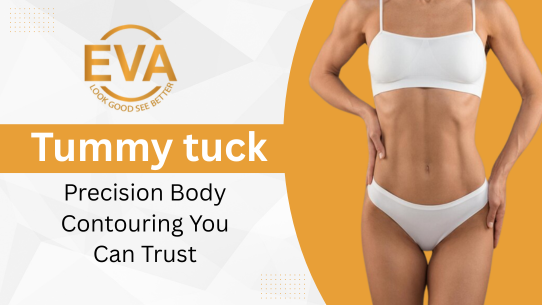
A tummy tuck addresses a different set of concerns. It is commonly considered by people who have excess abdominal skin, weakened or separated abdominal muscles, or changes in the abdominal wall that remain after pregnancy or substantial weight loss.
During an abdominoplasty, excess skin is removed and the remaining tissues are repositioned. Depending on the patient’s needs, the surgeon may also repair separated abdominal muscles. The exact procedure depends on the examination findings and surgical plan.
A tummy tuck can produce a flatter abdominal profile in suitable patients, but it is a more extensive operation than liposuction alone. It generally involves an incision and a recovery period that requires careful planning.
Understanding the Result in Context
When evaluating tummy tuck photographs, patients should consider more than how flat the abdomen appears. The position and healing of the scar, the shape of the waist, the transition between the abdomen and surrounding areas, and the amount of excess skin removed can all be relevant.
It is also important to recognise that scars do not disappear completely. Their appearance may change over time, but healing varies from person to person. Skin tone, genetics, wound healing, tension on the incision and postoperative care can all influence the final scar.
A tummy tuck surgeon in Delhi should explain where the incision is expected to sit, what type of scar is likely, how long healing may take and what restrictions will apply during recovery. These details are essential when weighing the potential benefits against the practical demands of surgery.
Patients should ask whether the proposed operation is intended to address excess skin, abdominal muscle separation, localised fat or a combination of concerns. This helps ensure that the procedure is being considered for the right reasons.
Liposuction vs Tummy Tuck: Which Result Is Relevant to You?
Although patients sometimes compare these procedures as if they were interchangeable, their purposes differ.
Liposuction is generally used to remove localised fat deposits. A tummy tuck is intended to remove excess abdominal skin and may include abdominal muscle repair. In selected cases, both procedures may be considered together, but combining operations is not appropriate for everyone.
| Concern | Liposuction | Tummy tuck |
|---|---|---|
| Localised fat deposits | Primary purpose | May be addressed as part of a broader plan |
| Significant loose abdominal skin | Does not reliably remove it | Designed to remove excess skin |
| Separated abdominal muscles | Does not repair them | Muscle repair may be included |
| Incisions and scars | Usually smaller access incisions | Typically a longer lower-abdominal scar |
| Recovery | Depends on treatment area and extent | Often involves more extensive recovery |
| Weight loss | Not a weight-loss procedure | Not a weight-loss procedure |
The most suitable option depends on the clinical findings, medical history, goals and willingness to accept the recovery and risks. A procedure should not be chosen simply because a photograph appears attractive or because it has a lower advertised price.
Why the Same Procedure Can Produce Different Results
One of the most important points to understand before surgery is that outcomes are individual. A patient may have a smooth result after liposuction, while another may develop visible irregularities or persistent swelling. A tummy tuck may improve abdominal shape substantially in one person but produce a more modest change in another.
Several factors can contribute to these differences.
1. Skin Quality and Healing
Skin elasticity influences how the skin responds after underlying fat is removed. When skin has limited elasticity, it may not retract as much as expected after liposuction. This is one reason a surgeon evaluates skin quality before recommending a procedure.
Healing also affects the final appearance. Swelling can temporarily obscure contours, while scars may continue to mature for many months. An early postoperative photograph should not automatically be compared with an image taken much later in the recovery process.
2. The Original Concern
A patient with a small, localised fat deposit has a different starting point from someone with significant excess skin after major weight loss. The procedures needed to address these concerns may be different, and the achievable results will also differ.
This is why online photographs should not be used to diagnose a patient’s suitability. An in-person examination or an appropriate clinical assessment is needed to understand the underlying issue.
3. Health and Medical History
Smoking, certain medications, underlying medical conditions and previous operations can affect surgical planning and healing. These factors should be discussed openly during the consultation.
Patients should provide accurate information about their medical history and follow the surgeon’s instructions about medicines, smoking cessation, fasting and other preparation requirements. Medication should not be stopped or changed without appropriate medical advice.
4. Postoperative Care
Recovery is part of the surgical process. Following activity restrictions, attending review appointments and monitoring the surgical area can help identify problems early.
Patients should not assume that strenuous exercise or heavy lifting can resume as soon as discomfort improves. The timeline varies by procedure and individual circumstances, and the treating surgeon should provide specific guidance.
How to Research Liposuction Surgery Cost in Delhi
Cost is a reasonable consideration when comparing surgical options. However, the lowest advertised price may not reflect the full cost of treatment or the level of care required.
The liposuction surgery cost in Delhi can vary according to the number and size of areas treated, the complexity of the procedure, the surgical technique, anaesthesia requirements, hospital or facility charges and postoperative follow-up.
A person asking about liposuction cost in Delhi should clarify exactly what a quotation includes. For example, does it cover the surgeon’s fee, anaesthesia, the operating facility, prescribed garments, medications and follow-up appointments? Are additional tests or treatments charged separately?
The phrase liposuction in Delhi price may produce a wide range of online estimates, but a general figure cannot establish what an individual patient will pay. A personalised quotation should follow an assessment of the treatment area and the proposed plan.
Patients should also be cautious about comparing different procedures solely by price. A quotation for one small treatment area is not equivalent to a quotation for several areas, and a simple procedure is not directly comparable with a more extensive operation.
Questions to Ask About Liposuction Fees
Before making a decision, consider asking:
-
What areas are included in the proposed procedure?
-
Which technique is being recommended, and why?
-
What are the surgeon’s and anaesthesia team’s fees?
-
Which facility charges and postoperative services are included?
-
Are compression garments, medicines and follow-up visits included?
-
What additional costs might arise if treatment or monitoring is needed?
These questions help patients compare estimates on a like-for-like basis rather than relying on a single headline price.
Frequently Asked Questions
1. How do I compare liposuction surgery in Delhi with tummy tuck surgery in Delhi?
Start by identifying the main concern. Liposuction removes selected fat deposits, whereas a tummy tuck removes excess abdominal skin and may include muscle repair. A clinical assessment helps determine which procedure, if any, is appropriate.
2. What affects liposuction surgery cost in Delhi?
The cost can depend on the treatment areas, procedure complexity, anaesthesia, facility charges, surgical technique and postoperative care. Request an itemised quotation based on your individual treatment plan.
3. How much is tummy tuck cost in Delhi?
There is no single price that applies to every patient. The extent of skin removal, possible muscle repair, surgical setting and other treatment requirements affect the final quotation. Ask the provider what is included and whether additional expenses may arise.
4. How can I find the best liposuction in Delhi?
Verify the surgeon’s qualifications and relevant experience, ask about the surgical facility and anaesthesia arrangements, review appropriately contextualised results and discuss risks and recovery. No online ranking can guarantee an individual outcome.
5. How do I choose a tummy tuck surgeon in Delhi?
Look for a suitably qualified plastic surgeon who evaluates your medical history, explains the procedure and alternatives, discusses scars and complications, and provides a clear postoperative follow-up plan.
6. Do before-and-after photographs guarantee my result?
No. Photographs show an individual result at a particular time. Your outcome may differ because of skin quality, body proportions, health, healing and other individual factors.
7. Is liposuction a substitute for weight loss?
No. Liposuction is a body-contouring procedure for selected fat deposits, not a treatment for obesity or a substitute for healthy weight management.
8. Does a tummy tuck remove all abdominal imperfections?
No. It can remove excess skin and may improve abdominal contour, but it cannot guarantee a perfectly flat abdomen or remove every stretch mark, scar or contour irregularity.
About Dr Hiranmayi Jha
Dr Hiranmayi Jha is a Consultant Plastic & Cosmetic Surgeon associated with Eterna Vision & Aesthetics in Delhi NCR. Her consultations focus on understanding individual concerns, discussing appropriate treatment options and helping patients make informed decisions about cosmetic and reconstructive procedures.
Medical Review Note: This content is medically reviewed by Dr. Hiranmayi Jha, Consultant Plastic & Cosmetic Surgeon, Delhi.