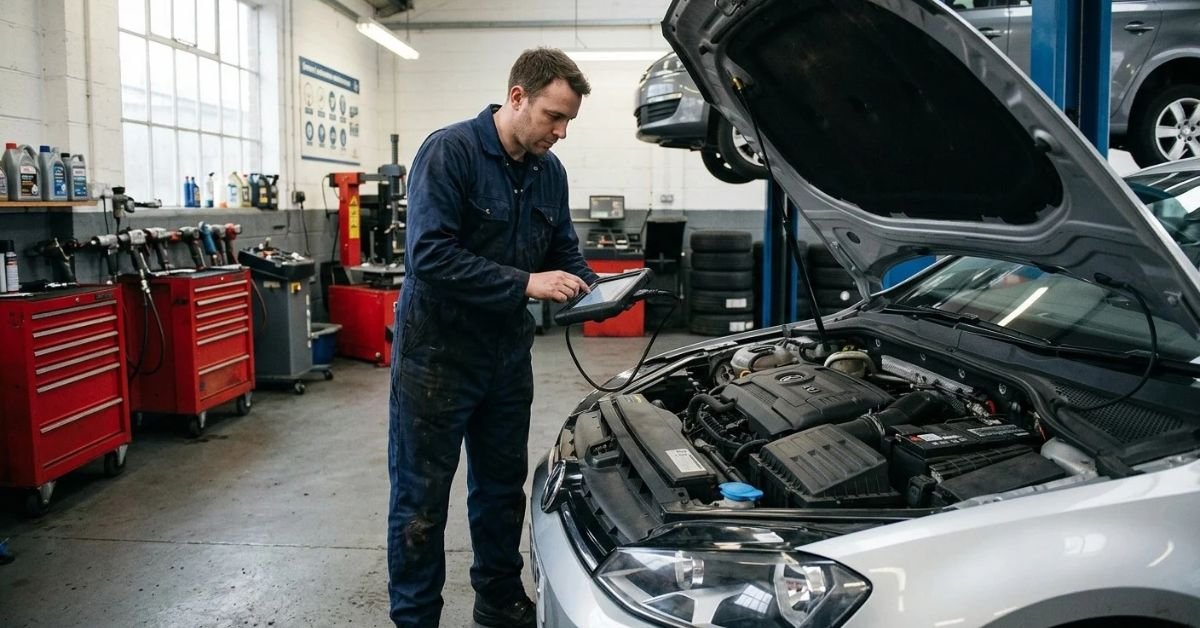
A car engine diagnostic test uses electronic diagnostic equipment to identify fault codes and examine vehicle data, helping a technician narrow down potential problems before unnecessary repairs are carried out.
It can be particularly useful when an engine warning light appears, performance changes or a vehicle develops symptoms that are difficult to diagnose. If you need professional help identifying an engine fault, a car diagnostic service can provide more detailed testing than a basic DIY scanner.
What Is a Car Engine Diagnostic Test?
Modern cars contain electronic control units (ECUs) that monitor numerous systems using sensors. When the vehicle detects an abnormal reading or fault, it may store a diagnostic trouble code (DTC) and, depending on the problem, illuminate a dashboard warning light.
During a diagnostic test, a scanner is connected to the vehicle’s diagnostic port, usually the OBD port. The equipment communicates with the vehicle’s electronic systems and retrieves relevant fault information.
A diagnostic scan is therefore a starting point for finding a problem rather than a replacement for proper mechanical diagnosis.
What Does an Engine Diagnostic Test Check?
The exact information available depends on the vehicle, its systems and the diagnostic equipment being used. An engine diagnostic test may examine:
1. Fault Codes
The scanner retrieves stored or pending diagnostic trouble codes. These can point towards issues involving the engine, sensors, emissions, fuel or ignition systems.
2. Engine Sensors and Live Data
Professional equipment can often display live information from sensors while the engine is running. This may include engine speed, coolant temperature, oxygen sensor readings, throttle position and airflow measurements.
Comparing these readings with expected values can help a technician investigate a fault more accurately.
3. Fuel and Air Systems
Problems with the air intake, fuel delivery or air-fuel mixture can affect performance, fuel economy and emissions. Diagnostic information can help identify areas that require further testing.
4. Ignition and Misfire-Related Faults
Fault codes may help identify misfires or problems associated with components such as ignition coils, spark plugs or related engine-control systems.
5. Emissions and Exhaust Systems
Modern vehicles monitor several emissions-related components. A diagnostic scan can reveal relevant fault codes when the vehicle detects an abnormal condition.
What Can a Diagnostic Test Tell You?
A diagnostic test can provide valuable information about where to investigate a problem, but it does not always identify the failed component with certainty.
For example, a sensor-related fault code does not necessarily mean the sensor itself needs replacing. The underlying cause could involve wiring, a connector, an air leak, another faulty component or an abnormal engine condition.
This is why professional diagnosis often combines scan results with visual inspections, live-data analysis and additional mechanical tests.
The main benefit is that diagnostics can reduce guesswork and help technicians make more informed repair decisions.
When Should You Get a Car Engine Diagnostic Test?
A diagnostic check can be worthwhile if you notice:
- An engine management or warning light
- Rough idling or engine misfires
- Loss of power or poor acceleration
- Unusual engine behaviour
- Difficult starting
- Unexpected changes in fuel economy
- Recurring warning lights
- Electronic or sensor-related problems
It can also be useful when buying a used car, particularly if there are unexplained warning lights or performance concerns. However, a diagnostic scan should complement rather than replace a thorough used-car inspection.
How Does a Car Diagnostic Test Work?
A typical diagnostic process involves several steps:
- Connect the equipment: A diagnostic scanner is connected to the vehicle’s OBD port.
- Scan the systems: The equipment communicates with relevant electronic control units and retrieves available fault information.
- Interpret the results: The technician considers the codes alongside symptoms and vehicle data.
- Carry out further checks: Additional electrical, mechanical or visual tests may be needed to confirm the underlying fault.
- Repair and verify: Once the problem has been repaired, the vehicle can be tested again to confirm that the fault has been resolved.
Simply clearing a warning light without identifying the cause is not a proper diagnosis.
How Long Does an Engine Diagnostic Test Take?
A basic diagnostic scan can sometimes be completed relatively quickly, but the total time depends on the vehicle and the complexity of the fault.
Reading a fault code may take only a short time, while identifying the underlying cause can require additional testing. A straightforward sensor issue may be easier to diagnose than an intermittent electrical fault or complex engine performance problem.
How Much Does a Car Diagnostic Test Cost in the UK?
Diagnostic prices vary between garages and depend on the vehicle, equipment used and depth of testing required. A basic code scan may cost less than a comprehensive diagnostic investigation.
Before booking, ask whether the quoted price covers only code reading or includes further diagnostic work. This distinction can make a significant difference when comparing prices.
Can a Diagnostic Test Find Every Engine Problem?
No. A diagnostic scan primarily identifies electronically monitored faults. Some mechanical problems may not generate a fault code at all.
Issues such as certain compression problems, physical component damage, leaks or mechanical wear may require separate inspections and specialist tests.
For this reason, a diagnostic scan should be viewed as one part of the wider diagnostic process.
FAQ’s
Does a diagnostic test fix an engine problem?
No. The test provides information that helps identify a potential fault. Any necessary repairs must be carried out separately.
Can a diagnostic test tell me exactly what is wrong?
Not always. Fault codes provide valuable clues, but additional testing may be required to establish the root cause.
Can I perform a diagnostic test myself?
Basic OBD scanners are available for motorists, but professional diagnostic equipment can access more vehicle systems and provide more detailed information.
Should I get a diagnostic test when the engine warning light appears?
Yes, particularly if the warning light remains illuminated or the vehicle develops symptoms. If the car is running poorly or displaying a serious warning, have it assessed promptly.
Is a diagnostic test the same as a car service?
No. A diagnostic test focuses on identifying electronic fault information and investigating specific problems. A service involves scheduled maintenance and checks according to the vehicle manufacturer’s requirements.
Conclusion
A car engine diagnostic test is a valuable first step when a warning light, performance problem or unexplained fault appears. It can reveal stored fault codes and useful vehicle data, helping technicians investigate problems more efficiently.
However, the scan is not always the final diagnosis. Combining electronic diagnostics with appropriate mechanical and visual checks provides a more reliable way to identify faults and avoid unnecessary repairs.