Climate change is no longer a discussion limited to environmental organizations and policymakers. It has become a major business concern affecting industries worldwide. Governments are introducing stricter emissions regulations, investors are evaluating companies based on sustainability performance, and consumers increasingly support businesses that take measurable climate action.
As organizations seek practical ways to reduce their environmental impact, carbon credits have emerged as one of the most effective mechanisms for achieving sustainability goals. The rapid growth of carbon trading has created demand for advanced digital platforms that simplify transactions, improve transparency, and connect market participants efficiently. This growing demand has made carbon credit marketplace development one of the most attractive opportunities in the climate technology sector.
For startups, enterprises, and investors, carbon marketplaces represent more than just trading platforms. They are becoming critical infrastructure for the future carbon economy.
Understanding the Role of Carbon Credits
Carbon credits are tradable environmental assets designed to reduce the overall concentration of greenhouse gases in the atmosphere. Each carbon credit represents one metric ton of carbon dioxide equivalent that has either been removed from the atmosphere or prevented from being emitted.
Carbon credits are typically generated through environmental projects such as:
- Reforestation programs
- Forest preservation initiatives
- Renewable energy projects
- Sustainable agriculture practices
- Land restoration programs
- Methane capture facilities
- Carbon removal technologies
Organizations that cannot completely eliminate emissions can purchase these credits to compensate for their environmental impact.
This creates a financial incentive for climate-positive projects while helping businesses achieve carbon reduction goals.
Why the Carbon Market Is Expanding Rapidly
The carbon market has experienced substantial growth over the last several years. Multiple factors are contributing to this expansion.
Net-Zero Commitments
Thousands of organizations have pledged to achieve net-zero emissions. Carbon credits provide a practical solution for addressing unavoidable emissions.
Regulatory Pressure
Governments across the world are introducing carbon reporting requirements and emissions reduction targets that encourage participation in carbon markets.
Investor Demand
ESG investing has become a major trend among institutional and private investors. Companies with strong sustainability initiatives often receive greater investment interest.
Customer Expectations
Modern consumers expect brands to demonstrate environmental responsibility through measurable actions rather than marketing claims.
International Climate Goals
Global agreements focused on reducing greenhouse gas emissions continue driving demand for carbon offset solutions.
These trends are expected to support long-term growth in carbon trading activity.
What Is a Carbon Credit Marketplace?
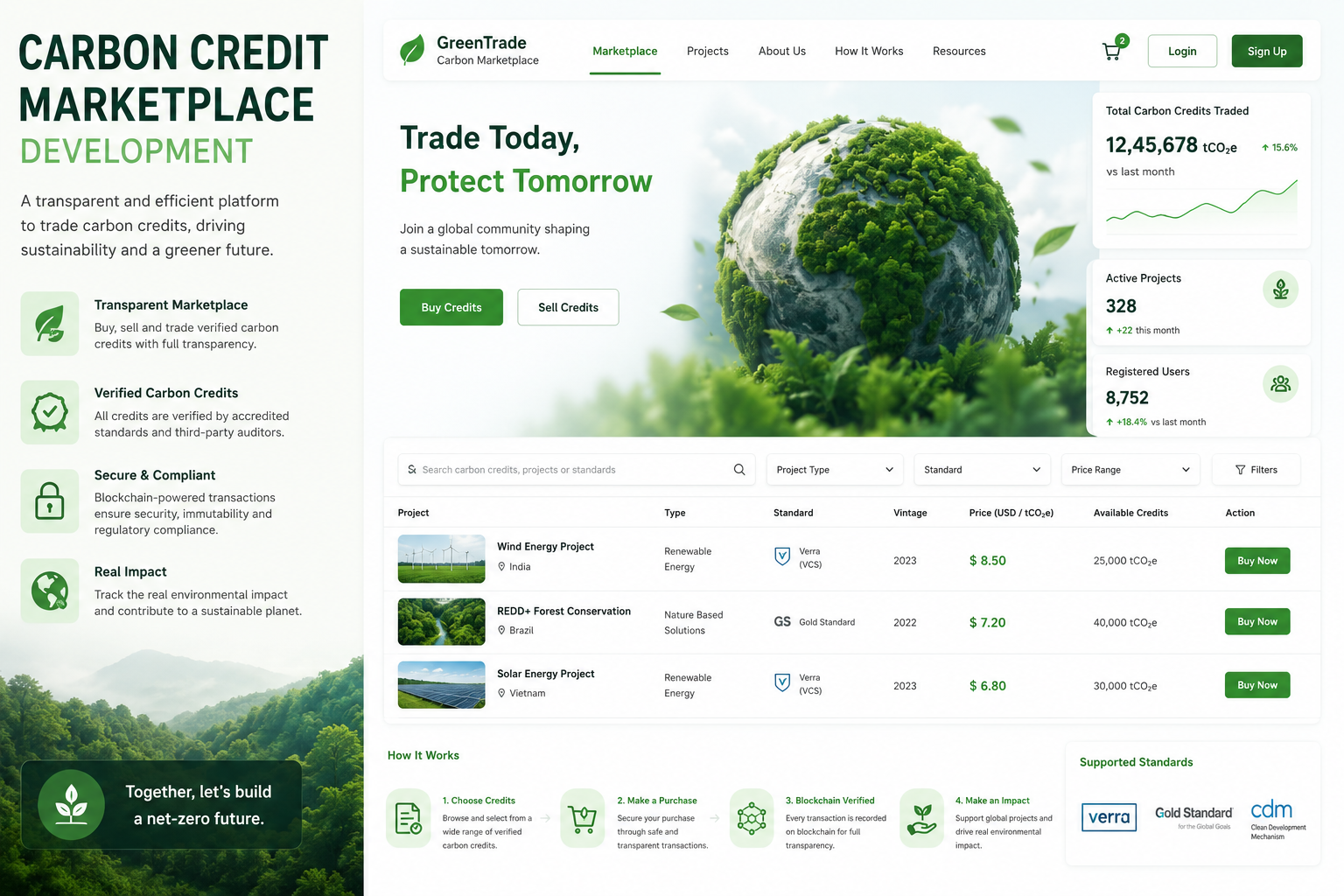
A carbon credit marketplace is a digital ecosystem that allows users to buy, sell, verify, transfer, and manage carbon credits.
The platform serves as a centralized hub where multiple stakeholders interact within a transparent and secure environment.
Participants typically include:
- Businesses purchasing carbon offsets
- Carbon project developers
- Sustainability consultants
- Investors
- Government agencies
- Certification organizations
- Environmental nonprofits
A marketplace simplifies the entire carbon trading process while improving accessibility for both buyers and sellers.
Why Carbon Credit Marketplace Development Is a Valuable Business Opportunity
The increasing demand for carbon credits is creating significant opportunities for technology companies and entrepreneurs.
Businesses that invest in carbon credit marketplace development can establish themselves within an industry that is expected to continue growing as sustainability becomes a core business requirement.
Unlike traditional environmental initiatives, carbon marketplaces generate revenue while simultaneously supporting climate action.
This combination of profitability and purpose makes the sector particularly attractive for modern businesses.
Core Components of a Carbon Trading Platform
A successful marketplace requires much more than a simple listing system. It must provide the infrastructure necessary to support secure, transparent, and scalable trading.
User Management System
The platform should support multiple user roles including buyers, sellers, administrators, auditors, and project developers.
Verification Framework
Verification systems ensure that listed carbon credits are legitimate and supported by recognized certification standards.
Trading Engine
An advanced trading engine allows participants to buy and sell credits efficiently while maintaining transparency.
Carbon Asset Registry
A centralized registry helps track ownership and prevent duplicate usage of credits.
Payment Infrastructure
Secure payment systems support transactions across multiple currencies and geographic regions.
Reporting Dashboard
Users require detailed insights into their carbon portfolios, offset achievements, and trading activity.
Compliance Management
Automated compliance tools simplify reporting obligations and regulatory requirements.
The Importance of Transparency in Carbon Markets
Trust remains one of the most important factors in carbon trading.
Organizations purchasing carbon credits need confidence that the credits represent genuine environmental benefits. Without transparency, buyers may question the legitimacy of projects and reduce participation.
A well-designed marketplace should provide:
- Complete project documentation
- Verification certificates
- Historical transaction records
- Environmental impact metrics
- Credit retirement tracking
These features help build confidence among market participants and strengthen marketplace credibility.
Blockchain and Carbon Trading
Blockchain technology has become increasingly relevant within carbon markets.
One of the industry’s biggest challenges is preventing double counting, where the same carbon credit is claimed by multiple parties. Blockchain addresses this issue by creating permanent and transparent ownership records.
Benefits of blockchain integration include:
Improved Traceability
Every transaction can be tracked throughout the lifecycle of a carbon credit.
Enhanced Security
Blockchain reduces the risk of unauthorized modifications and fraud.
Automated Transactions
Smart contracts can execute trades automatically when predefined conditions are met.
Greater Transparency
Participants can independently verify ownership and transaction history.
Because of these advantages, blockchain is often considered an important component of modern carbon credit marketplace development projects.
Revenue Models for Carbon Marketplaces
Carbon marketplaces offer multiple monetization opportunities.
Transaction-Based Revenue
Marketplace operators earn fees from every completed trade.
Subscription Services
Users pay monthly or annual fees for advanced features and analytics.
Project Listing Charges
Developers pay fees to list carbon credits on the platform.
Verification Services
Additional revenue can be generated through project validation support.
Market Intelligence
Selling industry data, insights, and carbon market reports.
Enterprise Solutions
Custom marketplace solutions for large corporations and governments.
Diversified revenue streams create long-term business sustainability.
Challenges in Carbon Marketplace Development
Although the industry presents substantial opportunities, businesses must address several operational challenges.
Regulatory Complexity
Carbon regulations vary significantly across countries and jurisdictions.
Credit Verification
Ensuring the legitimacy of carbon projects requires rigorous validation processes.
Market Liquidity
New marketplaces need sufficient buyer and seller participation to support efficient trading.
Data Management
Accurate environmental data is essential for maintaining marketplace trust.
Cybersecurity
Protecting sensitive financial and environmental information remains a top priority.
Successful platforms invest heavily in technology, governance, and compliance systems to address these challenges.
Why Carbon Credit Consulting Services Matter
The carbon market combines environmental science, finance, regulation, and technology. This complexity often creates barriers for organizations entering the industry.
Carbon Credit Consulting Services help businesses understand market dynamics and develop effective sustainability strategies.
Whether an organization is purchasing credits, developing carbon projects, or launching a trading platform, professional guidance can significantly improve decision-making.
Services Offered by Carbon Market Consultants
Consultants provide support across multiple areas of carbon market participation.
Carbon Strategy Development
Creating roadmaps for sustainability and emissions reduction goals.
Project Assessment
Evaluating carbon projects based on quality, credibility, and environmental impact.
Compliance Support
Helping organizations meet reporting requirements and regulatory obligations.
Risk Management
Identifying operational and financial risks associated with carbon investments.
ESG Integration
Aligning carbon initiatives with broader sustainability objectives.
Marketplace Advisory
Supporting businesses involved in carbon credit marketplace development through planning, execution, and growth stages.
These services help organizations maximize both environmental impact and financial returns.
How Carbon Credit Consulting Services Support Marketplace Growth
Launching a successful carbon marketplace requires industry expertise in addition to technical capabilities.
Carbon Credit Consulting Services can assist with:
- Market research
- Business model design
- Regulatory planning
- Verification processes
- Partnership development
- User acquisition strategies
- Sustainability reporting frameworks
Their involvement often accelerates platform development while improving marketplace credibility and operational efficiency.
Future Trends Shaping the Carbon Economy
The future of carbon trading will be influenced by several emerging trends.
Artificial Intelligence
AI will improve carbon accounting, project verification, and market forecasting.
Tokenized Carbon Assets
Digital tokens may simplify ownership transfers and improve market liquidity.
Automated Compliance Systems
Technology will streamline environmental reporting and regulatory audits.
Carbon Removal Markets
Advanced carbon capture technologies are expected to create new categories of tradable credits.
Cross-Border Carbon Trading
Global market integration may increase trading opportunities and improve liquidity.
Businesses that adapt to these developments will be better positioned for long-term success.
Conclusion
The carbon economy is rapidly becoming a foundational component of global sustainability efforts. As organizations seek reliable methods to offset emissions and meet environmental commitments, demand for advanced carbon trading platforms continues to grow.
Investing in carbon credit marketplace development allows businesses to participate in a high-growth industry while supporting meaningful climate action. These platforms create transparent, efficient, and scalable environments for carbon trading while opening new revenue opportunities for marketplace operators.
At the same time, Carbon Credit Consulting Services provide the expertise needed to navigate regulations, evaluate projects, and develop effective carbon strategies. Together, innovative technology and professional guidance are helping build a more transparent and sustainable future for carbon markets worldwide.