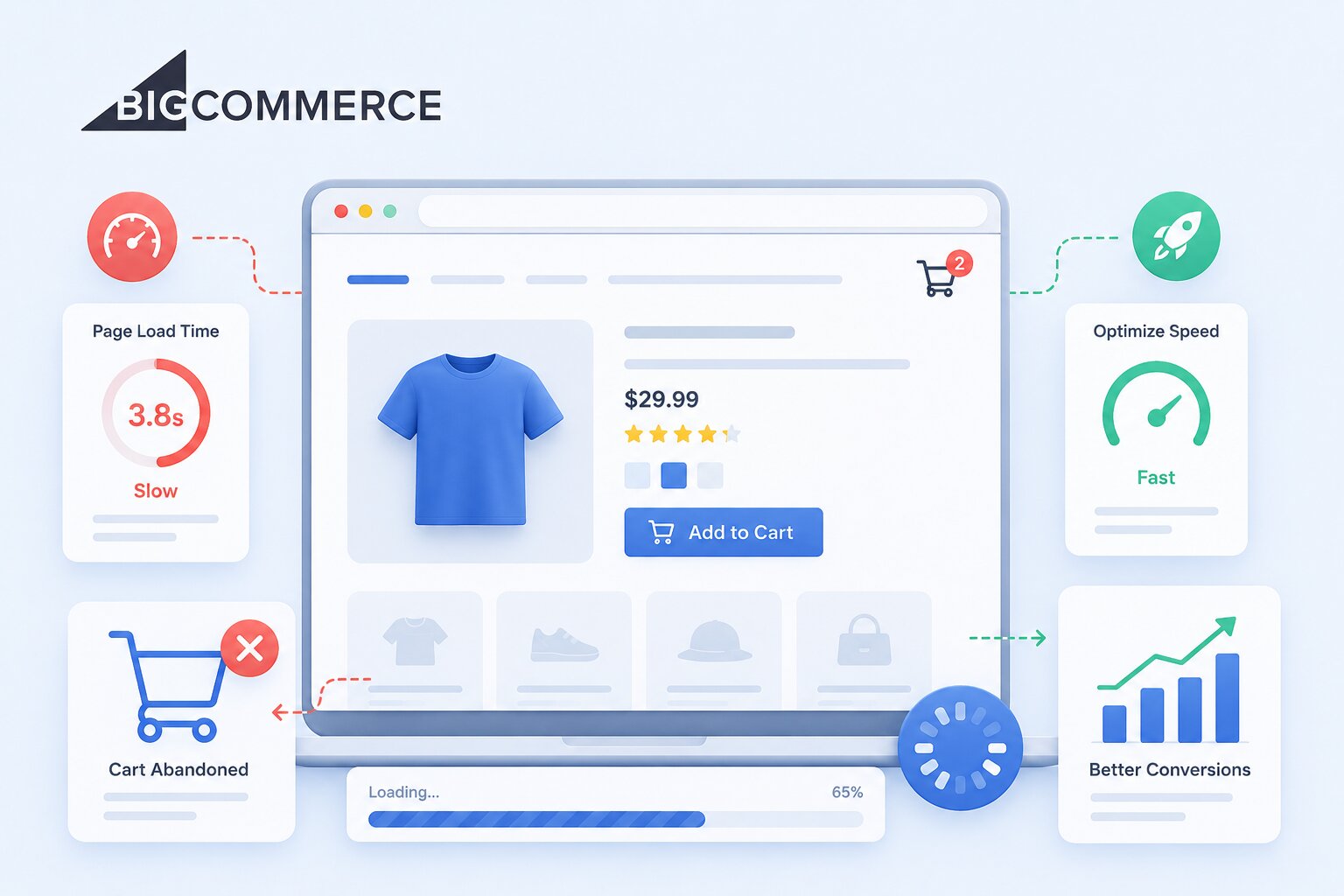
Every online store owner has faced it. A shopper adds products to the cart, moves toward checkout, and then disappears without completing the purchase. Cart abandonment is one of the biggest revenue leaks in e-commerce, and while pricing, trust, and shipping costs often get the blame, website speed is frequently the hidden reason behind it.
For BigCommerce store owners, speed is not just a technical metric. It directly shapes how customers experience the buying journey. A slow-loading homepage, laggy product pages, or delayed checkout flow can quietly push visitors away before they ever complete a purchase. This is exactly why many brands now rely on a BigCommerce speed optimizer strategy to improve both user experience and conversions.
The reality is simple: customers expect online stores to feel instant. If pages hesitate, users lose confidence quickly.
Why Website Speed Impacts Cart Abandonment
Online shoppers make decisions fast. They compare products, jump between tabs, and expect pages to respond immediately. Even a small delay can interrupt momentum. When a BigCommerce store loads slowly, customers often experience:
- Delayed product image loading
- Sluggish mobile browsing
- Slow add-to-cart actions
- Checkout friction
- Page freezing during navigation
These issues create frustration, especially on mobile devices where patience is even lower. A shopper may not consciously think, “This site is slow.” Instead, they simply leave and continue shopping on other faster websites. That is how speed silently contributes to cart abandonment.
How Slow Speed Quietly Pushes Customers Away
Many BigCommerce stores lose sales because of small speed delays throughout the shopping journey, not one major issue. Common abandonment triggers include:
- Product pages are loading too slowly
- Delayed add-to-cart actions
- Sluggish mobile browsing
- Checkout pages freezing or lagging
- Slow payment or coupon processing
These delays interrupt shopping flow and create frustration. Many customers simply leave before completing the purchase, even if they were ready to buy.
The hidden problem is that store owners often blame abandoned carts on pricing or shipping, while website speed quietly affects conversions in the background.
The Psychology Behind Faster E-commerce Experiences
Fast websites feel more trustworthy. They create a smoother shopping flow and reduce hesitation during checkout. Think about how customers behave when shopping online:
- They want product pages to open instantly
- They expect images to load without delay
- They want checkout steps to feel effortless
- They assume fast sites are more reliable and secure
When pages lag, customers subconsciously question the overall shopping experience. Slow performance can make even a professional-looking store feel unreliable. That is why improving speed is no longer just a developer task. It has become a conversion optimization priority.
BigCommerce Stores Often Face Hidden Speed Issues
BigCommerce provides a strong e-commerce foundation, but many stores unknowingly create performance problems over time. Common causes include:
Heavy Product Images
Large, uncompressed images are one of the biggest reasons ecommerce pages slow down. High-resolution product visuals may look impressive, but oversized files increase loading time significantly.
Too Many Apps and Scripts
Many store owners install multiple apps for marketing, reviews, pop-ups, analytics, and customer support. While useful individually, too many third-party scripts can slow down the entire storefront.
Unoptimized Themes
Some BigCommerce themes prioritize design over performance. Excess animations, sliders, and unnecessary elements can hurt loading speed.
Mobile Performance Problems
A store that works well on desktops may still perform poorly on mobile devices. Since a large percentage of e-commerce traffic now comes from smartphones, mobile speed matters more than ever.
How Faster Websites Improve E-commerce Conversions
Website speed influences every stage of the customer journey. A faster BigCommerce store can help:
- Reduce bounce rates
- Increase product page engagement
- Improve checkout completion rates
- Encourage longer browsing sessions
- Build stronger customer trust
Most importantly, speed helps maintain shopping momentum. When customers move through the site smoothly, they are more likely to complete purchases without interruption.
As an e-commerce brand looking to boost your website speed, investing in better performance can be a valuable decision that leads to smoother shopping experiences, lower cart abandonment, stronger customer trust, and higher conversion rates.
Simple Ways to Improve BigCommerce Website Speed
The good news is that improving speed does not always require major technical changes. Small optimizations can make a noticeable difference.
Optimize Product Images
Images should be compressed and properly sized before uploading. Modern formats like WebP can help reduce file size while maintaining quality. Avoid uploading oversized images that are much larger than the display dimensions.
Remove Unnecessary Apps
Review all installed apps and remove the ones that no longer provide clear value. Every additional script can impact loading performance.
Keeping only essential tools helps create a cleaner and faster storefront.
Choose a Lightweight Theme
Some themes are built with better performance practices than others. A clean, lightweight design often performs better than visually overloaded layouts. Simple navigation and faster rendering improve user experience significantly.
Improve Mobile Optimization
Mobile shoppers expect speed and smooth navigation. Testing your BigCommerce store on different mobile devices can help identify hidden usability and performance issues. Buttons, images, and checkout steps should all work seamlessly on smaller screens.
Use Performance-Focused Optimization Tools
Many e-commerce businesses now use dedicated optimization solutions to improve loading speed, image handling, and frontend performance without rebuilding the entire store. A reliable speed optimization approach can reduce friction across the customer journey.
Website Speed Is Part of Customer Experience
Today’s ecommerce shoppers expect convenience. They compare brands not only by pricing and products but also by how smooth the shopping experience feels.
A fast BigCommerce store communicates professionalism, reliability, and efficiency. It helps customers stay engaged instead of frustrated. That is why speed optimization should not be treated as a one-time technical fix. It should be viewed as an ongoing part of an e-commerce growth strategy.
Conclusion
Cart abandonment is rarely caused by a single issue. But website speed often plays a larger role than many BigCommerce store owners realize.
Slow-loading pages, delayed interactions, and sluggish mobile experiences quietly create friction throughout the shopping journey. Over time, those small delays can lead to lost sales, weaker customer trust, and reduced conversions.
Improving performance with a smart BigCommerce speed optimizer approach can create a smoother experience from product discovery to checkout completion. Faster websites help shoppers stay engaged, build confidence, and complete purchases more consistently.
For growing ecommerce brands, website speed is no longer optional. It is part of delivering the kind of online shopping experience customers now expect.
FAQs
Why does website speed affect cart abandonment in BigCommerce?
Slow-loading pages create friction during the shopping experience. Customers often leave if product pages or checkout steps take too long to load.
What is a BigCommerce speed optimizer?
A BigCommerce speed optimizer refers to strategies, tools, or services designed to improve store performance, reduce loading times, and enhance user experience.
How can I improve my BigCommerce store’s speed?
You can improve speed by compressing images, removing unnecessary apps, using lightweight themes, and optimizing mobile performance.
Does website speed impact e-commerce SEO?
Yes. Faster websites generally provide better user experiences, which can positively influence SEO signals like Core Web Vitals and engagement metrics.
Why is mobile speed important for BigCommerce stores?
Many e-commerce shoppers browse and purchase through mobile devices. Poor mobile performance can increase bounce rates and reduce conversions.
Can faster checkout pages reduce cart abandonment?
Yes. A smoother and faster checkout experience helps reduce friction and encourages customers to complete purchases instead of leaving midway.