If you’ve ever sat down to meditate and thought…
“I can’t stop thinking.”
“I’m terrible at this.”
“Maybe meditation just isn’t for me.”
You’re not alone.
One of the biggest myths around meditation is that your mind is supposed to become silent from day one. Social media often shows people sitting peacefully with closed eyes, looking completely unaffected by the chaos of life. Reality is much messier.
Meditation doesn’t reveal how calm you are.
It reveals how busy your mind has always been.
And for most people, that’s the first surprise.
If you’re exploring meditation for beginners, here’s something worth remembering: almost every obstacle you face isn’t a sign to quit, but an invitation to understand yourself a little better.
The Beginner’s Checklist: “Is This Normal?”
Before we dive deeper, here’s some reassurance.
If you’ve experienced any of these, congratulations! You’ve just joined almost everyone who’s ever tried meditating.
- Your mind jumps from one thought to another in seconds.
- You keep checking how much time has passed.
- Sitting still feels strangely uncomfortable.
- You wonder if you’re “doing it correctly.”
- You feel sleepy instead of peaceful.
- Some emotions become stronger instead of disappearing.
- You expect instant calm but leave feeling more aware of your mental noise.
None of these mean you’re failing.
They simply mean you’re paying attention for the first time.
Challenge #1: “My Mind Won’t Stop Thinking.”
Here’s the twist.
Meditation isn’t about stopping thoughts.
It’s about changing your relationship with them.
Imagine standing beside a busy road. Cars keep passing, but you don’t chase every single one. Thoughts work the same way. They arrive, they leave, and you slowly learn not to climb into each one.
That shift, from reacting to observing, is where meditation quietly begins.
Instead of Fighting Your Mind, Try This
The next time thoughts take over, resist the urge to become frustrated.
Instead:
- Notice the thought without judging it.
- Bring your attention back to your breath.
- Repeat this process gently, even if you have to do it fifty times.
- Celebrate returning, not wandering.
Every return is practice.
Challenge #2: “I Don’t Have Enough Time.”
Modern life makes meditation feel like another task on an already crowded to-do list.
Ironically, that’s exactly why it matters.
You don’t need an hour.
You need consistency.
Three mindful minutes every day will always beat thirty distracted minutes once a month.
The goal isn’t to escape life.
It’s to become more present while living it.
Tiny Habits That Make Meditation Stick
Instead of forcing a perfect routine:
- Meditate immediately after waking up.
- Keep your phone away for the first few minutes.
- Use the same corner of your home every day.
- Focus on building the habit before increasing the duration.
- Let progress feel natural, not forced.
Small rituals create lasting discipline.
Challenge #3: “I Don’t Feel Anything.”
This is where many beginners stop.
They expect meditation to produce instant peace, dramatic insights or emotional breakthroughs.
Sometimes it does.
Often, it doesn’t.
Growth in meditation is surprisingly quiet.
You may simply notice that you react a little less.
You become a little more patient.
You recover from stressful moments a little faster.
The biggest transformations rarely announce themselves.
They slowly become your new normal.
Why Learning in the Right Environment Changes Everything
Meditating alone is possible.
Learning alongside experienced guides can make the journey far less confusing.
Across India, immersive spiritual experiences are helping beginners build confidence through guided practices rather than trial and error. Many seekers now prefer spiritual retreats in India because they combine meditation with reflection, structure and a supportive environment instead of expecting participants to figure everything out on their own.
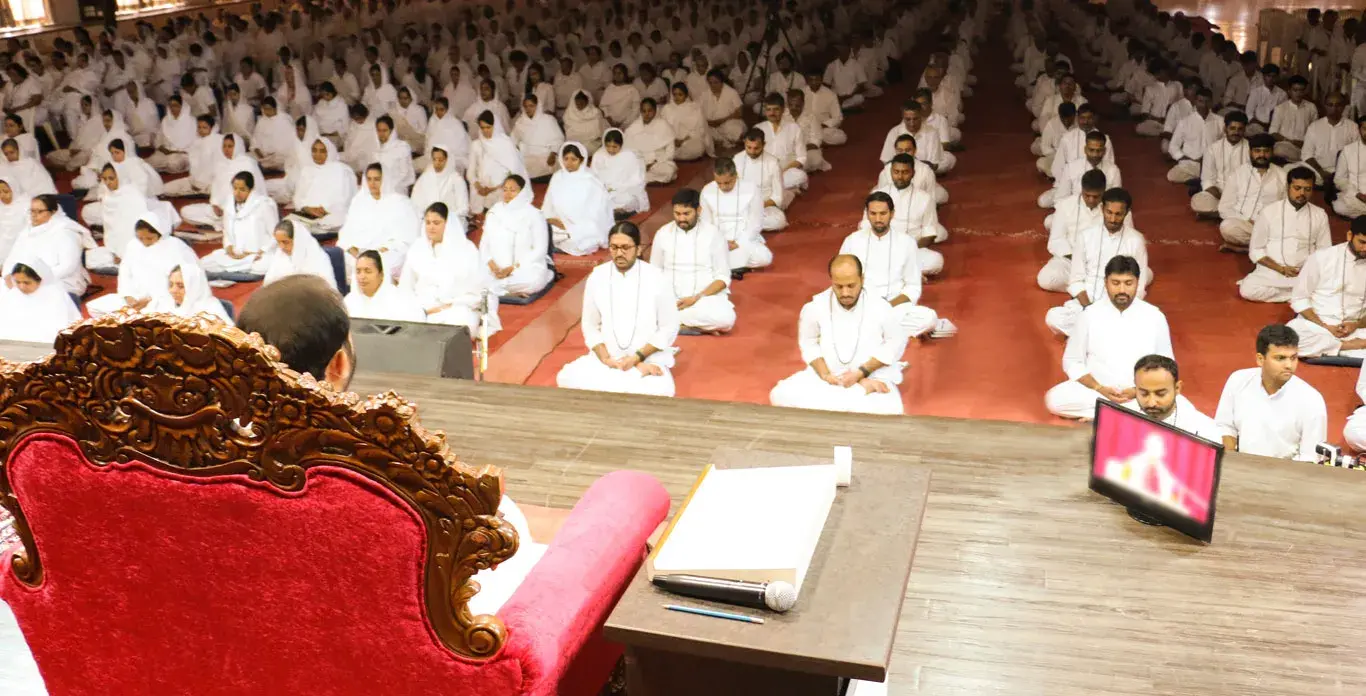
One such experience is the Basic Sadhana Bhatti, a thoughtfully designed three-day meditation retreat by Shrimad Rajchandra Mission Dharampur (SRMD).
Created by Pujya Gurudevshri Rakeshji, the retreat is built specifically for beginners and revolves around four transformational themes that nurture awareness, emotional balance, clarity and a deeper connection with oneself.
Rather than overwhelming participants with theory, it blends guided meditation sessions, digital detox, introspection and inspiring pravachan sessions into a practical experience that gently eases people into meditation.
What Makes a Beginner-Friendly Retreat Different?
The right environment removes many of the obstacles beginners struggle with.
Instead of navigating everything alone, you benefit from:
- Guided meditation sessions.
- Daily routines that minimise distractions.
- A digital detox that naturally improves focus.
- Reflective discourses by experienced teachers.
- Time for silence, self-observation and journaling.
- A peaceful setting that supports consistency.
Sometimes, changing your surroundings makes it easier to change your habits.
Meditation Was Never Meant to Be a Performance
Many of the world’s great Indian spiritual leaders have reminded seekers that spirituality isn’t measured by how long you can sit with your eyes closed.
It’s measured by how consciously you live once you open them.
That wisdom has echoed through traditions including the Jain religion, where inner awareness, self-observation and compassion are valued as lifelong practices rather than quick achievements.
Meditation isn’t about becoming someone new, but about becoming less distracted from who you already are.
The First Step Is Often the Hardest—And the Most Important
If you’re searching for the best ashram in India, don’t begin by asking which place promises the fastest transformation.
Ask which place makes you feel safe enough to begin.
Because meditation isn’t a competition.
It isn’t about emptying your mind.
It isn’t about achieving perfection.
It’s about returning, again and again, to yourself.
And perhaps that’s the most beautiful thing about beginning.
You don’t need to be peaceful before you meditate.
You meditate so that, little by little, peace can begin to find you.