A serious global health emergency is unfolding in the Democratic Republic of the Congo (DRC).
The country is battling an outbreak of Bundibugyo virus disease, a form of Ebola disease that has spread rapidly across parts of eastern DRC. The outbreak has become the largest Ebola outbreak ever recorded in the country, according to the World Health Organization.
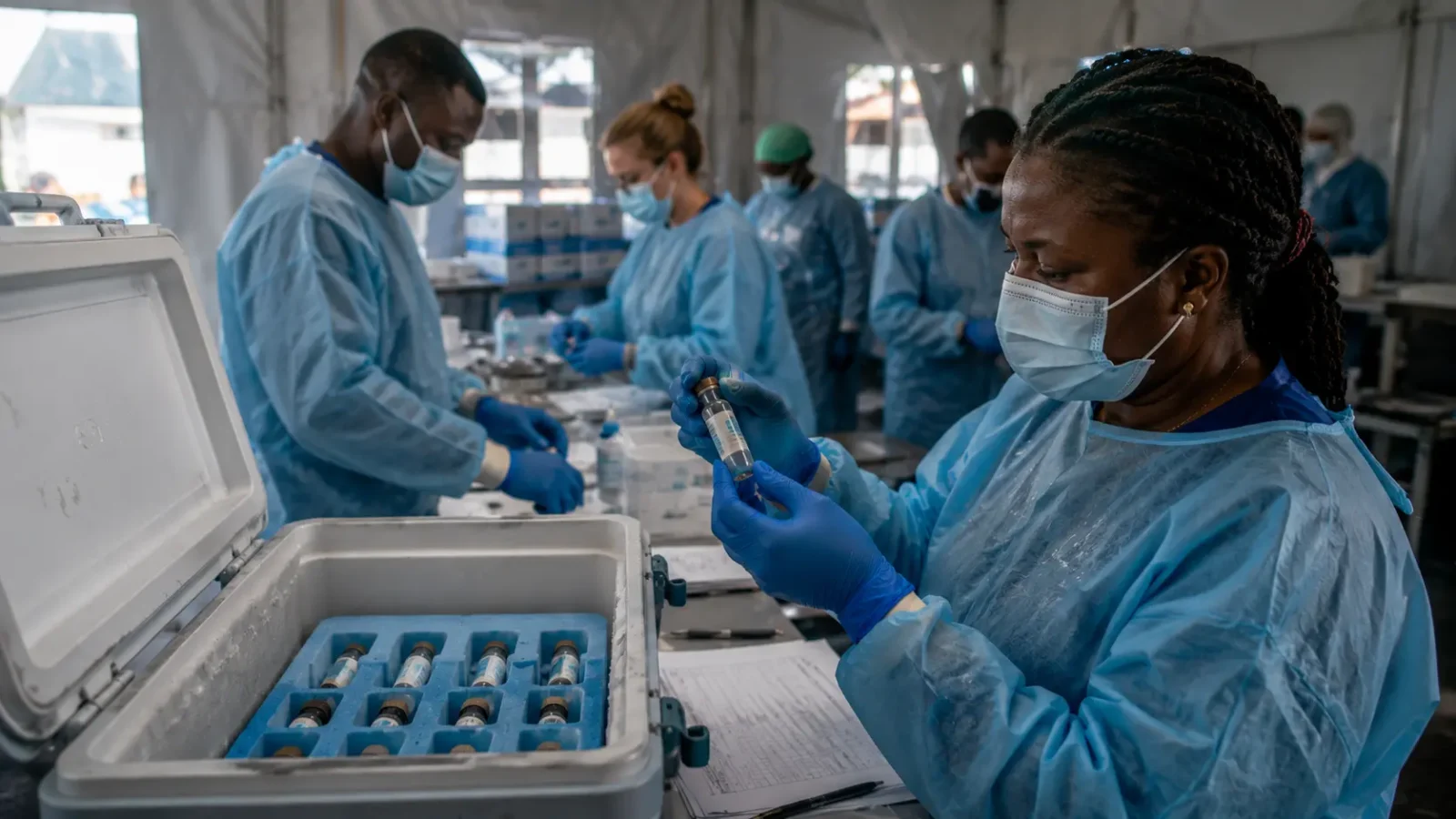
The situation has attracted renewed international attention today after the World Health Organization and Africa CDC announced the allocation of 70,000 doses of Ervebo, an Ebola vaccine, to support the response. But there is an important scientific caveat: Ervebo is licensed for Ebola disease caused by Zaire ebolavirus, while the current outbreak is caused by Bundibugyo virus. Whether the vaccine protects people against the current strain remains uncertain.
Of the 70,000 doses, 20,000 will be used in a Phase 3 clinical trial, while 50,000 will be provided to frontline and healthcare workers under current WHO recommendations.
The development highlights both the seriousness of the outbreak and the speed at which scientists and international health organizations are attempting to generate evidence and contain transmission.
What Is Happening in the Democratic Republic of Congo?
The current outbreak was officially declared by the DRC on 15 May 2026 after investigations identified Bundibugyo virus as the cause of the illness. WHO subsequently determined that the outbreak constituted a Public Health Emergency of International Concern (PHEIC).
The outbreak began in Ituri Province and has since expanded across multiple areas.
The latest reporting shows the outbreak has already resulted in more than 5,000 confirmed cases and more than 2,300 deaths, making it the deadliest Ebola outbreak in the DRC’s history.
The exact numbers can change rapidly as health authorities receive and verify new reports.
That is one reason WHO continues to update its outbreak data as surveillance develops.
What Makes This Ebola Outbreak Different?
One of the most important details about the current crisis is the strain of Ebola involved.
The outbreak is caused by the Bundibugyo virus, rather than Zaire ebolavirus, which has caused several previous major Ebola outbreaks.
This distinction matters because vaccines and treatments developed for one virus species cannot automatically be assumed to work against another.
WHO says there is currently no established licensed vaccine specifically for Bundibugyo virus, although early laboratory and animal data suggest Ervebo may potentially provide some protection. Human evidence is still needed.
That is why the new clinical trial is particularly important.
Why Are 70,000 Vaccine Doses Being Sent?
The allocation announced today has two purposes.
20,000 doses
These doses will be used in a Phase 3 clinical trial designed to help determine whether Ervebo provides protection against Bundibugyo virus.
50,000 doses
These doses are intended for frontline and healthcare workers, according to current WHO recommendations.
The approach reflects the unusual circumstances of the outbreak.
Rather than assuming the existing vaccine will work against the new strain, researchers are trying to generate evidence while simultaneously protecting people at particularly high risk of exposure.
Why Is the Vaccine Situation Complicated?
Ervebo has been an important tool during previous Ebola outbreaks.
However, it was developed and licensed for a different species of Ebola virus.
According to WHO, it is not yet known whether Ervebo provides protection against Bundibugyo virus in humans. Preliminary laboratory and animal evidence suggests there could be some protection, but that is not the same as demonstrated clinical effectiveness.
This distinction is important because public health decisions must balance potential benefits with scientific uncertainty.
WHO says people participating in the trial or receiving the vaccine should be informed about the known risks, potential benefits and limitations and should provide informed consent.
How Fast Is the Outbreak Spreading?
The speed of the outbreak is one of the biggest concerns for health authorities.
Reuters reported on 17 August that the DRC had recorded 4,945 confirmed cases and 2,325 deaths, with officials saying the outbreak was spreading substantially faster than previous Ebola outbreaks in the country.
The current outbreak has also been described as spreading faster than the 2014–2016 West Africa Ebola epidemic at a comparable stage.
Rapid spread makes traditional outbreak-control measures much harder.
Health authorities need to identify infected people, trace contacts, isolate cases, protect healthcare workers and communicate effectively with communities—all while the number of cases continues to rise.
Why Contact Tracing Is So Important
Contact tracing is one of the most important tools used to control infectious disease outbreaks.
When someone is diagnosed with Ebola, health teams attempt to identify people who may have had close contact with that person.
Those contacts can then be monitored for symptoms.
The challenge in the current DRC outbreak is that a significant proportion of new infections are occurring among people who were not previously being monitored as known contacts.
That suggests transmission chains may be more difficult to identify than expected.
The result is a race between the virus and public health teams.
Why Healthcare Workers Are at High Risk
Healthcare workers can face elevated exposure risks during Ebola outbreaks because they may have direct contact with infected patients and contaminated materials.
Protecting healthcare workers is therefore a central part of the response.
This includes:
- Personal protective equipment
- Infection-prevention protocols
- Safe patient-care procedures
- Vaccination strategies where appropriate
- Training
- Surveillance
- Laboratory testing
WHO’s allocation of 50,000 Ervebo doses for frontline and healthcare workers reflects the importance of protecting people working directly in the outbreak response.
The Role of Communities in Containing Ebola
Technology and vaccines are important, but they are not enough on their own.
Community cooperation is critical.
People need to trust health workers enough to:
- Report symptoms
- Seek medical care
- Cooperate with contact tracing
- Follow infection-control guidance
- Accept appropriate vaccination or trial participation
- Avoid unsafe exposure to infected individuals
WHO and Africa CDC have emphasized a community-led approach, recognizing that local communities need to play a central role in the response.
Without community trust, even advanced medical interventions can struggle to contain an outbreak.
Conflict Is Making the Response Harder
The DRC has faced prolonged instability in several affected areas.
This creates additional difficulties for healthcare teams.
Challenges can include:
- Restricted movement
- Difficult transportation
- Limited healthcare access
- Security concerns
- Interrupted supply chains
- Difficulty reaching remote communities
Today, Reuters reported that the AFC/M23 rebel alliance announced new movement restrictions in areas under its control, citing concerns about preventing Ebola transmission.
Movement restrictions may reduce transmission in some circumstances, but they can also complicate access to healthcare and humanitarian services.
Managing that balance is a major challenge for authorities.
Could Ebola Spread Internationally?
The outbreak is a major international health concern, but global attention does not automatically mean that widespread international transmission is occurring.
WHO has been coordinating with neighboring countries and international partners.
The organization has specifically engaged with Uganda and France in discussions around the outbreak and cross-border risk.
Cross-border surveillance is important because people, goods and healthcare workers can move between countries.
Early detection remains one of the strongest tools for preventing localized outbreaks from becoming larger international crises.
What Are the Symptoms of Ebola?
Ebola can initially resemble several other infections.
Possible symptoms can include:
- Fever
- Severe weakness
- Muscle pain
- Headache
- Sore throat
- Vomiting
- Diarrhea
- Abdominal pain
- Unexplained bleeding or bruising in some patients
Symptoms can vary.
Because several infectious diseases can cause similar early symptoms, diagnosis requires appropriate medical assessment and testing.
Anyone who believes they may have been exposed to Ebola should seek urgent medical advice rather than attempting to diagnose themselves.
How Does Ebola Spread?
Ebola can spread through direct contact with the blood or other body fluids of an infected person, particularly when the person is symptomatic.
Transmission can also occur through contact with contaminated materials.
Risk can increase during:
- Close caregiving
- Healthcare procedures without proper protection
- Handling infected body fluids
- Unsafe burial practices
Ebola is not generally spread simply by being in the same room as someone without direct exposure.
Understanding the actual transmission routes is important because fear and misinformation can create unnecessary panic.
Why Early Diagnosis Matters
Early recognition and appropriate supportive care are critical in Ebola outbreaks.
Patients may require:
- Fluid management
- Electrolyte support
- Monitoring
- Treatment of complications
- Infection-control measures
WHO notes that early supportive care can be lifesaving, while the absence of appropriate care can result in severe disease.
The exact treatment options depend on the virus strain and the clinical circumstances.
Because the current outbreak involves Bundibugyo virus, treatment and prevention strategies require particular scientific attention.
The Importance of New Research
One of the most significant aspects of today’s vaccine announcement is the research component.
The Phase 3 trial involving 20,000 doses could generate valuable evidence about whether Ervebo can protect against Bundibugyo virus.
That information could influence future outbreak responses.
If the vaccine proves effective, it could become an important tool for future Bundibugyo outbreaks.
If it does not, researchers will gain equally important information about the limitations of cross-protection.
Either way, scientific evidence will help shape future policy.
What WHO and Africa CDC Are Doing
International health organizations are supporting the DRC through multiple areas.
These include:
- Surveillance
- Laboratory testing
- Case management
- Infection prevention
- Contact tracing
- Vaccination coordination
- Community engagement
- Cross-border coordination
WHO and Africa CDC have repeatedly emphasized that stopping the outbreak requires coordinated action between national authorities, communities and international partners.
Why This Is a Global Health Story
It may be tempting to view the outbreak as a problem limited to the DRC.
But infectious diseases do not respect national borders.
The global health system has learned this repeatedly.
Outbreaks can affect:
- International travel
- Healthcare systems
- Supply chains
- Humanitarian operations
- Regional economies
- Public health preparedness
The current Ebola crisis is therefore also a test of how quickly the international community can respond to a fast-moving infectious disease threat.
What Can Other Countries Learn From This Outbreak?
The DRC outbreak offers several broader lessons.
1. Early Detection Matters
The earlier an outbreak is identified, the easier it can be to contain.
2. Local Communities Are Essential
Public health measures work better when communities trust and participate in them.
3. Vaccine Stockpiles Matter
Having emergency vaccine supplies available can save valuable time during an outbreak.
4. Research Must Continue Between Outbreaks
Vaccines and treatments cannot be developed overnight.
Investment in research before a crisis begins is critical.
5. Healthcare Workers Need Protection
Protecting medical staff protects the entire healthcare response.
Is There a Risk of Another Global Ebola Pandemic?
It is too early to make such a prediction.
The current outbreak is serious, but a serious outbreak does not automatically become a global pandemic.
The most important factors include:
- How quickly cases are detected
- How effectively contacts are traced
- Whether transmission can be interrupted
- Cross-border surveillance
- Community cooperation
- Healthcare capacity
- Scientific response
The fact that WHO and international partners are actively coordinating the response is important.
But the situation remains serious and requires continued monitoring.
What Should the Public Know?
For people outside affected areas, the most important response is accurate information rather than panic.
People should rely on trusted sources such as:
- WHO
- Africa CDC
- National health authorities
- Reputable medical institutions
Social media posts can spread misinformation quickly during disease outbreaks.
Unverified claims about vaccines, treatments, transmission or case numbers can create confusion and fear.
The Bigger Lesson for Global Health
The current Ebola outbreak highlights a broader reality.
The world remains vulnerable to emerging infectious diseases.
Climate change, population growth, urbanization, conflict, international travel and pressure on healthcare systems can all influence how quickly diseases emerge and spread.
Preparedness therefore cannot begin after an outbreak becomes a crisis.
It has to happen before.
That means:
Better surveillance + stronger healthcare systems + scientific research + community trust + international cooperation.
What Happens Next?
The coming weeks will be critical.
Health authorities will be watching:
- New case numbers
- Deaths
- Geographic spread
- Contact tracing success
- Vaccine trial results
- Healthcare worker infections
- Cross-border transmission
- Community response
The 70,000-dose vaccine allocation is an important development, but it is not a guaranteed solution.
The scientific question of whether Ervebo protects against Bundibugyo virus remains open.
Meanwhile, public health teams must continue using established outbreak-control measures while research progresses.
Final Thoughts
The 2026 Ebola outbreak in the Democratic Republic of the Congo is one of the most significant global health stories of the year.
The outbreak is caused by the Bundibugyo virus, a less common Ebola species for which there is currently no specifically licensed vaccine. The speed of transmission, high number of deaths and challenges surrounding surveillance and healthcare access have made containment particularly difficult.
Today’s announcement of 70,000 Ervebo doses marks an important step in the international response.
But it is equally important to understand what the announcement does not mean.
The vaccine has not yet been proven effective against Bundibugyo virus in humans.
That is precisely why part of the allocation will be used in a clinical trial.
The current crisis therefore represents both an emergency and a scientific race: health workers are working to save lives today while researchers gather evidence that could help protect people from future outbreaks.
For the rest of the world, the biggest lesson is clear.
Global health security depends on preparedness before a crisis begins, rapid action when it does, and international cooperation throughout the response.
Frequently Asked Questions
What is the current Ebola outbreak in Congo?
The current outbreak in the Democratic Republic of the Congo is caused by the Bundibugyo virus, a species of Ebola virus. The outbreak was officially declared on 15 May 2026 and has become the largest Ebola outbreak recorded in the country.
How many people have been affected?
The outbreak has surpassed 5,000 confirmed cases and 2,300 deaths, according to recent reporting. Numbers can change as health authorities update surveillance data.
Is there a vaccine for Bundibugyo virus?
There is currently no vaccine specifically licensed for Bundibugyo virus. WHO has allocated 70,000 Ervebo doses to the DRC, including 20,000 doses for a Phase 3 trial to determine whether the vaccine provides protection against the current strain.
Does the Ervebo vaccine protect against this Ebola strain?
It is not yet known whether Ervebo protects humans against Bundibugyo virus. Early laboratory and animal evidence suggests possible protection, but human clinical evidence is still needed.
How does Ebola spread?
Ebola can spread through direct contact with the blood or body fluids of an infected person, especially during symptomatic illness, and through contaminated materials.
What are common Ebola symptoms?
Symptoms can include fever, weakness, muscle pain, headache, vomiting, diarrhea and abdominal pain. Some patients may also develop bleeding or bruising.
Is Ebola spreading globally?
The current major outbreak is centered in the DRC, with international health authorities monitoring cross-border risks and coordinating with neighboring countries.
Why is the current outbreak particularly concerning?
The outbreak is spreading rapidly, has caused a high number of deaths, involves a virus strain without a specifically licensed vaccine, and is occurring in areas where conflict and healthcare-access challenges can complicate containment.