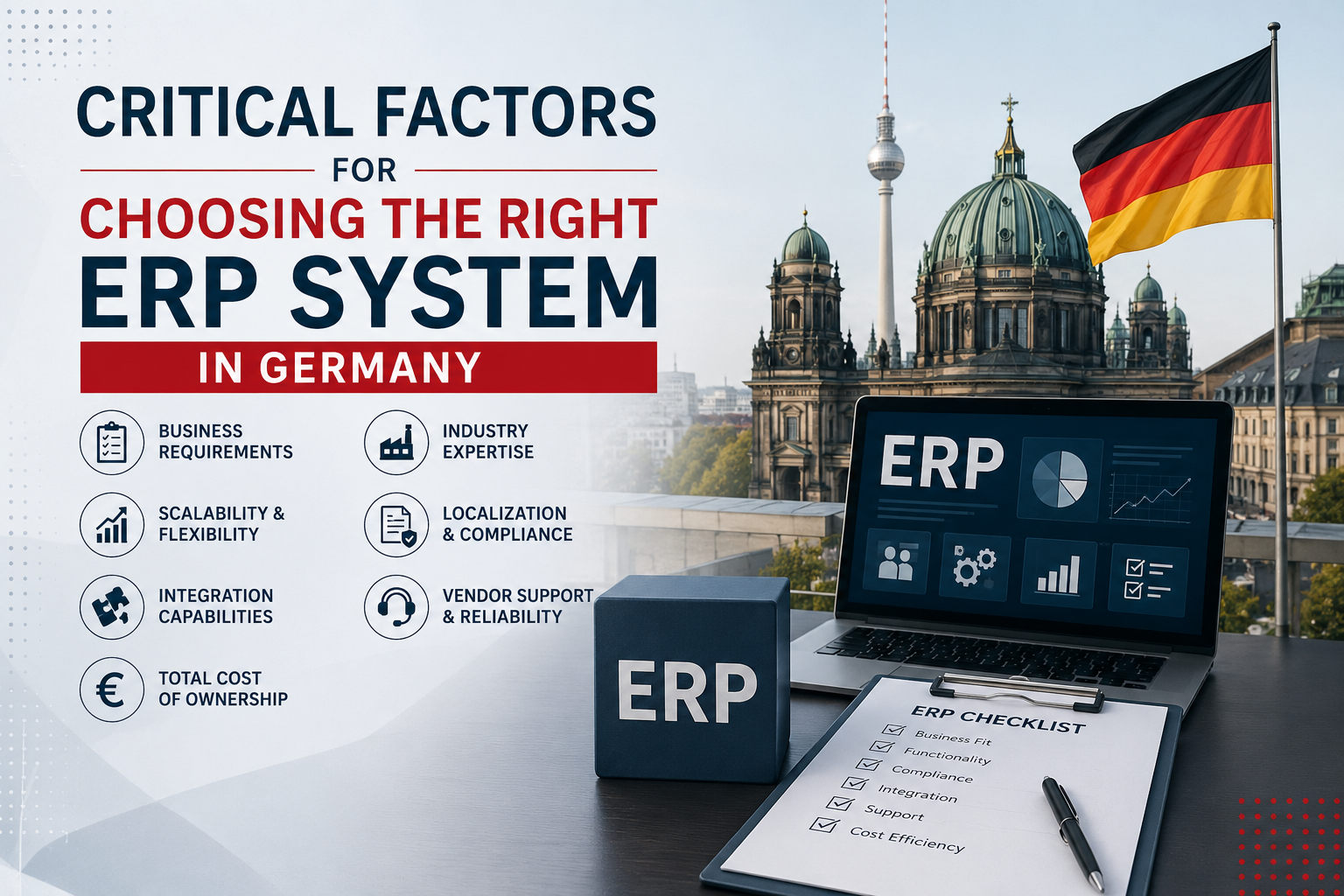
Choosing an ERP platform is a key business decision that can have a significant impact on operation efficiency, financial visibility and scalability. The right solution is expected to comply with regulations, help them integrate their business processes, and deliver comprehensive information for decision-making for German businesses.
A pre-implementation assessment of technical capability will ensure that the system will provide measurable business value and will support further growth.
Industry-Specific Functionality
Each industry has its own requirements for operation. Different types of manufacturing companies, distributors, service providers and retail businesses will need different workflows, reporting and process controls.
When considering an ERP System, business owners should consider what the system provides:
- Includes industry specific modules and workflows
- Process automation capabilities
- Custom reporting features
- Stock management and supply chain software.
- Project and resource management capabilities.
A system that meets industry needs does less customization and quicken implementation success.
Financial Management Capabilities
Businesses invest in ERP technology for financial operations as they are frequently the main concern. Solid accounting capabilities help to enhance visibility, compliance and financial accuracy throughout the organization.
An ERP system accounting software should be reliable, with integrated financial management features to tie in accounting, procurement, inventory, and sales and operations. Real-time financial reporting, automatic booking of reconciliations, tax management and cash flow monitoring help organizations keep a check on the performance of the business and also minimize manual work.
Scalability & Business Growth.
As businesses grow their needs change. An ERP system should be designed for scalability and flexibility so that you can continue expanding your business without having to re-do all your processes.
The primary elements of designing an ERP system for scalability and flexibility are as follows:
- Multi-company management
- Multi-location operations
- Multi-currency support
- Increasing transaction volumes
- Increase access needs of users
Choosing a scalable ERP platform helps ensure that your business can continue to grow with the market, and maintain consistency and integrity of your data.
Seamless system integration
Already most businesses have specific applications for customer management, e-commerce, banking or payroll. These technologies need to be well-integrated with a modern ERP platform.
Organizations should evaluate:
- The availability and flexibility of APIs.
- Third-party software compatibility
- Data synchronization capabilities
- Cloud integration options
- Support for migration of existing databases.
Excellent integration options break down information silos and provide business management in one place.
Compliance and Data Security
German businesses are subject to a well-regulated framework, with data security and financial transparency being paramount concerns. Compliance needs must be supported and sensitive business information must be protected by ERP solutions.
A good ERP System should have secure access controls, audit trails, automated compliance reporting, and good data governance capabilities. These capabilities enable organizations to satisfy regulatory requirements, minimize manual record management risks and costs.
Reporting and Business Intelligence
Getting accurate information is essential for strategic decision-making. Conventional reporting systems use spreadsheets and disjointed systems which cause delays and inconsistencies.
A good ERP platform should have:
- Real-time dashboards
- Financial performance analytics
- Custom reporting tools
- The ability to predict and plan budgets.
- Operational KPI monitoring
The ability of management to detect patterns, monitor their success, and make well-informed choices with more assurance results from advanced reporting.
End-User Experience and Acceptance
No matter how advanced the technology or how much functional capability there is in an application, if the customer is unable to use it successfully, they will not derive value from that application. User acceptance and adoption of an application is perhaps the most essential component in determining the success of an ERP implementation.
An intuitive erp system accounting software helps to boost productivity by making things easier and faster with daily activities and minimal training needs. Employees can adapt to a new working environment and utilize new procedures quickly since they can navigate their way through the process with ease, view customized dashboards by their job description, and go through the steps of the procedures in less time. Small to mid-sized businesses should emphasize solutions that provide the most functionality and ease of use.
Vendor Expertise and Support
The implementation of ERP is not buying software once and for all, it’s an investment. The knowledge and assistance from the vendor can have a significant impact on the implementation results and impact on system performance.
When you are considering the decision, assess:
- Industry experience
- Implementation methodology
- Technical support availability
- Training resources
These services are for upgrading and maintaining the system.These are system upgrade and maintenance services.
A capable ERP partner can minimize deployment risks and maximize ROI for the system’s life cycle.
Conclusion
Evaluation of an ERP solution’s functionality, flexibility for future growth, ability to integrate with other solutions, compliance with applicable laws, regulations, and utilisation of the vendor’s past experience is necessary when selecting an ERP solution. ERP Solutions which have been selected properly will improve the overall performance of the operations and provide an accurate picture of the financial condition of the organisation, which will allow for growth to occur in a manner that is both sustainable and effective.
Solutions like Sowaan ERP enable German businesses to unify processes, optimize decision-making and establish a technological basis that can ensure successful business goals in the future.