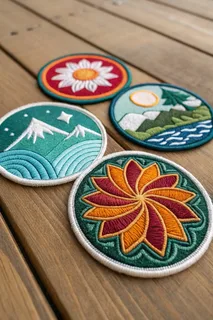
If you’ve ever admired the raised, textured logo on a varsity jacket, a motorcycle vest, or a scout’s sash, you’ve seen embroidered patches at work. They remain one of the most popular ways to brand apparel, gear, and accessories — and for good reason. Below is a practical guide to what embroidered patches are, how they’re made, and why so many brands, teams, and organizations still choose them over other patch styles.
What Exactly Are Embroidered Patches?
Embroidered patches are created by stitching colored thread onto a fabric backing — usually twill, felt, or canvas — using a computerized embroidery machine. The machine follows a digitized version of the artwork, laying down thousands of stitches to build up the design layer by layer. Once the stitching is complete, the patch is trimmed and finished with a merrowed (stitched) or laser-cut edge.
The result is a design with visible texture and dimension. Unlike a printed graphic, the thread itself creates the image, which is what gives embroidered patches their signature raised, tactile look.
Why People Choose Embroidered Patches
They have a timeless, professional look. The slightly raised surface catches light and shadow in a way flat graphics can’t, which is part of why embroidered patches have stayed the go-to choice for uniforms, military insignia, and team logos for generations.
They’re built to last. Quality thread and sturdy backing mean embroidered patches can handle regular washing, outdoor exposure, and daily wear without the design cracking or fading the way some printed alternatives do.
They’re flexible to attach. Depending on how they’re finished, embroidered patches can be sewn on for a permanent bond, ironed on for a quick application, or backed with hook-and-loop (Velcro) so they can be swapped out or removed entirely. That last option is especially handy if you only need a patch for a single event or short-term promotion rather than long-term wear — a Velcro-backed patch gives you an option without committing to permanent stitching.
They work at almost any scale. From small name tags to oversized back patches for jackets and vests, embroidery holds up well across a wide range of sizes, though very fine text or intricate line work is generally better suited to woven patches, which use thinner, denser threads for extra precision.
Where You’ll Typically See Them
- Workwear and uniforms — for employee identification, department branding, and a polished company look
- Sports and social groups — team crests, club insignia, and achievement badges
- Military, scouting, and cadet programs — rank insignia and program patches that need to hold up to heavy use
- Merch and promotional items — hats, bags, and jackets branded for events or giveaways
A Few Things to Keep in Mind
Embroidered patches aren’t the right fit for every design. Extremely fine text, thin outlines, or highly detailed artwork can lose clarity once it’s translated into stitches — in those cases, a woven patch (which weaves the design directly with finer threads) usually reproduces the detail more accurately. Embroidered patches are also a bit thicker and heavier than woven or printed alternatives, which is worth considering for lightweight fabrics.
Getting Your Own Made
If you’re ready to turn your logo or design into a real patch, working with a patch maker online takes the guesswork out of the process — you can typically upload your artwork, choose your backing (sew-on, iron-on, or Velcro), pick your size, and get a proof before production even begins. That’s especially useful if you’re ordering for a one-off event and just need a small batch rather than a bulk uniform order.
The Bottom Line
Embroidered patches remain a durable, classic way to brand apparel and gear, especially when the design is bold, moderately detailed, and meant to last. If your artwork leans toward fine text or intricate line work, it’s worth weighing a woven option instead — but for texture, tradition, and long-term wear, embroidery is still hard to beat.