The real estate market has traditionally relied on paperwork, intermediaries, and lengthy settlement procedures. Although property remains one of the most valuable investment categories, buying and selling real estate often requires considerable capital, legal verification, and administrative work. Digital innovation is changing this process by introducing tokenized ownership models that divide property value into digital units recorded on blockchain networks.
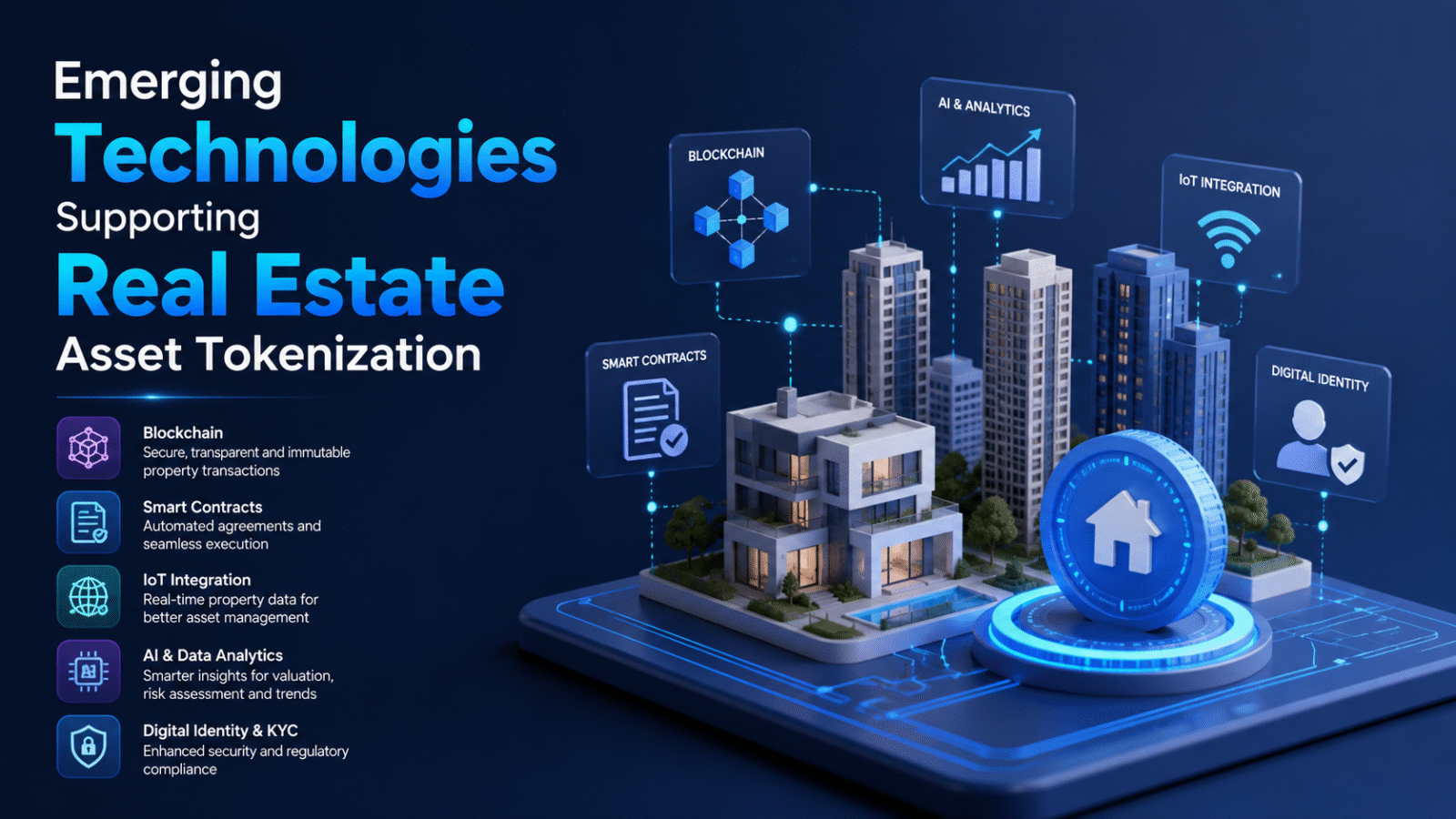
Real Estate Tokenization has become an attractive approach for property owners, developers, investment firms, and financial institutions looking for efficient ways to represent ownership digitally. Instead of depending only on conventional investment methods, organizations are evaluating blockchain infrastructure, smart contracts, digital identity systems, artificial intelligence, cloud computing, and data analytics to support property tokenization.
As interest in real estate asset tokenization continues to grow, businesses are also investing in modern technologies that improve compliance, security, automation, and investor participation. These technologies work together to create reliable digital ecosystems where assets can be issued, managed, transferred, and monitored with greater efficiency.
Understanding Real Estate Asset Tokenization
Real estate asset tokenization refers to the process of converting ownership rights in a physical property into blockchain-based digital tokens. Each token may represent a percentage of ownership, investment rights, or other predefined financial interests associated with a property.
Unlike conventional property transactions that involve multiple intermediaries, tokenization digitizes ownership records while maintaining legal and regulatory requirements. Investors can purchase smaller portions of high-value properties, making commercial and residential investments available to a wider audience.
Businesses seeking real estate tokenization development usually combine blockchain technology with legal frameworks, identity verification systems, and secure digital platforms to support compliant property investments.
Why Emerging Technologies Matter in Tokenized Real Estate
Tokenization is not dependent on blockchain alone. A successful digital property ecosystem requires multiple technologies working together.
These technologies help with:
- Digital ownership management
- Smart contract execution
- Identity verification
- Regulatory compliance
- Property valuation
- Investor onboarding
- Secure data storage
- Automated reporting
- Digital asset monitoring
- Cross-platform integration
Each technology contributes to different stages of the investment lifecycle.
Blockchain Networks as the Foundation
Blockchain remains the primary technology supporting digital property ownership. Every ownership record, transaction history, and token movement can be securely recorded on distributed ledgers.
Different blockchain networks provide varying transaction speeds, security models, and operational costs. Public blockchains offer broad accessibility, while permissioned blockchains are commonly selected for enterprise environments requiring controlled participation.
Many organizations offering Real Estate Tokenization Platform Development evaluate blockchain architecture based on compliance requirements, expected transaction volume, investor access, and long-term maintenance.
A reliable blockchain network also reduces duplicate records and provides an immutable transaction history for all authorized participants.
Smart Contracts for Automated Property Operations
Smart contracts are self-executing digital agreements that perform predefined actions once specified conditions are met.
In real estate asset tokenization, smart contracts can automate several operational activities, including:
Property token issuance
Digital tokens can be created according to predefined ownership structures.
Investor allocation
Smart contracts distribute ownership units to investors after successful verification and payment.
Income distribution
Rental income or other returns can be distributed automatically according to token ownership percentages.
Ownership transfer
Approved transfers occur based on compliance rules without requiring manual intervention for every transaction.
Compliance validation
Investor eligibility checks can be included before ownership transfers are completed.
Automation through smart contracts reduces repetitive administrative tasks while maintaining consistency throughout the investment process.
Artificial Intelligence Supporting Property Analysis
Artificial intelligence is becoming increasingly useful in digital real estate operations.
AI systems assist organizations by processing large amounts of property information that would otherwise require significant manual effort.
Applications include:
Property valuation
AI analyzes historical transactions, market trends, property features, and regional demand to support pricing estimates.
Market forecasting
Machine learning models identify changing investment patterns and regional growth indicators.
Risk assessment
AI evaluates financial data, tenant history, occupancy levels, and maintenance records.
Fraud detection
Suspicious transaction behavior can be identified through continuous monitoring.
Investor support
AI-powered assistants respond to common investor questions during onboarding and portfolio management.
Companies involved in Real Estate Tokenization Services increasingly integrate AI to improve operational efficiency while supporting better investment decisions.
Internet of Things and Smart Buildings
Internet of Things technology connects physical devices through sensors and communication networks.
For tokenized properties, IoT devices provide continuous information about building operations.
Examples include:
- Energy consumption
- Security monitoring
- Building occupancy
- Environmental conditions
- Equipment maintenance
- Access control
- Utility monitoring
Property managers can monitor building performance while investors receive updated operational information that supports asset management.
These connected systems also improve property maintenance planning and operational reporting.
Cloud Computing for Digital Infrastructure
Cloud technology supports large-scale digital asset platforms by providing reliable computing resources without relying entirely on local infrastructure.
Cloud services assist with:
- Data storage
- Application hosting
- Disaster recovery
- Platform monitoring
- User management
- Software deployment
- System maintenance
Organizations involved in real estate tokenization development frequently rely on cloud infrastructure to manage growing investor activity while maintaining system availability.
Cloud environments also simplify software updates and operational maintenance across multiple regions.
Digital Identity Verification and KYC Technology
Identity verification plays an important role in property tokenization because investment platforms must comply with financial regulations.
Modern KYC technologies verify:
- Government-issued identification
- Facial recognition
- Address verification
- Sanction screening
- Politically exposed person screening
- Anti-money laundering checks
Automated verification reduces onboarding time while helping organizations satisfy regulatory requirements.
Many businesses offering Real Estate Tokenization Development Services integrate digital identity providers directly into investor registration workflows.
Data Analytics for Better Investment Decisions
Tokenized real estate platforms generate large amounts of operational and financial data.
Analytics platforms organize this information into meaningful reports covering:
Investor activity
User registrations, transaction frequency, and investment preferences.
Property performance
Occupancy rates, rental income, maintenance costs, and asset appreciation.
Portfolio insights
Investment diversification across different property categories.
Financial reporting
Revenue tracking and operational performance metrics.
Data analytics supports property owners, fund managers, and investors when reviewing long-term investment performance.
Digital Wallet Technology
Digital wallets securely store blockchain-based property tokens and digital assets.
Modern wallets support:
- Token storage
- Secure authentication
- Transaction approval
- Multi-signature authorization
- Portfolio viewing
- Digital asset transfers
Institutional investors often require enterprise-grade custody solutions, while retail investors generally prefer user-friendly wallet applications.
Wallet integration remains an important consideration during Real Estate Tokenization Platform Development projects.
Cybersecurity Technologies Protecting Tokenized Assets
As digital property investments continue growing, cybersecurity receives increasing attention.
Security technologies include:
Multi-factor authentication
Additional verification beyond passwords.
Encryption
Sensitive investor information remains protected during storage and transmission.
Security monitoring
Continuous monitoring identifies unusual platform behavior.
Access management
Different user roles receive appropriate permission levels.
Smart contract auditing
Independent reviews reduce coding vulnerabilities before deployment.
Security planning supports investor confidence while protecting digital ownership records.
API Integration Across Financial Systems
Modern tokenization platforms rarely operate independently.
Application Programming Interfaces connect various external services, including:
- Banking systems
- Payment gateways
- Property management software
- Identity verification providers
- Tax reporting tools
- CRM platforms
- Accounting software
These integrations simplify operational workflows while improving data consistency across connected systems.
Digital Document Management
Property transactions involve legal agreements, ownership certificates, compliance records, financial statements, and inspection reports.
Digital document management systems organize these files securely while allowing authorized users to retrieve information when required.
Document automation also reduces manual paperwork and improves record organization across multiple investment projects.
Geographic Information Systems in Property Evaluation
Geographic Information Systems provide location-based intelligence that assists investors and property managers.
GIS technology supports analysis of:
- Transportation access
- Population growth
- Infrastructure projects
- Commercial development
- Environmental conditions
- Neighborhood trends
Location intelligence contributes additional information during investment evaluations and property selection.
Regulatory Technology Supporting Compliance
Real estate tokenization operates within legal and financial regulations that differ between jurisdictions.
Regulatory technology assists organizations with:
- AML monitoring
- KYC verification
- Compliance reporting
- Audit preparation
- Transaction monitoring
- Regulatory documentation
Businesses working with a Real Estate Tokenization company often include RegTech solutions to reduce manual compliance workloads while maintaining regulatory alignment.
Interoperability Between Blockchain Networks
Many organizations now consider interoperability when designing tokenized property ecosystems.
Cross-chain technologies allow digital assets to communicate across different blockchain environments where appropriate.
This approach may support:
- Wider investor participation
- Multi-network asset management
- Cross-platform transactions
- Expanded liquidity opportunities
As blockchain ecosystems continue developing, interoperability may become increasingly valuable for institutional property investment platforms.
Future Technology Trends
Technology supporting tokenized real estate continues to evolve alongside blockchain adoption.
Future developments may include:
- Improved digital identity standards
- AI-assisted compliance monitoring
- Better property data automation
- More efficient blockchain infrastructure
- Increased institutional participation
- Digital government property records
- Broader integration with financial ecosystems
- Improved investor reporting tools
Organizations planning long-term investments often evaluate these developments when preparing future platform strategies.
Conclusion
Real estate asset tokenization combines blockchain with several complementary technologies that support digital ownership, compliance, automation, security, and property management. Smart contracts, artificial intelligence, cloud computing, IoT, cybersecurity, digital identity verification, analytics, and interoperability each contribute to creating efficient digital investment ecosystems. As property markets continue adopting digital ownership models, businesses seeking long-term participation are increasingly investing in Real Estate Tokenization, Real Estate Tokenization Services, real estate tokenization development, and Real Estate Tokenization Platform Development to support compliant and efficient investment platforms. Working with an experienced Real Estate Tokenization Development company can simplify planning, technology selection, and platform implementation. Blockchain App Factory provides Real Estate Tokenization Development Services that help businesses develop secure, compliant, and feature-rich tokenized real estate platforms for evolving digital investment markets.
FAQs
1. What is real estate asset tokenization?
Real estate asset tokenization is the process of representing ownership rights in a property through blockchain-based digital tokens. These tokens can represent fractional ownership, making property investment available to a wider range of investors.
2. Which technologies support Real Estate Tokenization?
Blockchain, smart contracts, artificial intelligence, cloud computing, IoT, cybersecurity, digital identity verification, data analytics, digital wallets, and regulatory technology all contribute to modern Real Estate Tokenization platforms.
3. Why are smart contracts important in property tokenization?
Smart contracts automate token issuance, ownership transfers, investor allocation, rental income distribution, and compliance procedures according to predefined rules.
4. How does AI contribute to real estate tokenization development?
AI assists with property valuation, market analysis, fraud detection, investment insights, risk assessment, and customer support, helping businesses manage digital property platforms more efficiently.
5. Why should businesses work with a Real Estate Tokenization company?
A professional Real Estate Tokenization company provides technical expertise, compliance planning, blockchain integration, smart contract development, security implementation, and platform deployment, helping businesses launch reliable tokenized real estate solutions.