If you have ever looked in your child’s mouth and noted the bumps and grooves on the surface of his/her back teeth, then you have seen one of the hardest surfaces to keep clean. These grooves become natural shelters for food particles and bacteria, and even with proper brushing techniques, one may miss cleaning them. As a Greenvale dentist, it is one of the most vulnerable places for cavities to form in children. This is why the treatment method called fissure sealants was invented. In case your dentist mentioned this term but you do not know what it means, here is a clear, simple definition.
What Are Fissure Sealants?
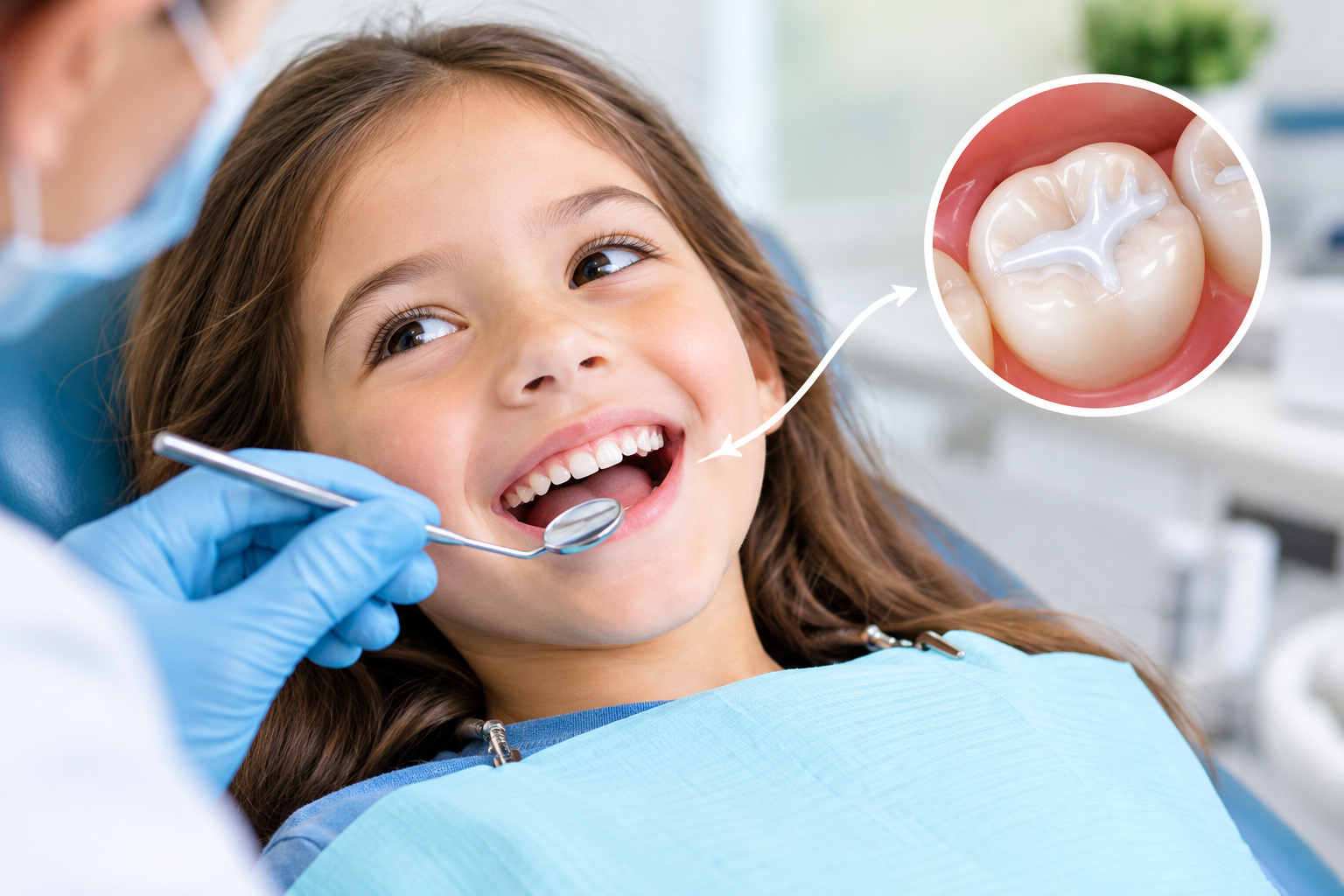
Fissure sealants are a coating substance applied to the chewing surfaces of back teeth, mostly molars. “Fissures” refer to the deep grooves and pits on the surface.
You can compare this procedure to applying a raincoat to the tooth. The substance spreads through the grooves, making the surface smoother and thus reducing the possibility of food particles sticking to the tooth surface. With a reduced amount of particles, there will be fewer chances for the formation of bacteria.
Why Back Teeth Need Extra Help
Back teeth do the heavy lifting when it comes to chewing, and their surfaces are naturally full of nooks and crannies. Some of those grooves are so narrow that a single toothbrush bristle can’t reach the bottom.
On top of that, kids aren’t always the most thorough brushers, especially with the teeth right at the back. Add in snacks, lunchbox treats and the odd sugary drink, and it’s easy to see why these teeth are often first in line for cavities.
When Are Sealants Usually Placed?
Sealants are most often recommended soon after the permanent (adult) molars come through. For many kids, that’s:
- Around 6 to 7 years old, when the first permanent molars appear
- Around 11 to 13 years old, when the second permanent molars arrive
Placing them fairly soon after the teeth come through means they can be protected early, before decay has a chance to start. That said, every child is different. Your dentist will look at your child’s teeth, their risk of decay, and the shape of the grooves before suggesting whether sealants are a good idea. In some cases they might also recommend them for baby molars, or even for teenagers and adults with deep grooves.
What Happens at the Appointment?
This is the part most parents (and kids) are relieved to hear. Having sealants placed is usually quick and straightforward, and in most cases there’s no drilling and no needles.
Here’s roughly what happens:
- The tooth is cleaned to remove any plaque or food from the grooves.
- The surface is prepared and dried so the sealant can stick properly. Keeping the tooth dry is important, so your child may have cotton rolls or a little suction tube in their mouth for a few minutes.
- The sealant is painted on and flows into the grooves.
- A special blue light is used to help it set hard, depending on the material.
That’s it. Each tooth usually only takes a few minutes, and kids can generally eat and drink as normal afterwards. Most children find the whole thing much easier than they expected. The trickiest part for some is just keeping their mouth open and still for a little while.
How Long Do Sealants Last?
While they can remain in place for many years, sealants do not provide everlasting protection. They become susceptible to wear through everyday chewing. Additionally, occasionally a small portion breaks off.
The good news is that the dentist will perform a routine examination of sealants during your child’s routine checkups. The dentist can replace or add new sealants if needed.
Do Sealants Replace Brushing?
By no means, as this point is quite crucial. While sealants effectively shield the chewing surfaces of teeth, the other parts of the mouth remain vulnerable to decay. Cavities can appear in between the teeth and along the side parts of them.
Therefore, it is necessary to maintain all the basics of oral hygiene:
- Brushing teeth twice a day using fluoridated toothpaste
- Flossing
- Minimizing consumption of sweets, especially between meals
- Routine visits to the dentist
What About the Cost?
The costs will differ according to each dental practice; hence, it is always advisable that you seek a quote from your dentist. In case your child qualifies for the Child Dental Benefits Schedule, the procedure may be subsidized as part of the CDBS. Other than the government, there may be some health insurance plans that could pay for the service.
Conclusion
Fissure sealants provide a safe, harmless method for protecting your child’s molars from decay in the period when they need protection most. The application takes very little time and causes no pain. It is an effective way of preventing tooth decay along with proper brushing of teeth.
If you want to know if your child needs fissure sealants, then please talk to your dentist at the next visit.