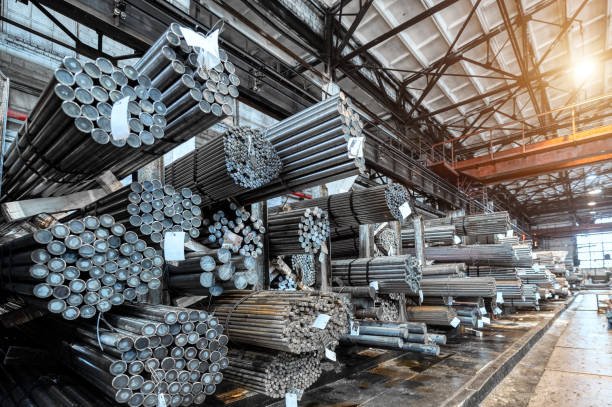
Southeast Asia is experiencing substantial construction and infrastructure development as governments and private investors accelerate investments in urban infrastructure, transportation networks, residential projects, and industrial facilities. Rapid population growth, expanding cities, and increasing economic activity are creating greater requirements for durable construction materials. Among these materials, steel bars remain essential for reinforcing concrete structures and ensuring the strength, stability, and longevity of modern buildings and infrastructure.
The Southeast Asia Steel Bars Market is gaining momentum as construction activities expand across emerging economies in the region. According to the latest assessment by Markntel Advisor, the market was valued at approximately USD 18.19 billion in 2025 and is projected to reach USD 27.11 billion by 2032, registering a CAGR of around 5.87% during 2026–2032. Increasing investments in steel reinforcement products across Southeast Asia highlight the growing importance of high-quality construction materials in supporting infrastructure modernization and industrial development.
Steel bars are becoming increasingly important beyond conventional residential and commercial construction. Their applications across bridges, highways, industrial facilities, ports, and energy infrastructure make them a fundamental component of regional development. Additionally, changing construction standards and growing emphasis on structural safety are encouraging developers to adopt advanced reinforcement materials.
Infrastructure Development Is Creating New Demand Opportunities
Infrastructure investments remain a major contributor to steel bar consumption across Southeast Asia. Governments are allocating resources toward highways, railway networks, airports, seaports, bridges, and urban transportation systems to improve connectivity and facilitate economic development.
These large-scale projects require reinforced concrete structures capable of supporting heavy loads and maintaining long-term structural stability. Consequently, construction contractors increasingly depend on high-strength steel reinforcement products to meet engineering specifications and project requirements.
Rapid urbanization is further strengthening this demand. Growing metropolitan populations are encouraging the development of residential complexes, commercial buildings, hospitals, educational institutions, and public infrastructure. These construction activities are expected to create consistent opportunities for steel manufacturers and suppliers throughout the region.
Markntel Advisor Highlights Manufacturing and Industrial Expansion as Key Demand Drivers
According to Markntel Advisor, expanding industrial activities and infrastructure investments are important factors supporting the development of the regional steel reinforcement sector. Southeast Asia is attracting manufacturing investments as businesses diversify production locations and strengthen regional supply chains.
The development of industrial parks, manufacturing facilities, logistics centers, warehouses, and commercial infrastructure is increasing the requirement for structural reinforcement materials. Steel bars play an important role in constructing industrial buildings, foundations, storage facilities, and supporting infrastructure.
Furthermore, manufacturing expansion generates additional demand for roads, electricity networks, water management systems, and transportation facilities. This interconnected development across industrial and infrastructure projects is strengthening the consumption of reinforcement steel across regional economies.
Sustainable Construction Is Influencing Steel Manufacturing
Environmental sustainability is becoming an important consideration for construction companies and material manufacturers throughout Southeast Asia. Governments, developers, and infrastructure authorities are increasingly encouraging construction practices that reduce environmental impact while maintaining structural performance.
Steel manufacturers are exploring energy-efficient production methods, improved resource utilization, and recycled raw materials to support more sustainable manufacturing operations. Recycled steel is particularly relevant because it enables material recovery and supports circular economy objectives.
Additionally, advancements in steelmaking technologies are helping manufacturers improve production efficiency and reduce industrial waste. These developments are encouraging the adoption of environmentally responsible reinforcement materials across residential, commercial, and infrastructure projects.
Technological Advancements Are Improving Product Quality
Technological innovation is transforming steel manufacturing through automation, digital monitoring, and advanced production equipment. Modern manufacturing facilities are increasingly implementing automated rolling processes and quality inspection systems to improve product consistency and manufacturing efficiency.
These technologies help manufacturers maintain accurate product dimensions, enhance mechanical properties, and reduce production-related defects. Research and development activities are also supporting the development of reinforcement products with improved tensile strength, corrosion resistance, and weldability.
Such improvements are particularly important for infrastructure projects exposed to challenging environmental conditions, including coastal construction, bridges, and large transportation facilities. High-performance reinforcement products enable developers to meet demanding engineering requirements while improving the durability of structures.
Regional Trade Integration Is Supporting Supply Chain Development
Economic cooperation and regional trade integration are strengthening construction-related supply chains across Southeast Asia. Improved connectivity between countries is encouraging cross-border investments, industrial collaboration, and the movement of construction materials.
Regional infrastructure initiatives are also creating opportunities for steel producers to expand their distribution networks and serve a wider customer base. Better transportation connectivity can improve raw material availability, support product distribution, and strengthen supply chain efficiency.
According to the Organisation for Economic Co-operation and Development (OECD), infrastructure investment and regional connectivity are important contributors to economic productivity and long-term competitiveness. These priorities are supporting construction activities and creating additional opportunities for reinforcement steel suppliers.
Future Outlook
The future of steel reinforcement demand across Southeast Asia remains promising as governments continue prioritizing infrastructure modernization, urban development, and industrial expansion. Increasing investments in transportation networks, residential construction, commercial facilities, and manufacturing infrastructure are expected to sustain demand for steel bars over the coming years.
At the same time, technological advancements and sustainability initiatives will encourage manufacturers to improve production efficiency, product quality, and environmental performance. Companies investing in advanced manufacturing capabilities and reliable distribution networks will be better positioned to capitalize on emerging construction opportunities.
As Southeast Asian economies continue developing their infrastructure and industrial capabilities, steel bars will remain an essential construction material. The combination of urbanization, infrastructure spending, and industrial investment is expected to support the sector’s long-term development through 2032.