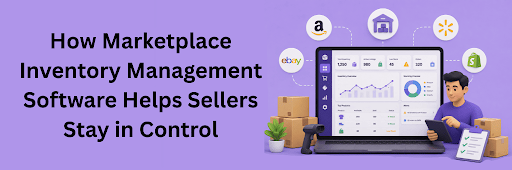
Marketplace inventory management software gives sellers one clear stock view. It connects listings, orders, warehouses, stores, and sales channels. Therefore, teams can manage marketplace inventory without constant spreadsheet updates. The system also supports ecommerce product management across several online platforms. Meanwhile, accurate stock synchronization reduces overselling and missing availability. Sellers gain better control during promotions, seasonal demand, and daily fulfillment. Additionally, one dashboard simplifies marketplace operations for growing retail teams. This approach improves accuracy, speed, planning, and customer confidence. Most importantly, it creates stronger control over every available product unit. Consequently, sellers can expand channels without losing daily operational visibility.
How Marketplace Inventory Management Software Works Across Channels
How does marketplace inventory management software work? It connects every channel with one inventory source. First, the platform imports stock from warehouses, stores, or business systems. Next, it receives orders from connected marketplaces. Then, it deducts quantities after confirmed purchases.
However, marketplaces may process orders differently. Good software standardizes workflows before updating stock. Consequently, every channel receives the latest available quantity. This process creates dependable ecommerce stock synchronization.
The system usually manages:
- Available, reserved, damaged, and returned stock
- Quantities across stores and warehouses
- Low-stock alerts and reorder points
- Channel-specific stock buffers
- Product variations, bundles, and kits
Why Sellers Need Centralized Marketplace Inventory Control
Why do sellers need marketplace inventory management software? Multiple channels create operational pressure quickly. Each sale changes availability across every platform. Without automation, employees must update several systems manually.
As a result, delays cause overselling, cancellations, and complaints. However, multichannel inventory control keeps quantities aligned across marketplaces. Teams can also reserve stock for priority channels.
Furthermore, centralized visibility improves replenishment planning. Managers can review fast-moving products before shortages appear. Meanwhile, warehouses receive clearer fulfilment priorities.
Therefore, marketplace inventory management software supports daily accuracy and sustainable growth. It replaces scattered records with one dependable operating view.
How Software Reduces Stock Errors and Overselling
How can marketplace inventory management software reduce stock errors? It removes repeated manual updates. Each confirmed order triggers an automatic stock adjustment. Consequently, another marketplace cannot sell the same unavailable unit.
Stock buffers also protect high-risk products. Sellers can hide several units from public availability. This rule helps during delayed scanning or damaged stock reporting.
Moreover, barcode workflows improve picking accuracy. Return processing restores sellable quantities after inspection. Thus, teams avoid adding damaged items into available stock.
Strong systems also maintain inventory histories. Managers can review adjustments, transfers, returns, and cancellations. Ultimately, accurate stock synchronization lowers cancellations and protects seller ratings.
What Ecommerce Product Management Means for Sellers
What is ecommerce product management? It covers every task behind an online listing. These tasks include titles, descriptions, images, prices, attributes, and variations. Effective ecommerce product management keeps this information complete and consistent.
A centralized product catalogue gives teams one approved product record. Therefore, employees can publish accurate information across several channels. Meanwhile, channel rules may require different titles or image sizes.
Product teams should manage:
- Names, descriptions, and specifications
- Images and other media files
- Prices, discounts, and tax settings
- Categories, brands, and collections
- Sizes, colors, bundles, and variants
- Marketplace-specific attributes
Consequently, sellers reduce listing inconsistencies and protect brand presentation.
How Ecommerce Product Management Improves Online Sales
How does ecommerce product management improve online sales? Clear listings help customers understand products faster. Accurate details also reduce uncertainty during purchase decisions. Therefore, better content can improve conversion quality.
Additionally, consistent images build stronger brand recognition. Correct attributes help marketplace filters show relevant products. Meanwhile, complete specifications reduce questions and avoidable returns.
Good ecommerce product management also supports faster launches. Teams can prepare one product record for several channels. Consequently, brands expand without rebuilding every listing.
However, product information must match inventory availability. Therefore, product and inventory tools should operate together. This connection strengthens multichannel selling through reliable content and available stock.
Tools for Better Ecommerce Product Management
What tools help with ecommerce product management?
Sellers use product systems, inventory platforms, connectors, and order software. Each tool solves a different workflow need.
However, separate applications often create duplicate work. An integrated platform connects product records with stock and orders. Consequently, teams maintain fewer spreadsheets.
Useful capabilities include bulk uploads, image management, attribute mapping, and channel publishing. Approval workflows also protect listing quality. Therefore, sellers should choose tools supporting both products and inventory.
How to Manage Products Across Multiple Ecommerce Channels
How to manage products across multiple ecommerce channels? Start with one master product catalogue. Next, standardize product codes, attributes, and variations. Then, connect every channel through supported integrations.
Sellers should also define channel-specific rules. Some marketplaces need unique categories or image formats. However, core product information should remain consistent.
A practical workflow includes:
- Create one approved product record.
- Map fields for each marketplace.
- Assign prices and channel rules.
- Publish listings from one panel.
- Sync inventory after every movement.
Therefore, a centralized product catalogue supports faster expansion. Combined with ecommerce stock synchronization, it protects stock accuracy.
Ginkgo Retail for Connected Marketplace Operations
Ginkgo Retail combines inventory, product, and multi-channel management within one ecommerce operating system. Its platform centralizes inventory channels and manages products across multiple sales channels. It also supports bulk media uploads, collection sorting, and image controls. Furthermore, sellers can manage multiple ecommerce stores through one view. These capabilities support connected marketplace inventory and structured ecommerce product management. Therefore, teams reduce repetitive updates while improving operational visibility. Ginkgo Retail also supports direct inventory updates and selected automatic stock sources.
Choosing the Best Marketplace Inventory Management Software
What is the best marketplace inventory management software?
The right choice depends on channels and complexity. Therefore, sellers should compare business fit instead of popularity.
Look for real-time updates, product management, marketplace integrations, and return handling. Also review stock buffers, warehouse support, reporting, and user permissions. Meanwhile, growing sellers need scalable integrations and reliable automation.
The best platform should support multichannel selling without extra administration. It should connect inventory, products, orders, and fulfillment. Therefore, the software must simplify growth rather than complicate it.
Final Perspective: Building Stronger Marketplace Growth
Marketplace inventory management software connects stock, products, orders, and channels. Therefore, sellers gain faster updates and stronger control. Accurate inventory prevents overselling, while quality product data supports buying decisions.
Moreover, integrated ecommerce product management simplifies launches across expanding sales networks. A connected platform improves inventory coordination across channels and increases fulfilment precision.
Ginkgo Retail supports this connected approach through inventory, product, and multi-channel capabilities. As a result, growing sellers manage complexity with greater visibility. The right platform turns scattered processes into one scalable retail operation.
FAQs:
- What is marketplace inventory management software?
It centralizes stock across marketplaces, stores, and warehouses. Therefore, sellers update quantities through one connected system.
- How does Ginkgo Retail support marketplace inventory control?
Ginkgo Retail centralizes inventory channels and synchronizes connected stock sources. Therefore, sellers gain one inventory view.
- Where can sellers manage products through Ginkgo Retail?
Sellers manage products across multiple sales channels from one panel. It also supports bulk media controls.
- How can Ginkgo Retail help sellers without an ERP?
Ginkgo Retail can use manual inventory or supported ecommerce store sources. Therefore, vendors can join without ERP software.
- Why does Ginkgo Retail suit multichannel selling?
Its platform connects product, inventory, order, and multi-channel workflows. Consequently, teams manage several operations together.
- What Ginkgo Retail features support product management?
Ginkgo Retail supports bulk media uploads, collection sorting, and image optimization. Therefore, teams manage product content efficiently.
- When should sellers adopt inventory management software?
Sellers should adopt software before manual updates cause regular cancellations. Early adoption supports cleaner channel growth.
- How does product management improve customer trust?
Accurate descriptions, images, pricing, and availability reduce confusion. Consequently, customers receive clearer purchasing information.