A newly developed landscape can look clean and attractive, but without the right trees, it may still feel incomplete. Trees add structure, shade, privacy, visual balance, and natural character to outdoor spaces. However, simply placing a tree in the ground does not guarantee healthy growth.
Professional installation focuses on more than digging a hole and adding a tree. It involves choosing suitable species, evaluating the planting location, handling the tree carefully, setting the correct planting depth, and providing the right conditions for root establishment. These details can make a major difference in how a new landscape develops over time.
Why Tree Installation Matters in a New Landscape
Trees are long-term landscape investments. Unlike seasonal flowers or temporary decorative features, a properly established tree can remain part of a property for decades.
The way a tree is installed during the early stage can influence its future health, stability, and appearance. Poor planting depth, damaged roots, compacted soil, insufficient water, or unsuitable placement can create problems that may not become visible until years later.
Professional installation helps give newly planted trees a stronger start by considering both the tree and the surrounding landscape.
Choosing the Right Tree for the Property
One of the most important steps is selecting a tree that matches the location.
A tree that looks attractive at a garden center may not be suitable for every property. Before installation, factors such as available space, soil conditions, sunlight, drainage, climate, mature size, and nearby structures should be considered.
For example, a large-growing tree may eventually interfere with buildings, overhead utilities, driveways, or other landscape features if it is installed in a small area. Similarly, a species that does not tolerate local soil or weather conditions may struggle even when it receives regular care.
A professional approach starts with matching the tree to the site rather than choosing a tree based only on its appearance.
Creating Better Landscape Structure
Trees can help define the overall shape and character of a new landscape.
Strategically placed trees can:
-
Frame the entrance of a property
-
Create shade around outdoor living areas
-
Add privacy between neighboring properties
-
Provide a natural background for gardens
-
Break up large open areas
-
Add height and visual interest
-
Create a more established appearance
-
Complement existing plants and landscape features
Good placement is especially important in a new landscape because trees often become the permanent framework around which other plants and outdoor features are arranged.
Improving Shade and Outdoor Comfort
A new property may have attractive hardscaping, patios, walkways, and seating areas but still feel exposed to direct sunlight.
Trees can gradually provide natural shade as their canopies develop. This can make outdoor areas more comfortable and create a more inviting environment for relaxing, entertaining, or spending time with family.
However, the position of the tree matters. The goal is not simply to add a tree but to place it where its future canopy can provide useful shade without creating conflicts with buildings, paths, utilities, or other landscape elements.
Supporting Healthy Root Development
A tree’s visible branches and leaves are only part of the picture. A strong root system is essential for establishment and long-term growth.
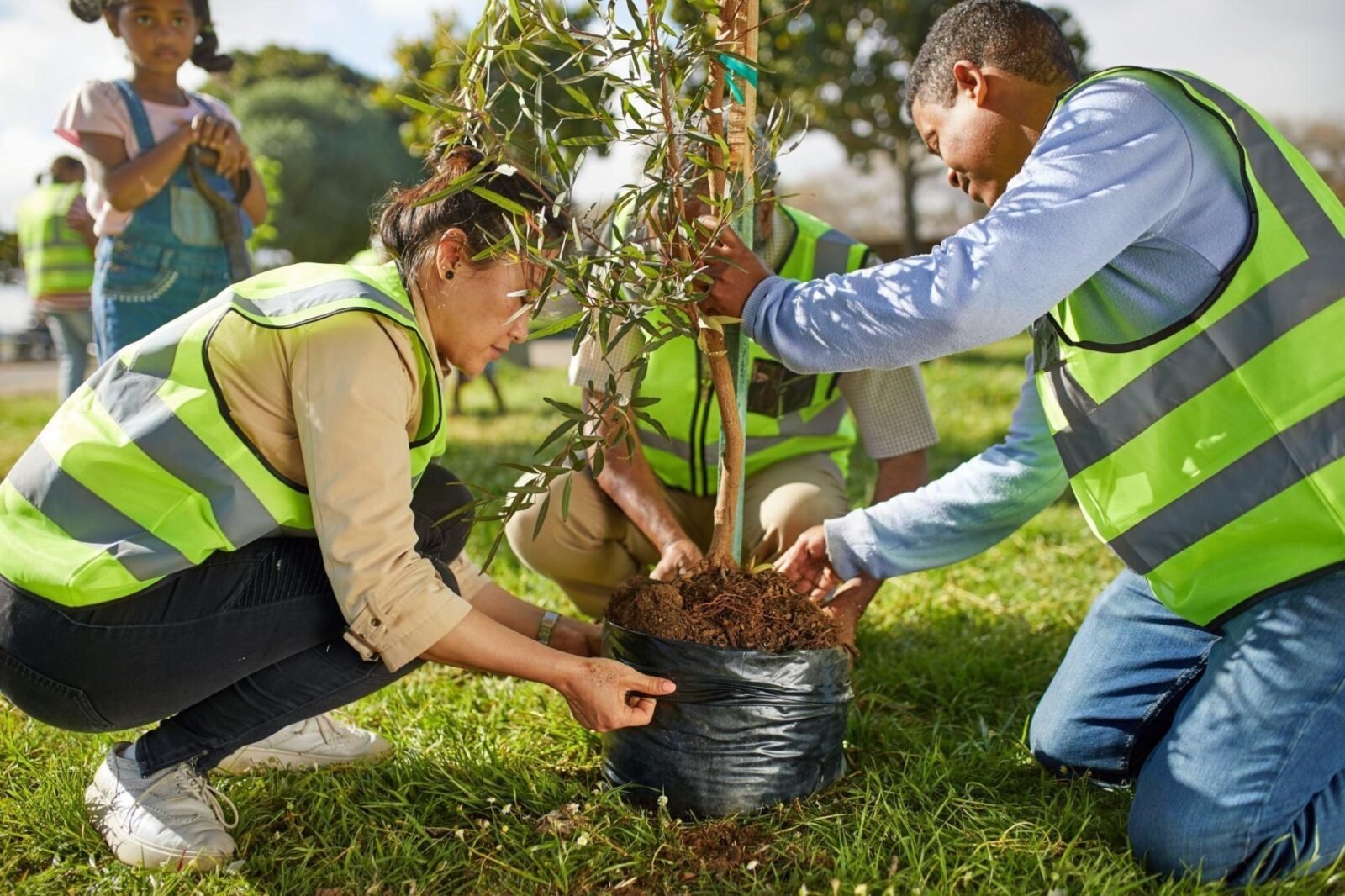
During professional installation, attention should be given to the root ball and planting hole. The planting hole should provide adequate room for roots to move into the surrounding soil, while the tree should be positioned at an appropriate depth.
The trunk flare is particularly important. It should remain visible at the finished soil level rather than being buried beneath excessive soil or mulch. Extension guidance emphasizes that planting too deeply can create serious establishment problems.
This is one reason professional installation can be valuable: correct placement is not always obvious when looking only at the top of the tree.
Preparing the Planting Area Properly
The condition of the soil around a new tree can have a major effect on establishment.
Compacted ground may restrict root development, while poorly drained soil can leave roots with insufficient oxygen. Professional installation considers the existing site rather than assuming that every planting area has the same conditions.
In many situations, the original site soil is appropriate for backfilling when the planting hole has been prepared correctly. Adding large amounts of organic material directly into the hole is not automatically beneficial and can sometimes interfere with how roots transition into the surrounding soil.
The objective is to create a planting environment where roots can gradually expand beyond the original root ball.
Handling Trees Carefully Before Installation
A tree can be damaged before it ever reaches the planting hole.
Large trees and their root balls can be heavy and difficult to move. Improper handling can damage branches, trunks, or roots. Professional installation involves appropriate handling and positioning methods to reduce unnecessary stress.
Trees should also be protected from drying out when they cannot be installed immediately. Proper handling is particularly important with larger specimens because their size can make transportation and positioning more challenging.
Careful handling helps protect the investment made in the plant before it becomes part of the landscape.
Getting the Planting Depth Right
Planting too deeply is one of the common problems that can affect newly installed trees.
The root flare should be located before determining the final planting depth. The tree should not simply be placed at the same depth as the container or root ball appears to indicate.
Current professional guidance places significant emphasis on identifying the trunk flare and ensuring that the finished grade is appropriate.
Getting this detail right can help provide the trunk and roots with better growing conditions from the beginning.
Watering After Installation
Installation is only the beginning. Newly planted trees need consistent moisture while their roots establish in the surrounding soil.
Water requirements vary according to tree size, soil, weather, site exposure, and other conditions. The important point is to provide adequate moisture without keeping the soil constantly saturated.
Recent guidance from Penn State Extension recommends regular watering during establishment and notes that newly planted trees need substantially more attention than established trees. It also warns that both under-watering and over-watering can create problems.
A professional installation plan should therefore include clear aftercare instructions rather than treating watering as an afterthought.
Using Mulch the Right Way
Mulch can help newly installed trees by conserving soil moisture, reducing competition from grass and weeds, moderating soil temperatures, and protecting the surrounding soil from compaction.
However, more mulch is not necessarily better.
Mulch should be spread across the root zone at an appropriate depth and kept away from direct contact with the trunk. Creating a thick mound around the trunk can hold excessive moisture against the bark and interfere with healthy root and trunk conditions.
Properly applied mulch supports establishment while keeping the trunk flare visible.
Knowing When Support Is Needed
Some newly installed trees may require temporary staking, particularly in exposed or windy locations or where the tree cannot remain stable on its own.
Staking should not automatically be used for every tree. The goal is to provide temporary support when needed while allowing appropriate natural movement. Professional guidance recommends removing support once the tree is established rather than leaving it in place indefinitely.
This is another area where site conditions should guide the installation approach.
How Professional Tree Planting Fits Into a Complete Landscape
Professional tree planting works best when it is considered part of the overall landscape design.
Before adding trees, it is useful to consider:
-
Existing plants and mature trees
-
Building locations
-
Walkways and driveways
-
Outdoor seating areas
-
Underground and overhead utilities
-
Future canopy size
-
Sun and shade patterns
-
Irrigation access
-
Soil and drainage conditions
-
Desired privacy and screening
Thinking about these factors before installation can reduce future conflicts and create a more balanced landscape.
Adding Long-Term Value to New Properties
A newly landscaped property can look good immediately, but the real value of trees often develops gradually.
As trees become established, they can provide greater shade, stronger visual definition, increased privacy, and a more mature appearance. Their growth can also make an outdoor area feel more connected to its natural surroundings.
The key is to think beyond the day of installation. A tree that looks small when first installed may eventually have a large canopy and root system. Planning for its mature form helps prevent future problems and supports a better landscape design.
Professional Installation Is About More Than Planting a Tree
The quality of a new landscape is influenced by the decisions made before, during, and after installation.
Professional tree installation brings these steps together: selecting an appropriate tree, evaluating the site, protecting the root system, preparing the planting area, setting the correct depth, watering thoroughly, applying mulch correctly, and monitoring the tree during establishment.
These practices are supported by established horticultural and arboricultural guidance rather than relying on appearance alone. Industry standards specifically address site inspection, planting methods, planting-hole preparation, installation, and post-installation care.
Final Words
Adding trees can transform a new landscape from a recently developed outdoor area into a more established and functional environment. But the long-term result depends heavily on getting the installation process right.
Choosing the right species, placing it carefully, protecting its roots, preparing the soil, and providing proper early care can give a new tree a much better opportunity to establish successfully.
For property owners investing in a new landscape, professional installation can help turn that investment into healthy, attractive trees that become an important part of the property for years to come.