
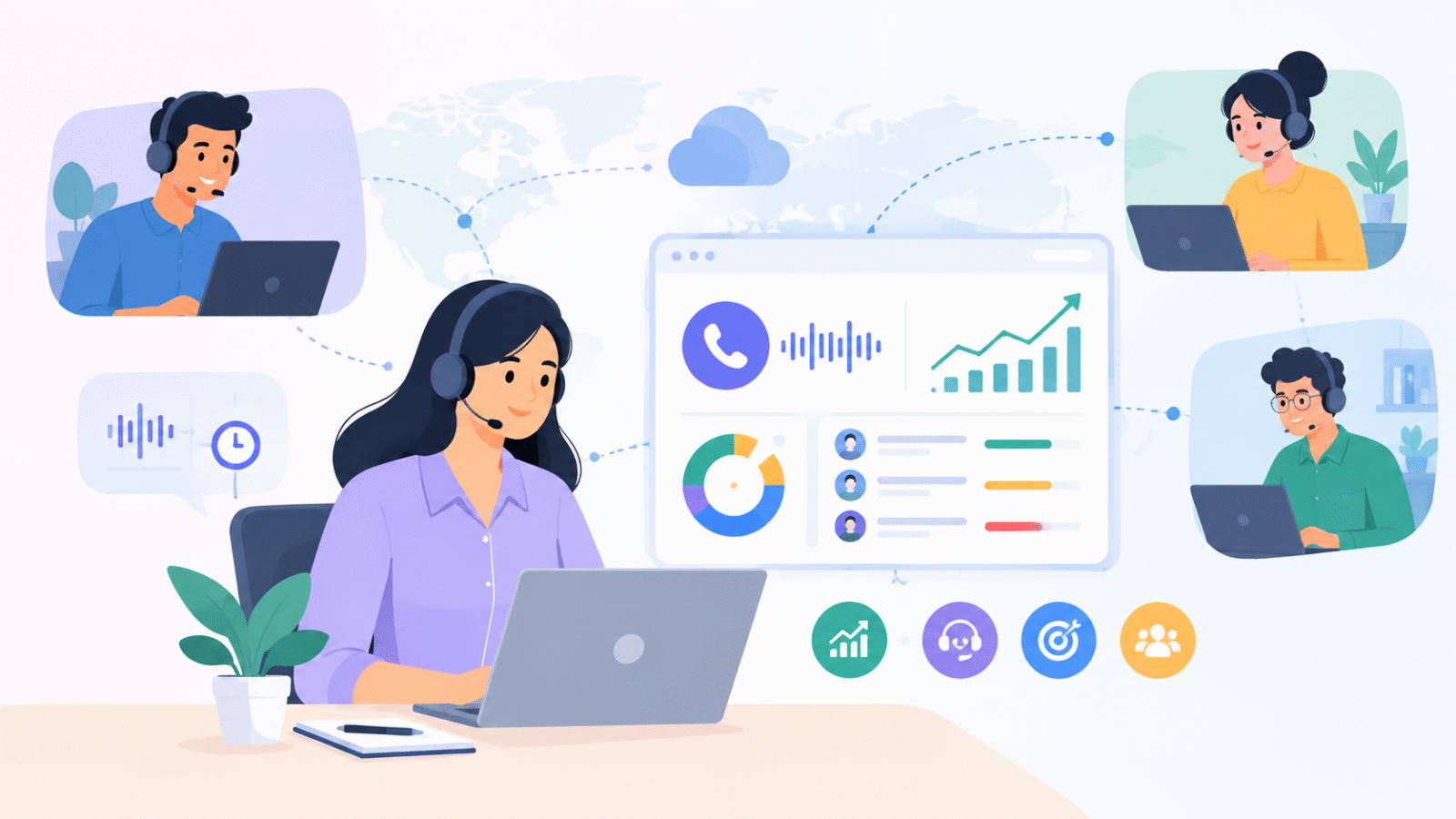
If your sales team works from home, phones, or different cities, you already know the hard part isn’t making calls. It’s knowing what’s actually happening on those calls once they’re done. That’s exactly the gap call analytics for sales teams is built to close.
What Is Call Analytics for Sales Teams?
Call analytics for sales teams simply means turning every phone call your reps make into data you can actually use. Instead of guessing how a call went, you get real numbers: who got connected, who called back on time, and which calls turned into real deals.
For remote teams, this matters even more. A manager sitting in an office can walk past a desk and get a feel for how the team is doing. A remote manager can’t do that. All they have is what the data tells them, so the quality of that data decides everything else.
Why Remote Sales Teams Struggle Without It
Sales call conversion rates already vary a lot by industry, ranging anywhere from 13% to 25% depending on the industry, price point, and lead source (Focus Digital, 2025). Without proper tracking, remote managers can’t even tell if their team is hitting a fair benchmark or falling behind for reasons that have nothing to do with effort, like a bad lead list or a slow network.
This is where sales call analytics software earns its place. Teams that use advanced call analytics platforms have reported around a 25% lift in revenue, along with fewer customer complaints (Momentum.io, 2025). That’s not a small edge. It’s the difference between guessing and actually knowing where deals are getting stuck.
Remote reps also deal with something office reps don’t: isolation. Without daily contact with a manager, one bad number on a report can feel like an attack instead of helpful feedback. This is exactly why remote telesales monitoring needs to be built on trust, not just tracking. Good analytics fixes this in a simple way: reps get to see their own numbers first, before the manager does, instead of just being handed a bad score after the fact.
Key Features to Look For
Not every call analytics for sales teams tool is built the same way. Here’s what actually helps:
- Automatic call logging — calls should record themselves the moment they happen, with no manual entry from the rep.
- Follow-up tracking — a clear view of which callbacks were completed on time and which were missed.
- Shared dashboards — reps and managers see the same numbers, so reviews feel like a conversation, not an inspection.
- Call recordings — useful for coaching based on what was actually said, not a rep’s memory of the call.
- Simple reporting — daily or weekly summaries that don’t require a manager to build a report by hand.
Who Benefits From Call Analytics
Remote Sales Teams and BPOs
Teams spread across cities need remote sales team performance tracking that accounts for real differences, like network reliability or lead quality, instead of judging every rep against one flat number.
Sales Managers
Managers get a faster feedback loop. Instead of finding out about a problem three days later in a report, they catch it while it’s still small enough to fix in a quick conversation.
Individual Reps
Reps get to see their own numbers first, before a manager reviews them. That one shift turns monitoring from something that happens to them into something they can act on themselves.
The Trend: From Tracking to Coaching
The bigger shift in this space isn’t just better tracking, it’s what teams do with the data afterward. The most effective setups treat data as a coaching tool, not a scorecard. A weekly rhythm, reviewing numbers on Monday, quality-checking calls midweek, and coaching by Thursday, tends to work better than daily pressure that burns managers and reps out.
Tools built around a proper call monitoring system make this shift easier, because the data is already organized around what predicts performance, not just what’s easy to count.
The Bottom Line
Call analytics for sales teams isn’t about watching reps more closely. It’s about giving remote teams the same context an office naturally provides; just delivered through better data instead of overheard conversations. Get the basics right, connect rate, follow-up adherence, and a shared view between reps and managers, and performance improves on its own.