Recovery from sports injury is a delicate balancing act. Moving too slowly means missing critical training and competition time. Moving too quickly means risking further damage and prolonged absence. Sports physiotherapy is uniquely positioned to navigate this balance expertly. It ensures recovery is both as fast and as safe as possible. Every decision is guided by evidence, clinical expertise, and athlete-specific goals. This article explains how sports physiotherapy achieves faster and safer recovery outcomes.
Why Speed and Safety Must Co-Exist in Athletic Recovery
Many athletes view speed and safety as opposing forces in recovery. This is a fundamental misconception that physiotherapy corrects. The fastest possible safe recovery is the true goal of rehabilitation. Reckless speed creates setbacks that extend overall recovery time. Excessive caution leaves athletes physically underprepared for return. Sports physiotherapy finds the optimal middle path between these extremes. Evidence-based protocols guide decision-making at every stage of rehabilitation. Athletes who follow expert physiotherapy guidance achieve the best combination of speed and safety.
Immediate Injury Management That Sets the Foundation
The first hours and days after injury significantly influence recovery speed. Correct acute management reduces tissue damage and accelerates healing. Physiotherapists provide specific, accurate guidance on immediate post-injury care. The updated PEACE and LOVE principles guide modern acute injury management. Protection, elevation, avoidance of anti-inflammatories, compression, and education form PEACE. Load, optimism, vascularisation, and exercise guide the subsequent LOVE phase. This framework improves on older approaches and produces faster early recovery. Athletes who follow evidence-based acute care protocols recover more quickly from the outset.
Why Optimal Loading Starts Immediately
Early movement is central to modern injury recovery philosophy. Complete immobilisation causes rapid strength loss and joint stiffness. Gentle, pain-free movement maintains circulation and promotes collagen production. Guided early loading by a physiotherapist prevents excessive deconditioning. It also helps the nervous system maintain motor patterns during healing. Early movement must be carefully calibrated to avoid harming healing tissue. Physiotherapists determine the appropriate type and amount of loading at each stage. This expertise is one of the primary reasons athletes recover faster with professional guidance.
Reducing Recovery Time Through Targeted Treatment
Physiotherapy reduces recovery time through several specific mechanisms. Each mechanism addresses a different component of the recovery process.
Manual Therapy for Faster Tissue Healing
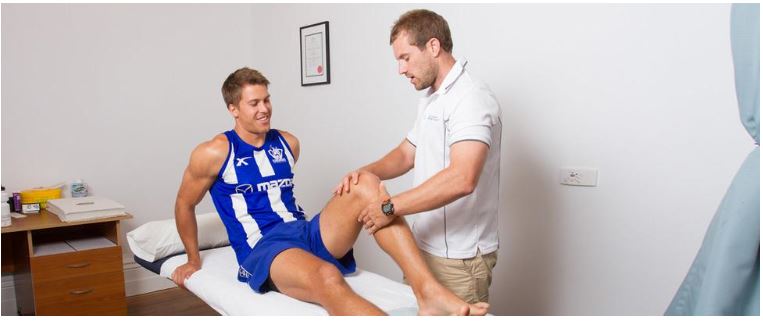
Manual therapy directly accelerates recovery in several important ways. Joint mobilisation restores normal joint mechanics more quickly than rest alone. Soft tissue massage reduces muscle guarding and promotes tissue extensibility. Lymphatic drainage techniques reduce swelling more effectively than rest and ice alone. Neural mobilisation addresses nerve tension that limits movement during recovery. These techniques reduce the time athletes spend in the mobility restoration phase. Faster mobility restoration allows strengthening to begin sooner. Earlier strengthening directly translates to faster overall recovery timelines.
Electrotherapy and Adjunct Modalities
Electrotherapy modalities play a valuable role in accelerating recovery. Therapeutic ultrasound promotes cellular healing through thermal and mechanical effects. TENS effectively manages pain, allowing more productive participation in rehabilitation exercises. Interferential therapy reduces swelling and pain in acute and subacute injuries. Low-level laser therapy promotes soft tissue healing at the cellular level. These modalities shorten the painful early phases of recovery significantly. They are always used alongside active exercise for maximum benefit. Physiotherapists select modalities based on injury type, stage, and athlete response.
Progressive Rehabilitation That Safely Builds Function
Progressive rehabilitation is the cornerstone of safe athletic recovery. Each stage builds the physical foundation required for the next. Rushing any stage compromises the safety of subsequent stages. Physiotherapists design meticulously staged programmes for every injury type.
Strength Progression Protocols
Strength programmes in sports rehabilitation follow strict progression principles. They begin with isometric exercises to engage muscles without painful joint movement. Isotonic exercises with progressive resistance follow as tolerance increases. Functional exercises that mirror sport-specific demands are introduced next. Plyometric and power exercises complete the strengthening progression. Each stage requires meeting specific criteria before progression is permitted. Pain levels, swelling, and strength symmetry guide progression decisions. This structured approach produces strong, resilient athletes ready for return to sport.
Neuromuscular Retraining for Safe Return
Neuromuscular retraining is a non-negotiable element of safe recovery. Joint injuries damage proprioceptive receptors within ligaments and joint capsules. These receptors normally provide critical joint protection feedback. Without them, athletes are vulnerable to reinjury in unpredictable game situations. Physiotherapy dedicates extensive time to restoring neuromuscular function. Balance boards, perturbation training, and reactive drills are core neuromuscular tools. Athletes who complete thorough neuromuscular training demonstrate lower reinjury rates. This training is as important as strength restoration in ensuring safe return.
Monitoring Recovery to Prevent Setbacks
Monitoring is a critical component of safe recovery management. Physiotherapists track multiple indicators of recovery progress at every session. Pain levels, swelling, range of motion, and strength are all regularly assessed. Any deterioration in these indicators signals the need to modify the programme. Athletes sometimes feel better before full healing has occurred. This subjective improvement can lead to premature progression without monitoring. Physiotherapists provide objective assessment that overrides subjective feeling alone. Regular monitoring prevents the setbacks that extend recovery timelines significantly.
Sport-Specific Preparation Before Return to Competition
The final phase of rehabilitation is sport-specific preparation. This phase bridges the gap between general rehabilitation and competitive performance. It is frequently neglected in inadequate rehabilitation programmes. Athletes who skip this phase return to competition underprepared.
Simulating Competition Demands in Rehabilitation
Physiotherapists simulate competition demands progressively during the final phase. Running at increasing speeds, changing direction, and reacting to cues are integrated. Contact sport athletes practise controlled contact before returning to competition. Sport-specific drills increase in complexity, speed, and intensity over days. This progressive simulation prepares athletes both physically and psychologically. Athletes who complete sport-specific preparation return with greater confidence. Their bodies are genuinely ready for the demands they will face in competition. A dedicated sports injury physio designs this phase to match each athlete’s sport precisely. Their specialist knowledge is what makes the difference between adequate and excellent recovery.
Communication With Coaches and Medical Teams
Safe and effective recovery requires excellent communication between professionals. Physiotherapists liaise regularly with coaches, medical staff, and strength coaches. Coaches need to know what activities athletes can and cannot perform. Medical staff need updates on injury status and rehabilitation progress. Strength coaches need to understand how rehabilitation exercises interact with training. This communication ensures that all professionals work toward the same recovery goals. Conflicting advice from different professionals slows recovery and creates confusion. Physiotherapists who communicate proactively produce safer and faster outcomes for athletes.
The Psychological Dimension of Faster, Safer Recovery
Mental factors significantly influence both the speed and safety of recovery. Athletes who are confident and motivated progress faster through rehabilitation. Those who are fearful or anxious move more cautiously and take longer. Physiotherapists actively manage the psychological dimension of recovery. Education about the healing process reduces fear and catastrophic thinking. Celebrating milestones maintains motivation during long rehabilitation programmes. Graded exposure to sport-specific movements rebuilds confidence incrementally. Athletes who leave physiotherapy psychologically as well as physically prepared perform better.
Final Thoughts
Sports physiotherapy provides the expertise, structure, and tools for faster and safer recovery. From immediate injury management to sport-specific preparation, every phase is expertly guided. Athletes who access physiotherapy promptly and commit fully achieve the best outcomes. Recovery speed and safety are not competing priorities — they are complementary ones. Physiotherapy achieves both simultaneously when evidence-based principles are followed. Every athlete deserves the quality of care that physiotherapy provides. Trust the process, engage fully, and return to sport stronger than before.