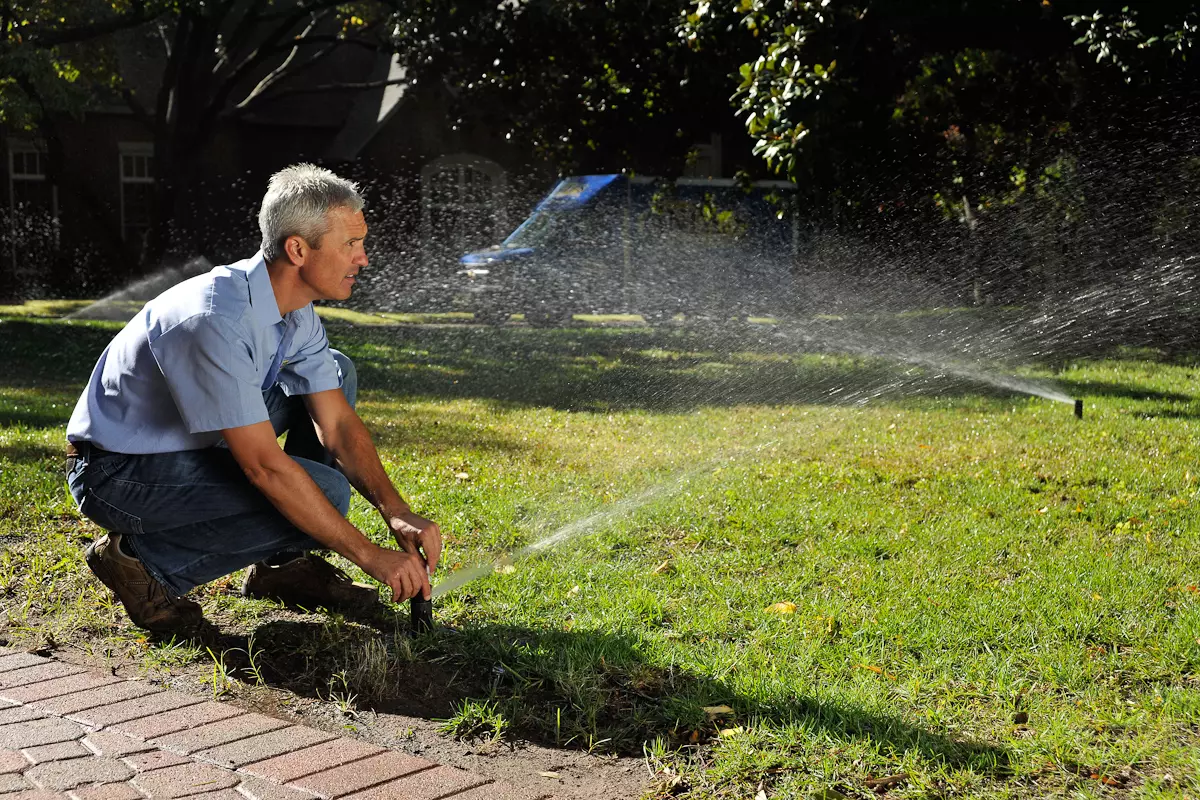
Winter presents one of the most serious threats to irrigation system health. Temperatures drop, ground freezes, and trapped water becomes ice. That ice expands inside pipes with enormous force. The resulting damage ranges from hairline cracks to fully shattered pipe sections. None of it is visible until spring, when the system is reactivated and leaks appear everywhere.
The sprinkler blowout process directly addresses this risk. It removes all water from underground and above-ground components before freezing begins. Without water present, there is nothing to freeze and expand. The pipes, heads, and valves enter winter in the same condition they leave fall. A properly executed blowout is the most reliable freeze prevention strategy available.
What Happens Inside a Pipe When Water Freezes
Understanding the physics of frozen pipes clarifies why blowouts are so important. Water molecules expand into a lattice structure as they transition to ice. This lattice occupies approximately nine percent more volume than liquid water. Inside a sealed, inelastic pipe, this nine percent has nowhere to go. The resulting internal pressure builds until the weakest point in the pipe fails.
The failure point varies depending on pipe material and system age. PVC pipe tends to crack cleanly along the pipe wall when overpressured. Poly pipe stretches before splitting but eventually fails under sustained freeze pressure. Copper fittings and joints can separate under freeze-induced pressure spikes. Sprinkler head bodies made of plastic crack most easily due to their thin walls. All of these failures are immediately resolved by ensuring no water remains inside.
Why Frozen Pipes Are Especially Costly to Repair
Underground irrigation pipe repairs are expensive because of the excavation involved. The break must first be located precisely using pressure tests or visual surface clues. Excavation equipment must safely remove soil without damaging nearby pipe sections. The damaged section is cut out and replaced with new pipe and fittings. Soil is then replaced, compacted, and lawn is restored to its pre-excavation condition.
The labor for this entire process is substantial even for a single small break. Multiple breaks in one season multiply these costs across the entire property. Emergency repair services, often needed urgently in spring, carry premium pricing. The total cost of repairing even moderate freeze damage consistently exceeds the blowout cost many times over. Prevention through blowout is the obvious financial choice for any property owner.
The Blowout Process Step by Step
A proper blowout begins with shutting off the main irrigation water supply. The shutoff valve for irrigation is usually located near the backflow preventer outside. After water supply is confirmed off, the controller is switched to manual mode. Zones will be activated manually during the blowout process for full control. This preparation ensures safe and systematic water removal from every part of the system.
The compressor is connected to the blow-out port on the main irrigation line. The blow-out port accepts a standard air compressor coupler fitting. It is typically located at or near the backflow preventer connection point. Confirming the correct fitting before starting prevents delays and connection problems. The compressor is kept off until everything is connected and the first zone is activated.
Zone-by-Zone Blowout Sequence
Zones should be blown out starting from the farthest point from the compressor connection. This forces air to travel the longest possible distance through the pipe network. The longest travel path pushes more water toward the active heads. Working progressively toward the compressor clears the entire system systematically. Skipping or re-ordering zones can leave sections with trapped water after the process.
Each zone is activated manually through the controller during its blow-out cycle. Air is introduced through the compressor at the appropriate pressure for the head type. Water exits through the active heads and can be seen discharging from the spray nozzles. The zone continues until only air or very faint mist exits from all heads. Two to four passes per zone are typically required for complete water removal.
Air Pressure Selection and Its Importance
Selecting the correct air pressure is critical to a safe and effective blowout. Too little pressure fails to push water completely through long pipe runs. Too much pressure can crack pipe joints, damage head bodies, and separate underground fittings. The damage from excessive pressure is sometimes worse than freeze damage would have been. Pressure selection must account for pipe material, pipe diameter, and head type.
PVC pipe systems should not exceed 50 PSI during the blowout operation. Polyethylene pipe systems also perform safely up to approximately 50 PSI. Fixed spray heads require less pressure than rotary heads to function correctly. Rotary heads may need up to 50 PSI to spin and discharge water fully. A qualified professional adjusts pressure settings appropriately for each zone’s specific configuration.
Compressor Size and CFM Requirements
Compressor CFM rating matters as much as pressure for an effective blowout. CFM measures the volume of air the compressor delivers per minute. A compressor with adequate pressure but low CFM runs out of air quickly. It cannot maintain sufficient airflow to push water through longer pipe sections. The result is incomplete water removal despite multiple cycle attempts.
Most residential irrigation systems require a compressor delivering 20 to 50 CFM. Larger commercial or multi-zone systems may need higher CFM ratings for efficiency. Small portable electric compressors with small tanks are rarely adequate for full systems. Renting a properly sized gas-powered compressor ensures the job is done completely. Professionals own correctly rated equipment and deliver reliable results every time.
Handling Difficult System Configurations
Some irrigation systems present unique challenges during the blowout process. Systems with elevation changes retain water at low points after air passes through. Multiple flush cycles at lower pressure help clear these elevation-related pockets. Drip irrigation zones connected to the main system need special attention during blowout. The smaller diameter lines in drip zones require lower pressure and longer flush times.
Backflow preventers need specific handling during the blowout process. Water trapped inside the preventer body must be drained before and after blowout. Test cocks on the preventer body are opened to release trapped water. The shut-off handles are positioned at 45 degrees to allow internal draining. After blowout, the preventer should be insulated to protect against ambient freeze.
Above-Ground Component Winterization
Above-ground components require physical protection in addition to blowout procedures. Pipe sections running on exterior walls are exposed to cold air and wind. Foam pipe insulation sleeves wrap around these sections to slow heat loss. Tape seals the insulation at all seam and end points for maximum effectiveness. Double-layering insulation on north-facing walls provides additional protection in harsh climates.
Valve boxes buried near the surface also benefit from additional insulation. Placing foam insulation inside the box around valve manifolds slows ground freeze penetration. Securing valve box covers firmly prevents cold air circulation inside the box. These simple and inexpensive physical measures supplement the blowout effectively. Together, they create a complete winterization strategy with multiple layers of protection.
The Timing of Blowouts for Maximum Protection
Timing the blowout correctly is essential for complete freeze protection. Performing the blowout too early wastes the remaining irrigation season unnecessarily. Waiting too long risks freeze damage before protection is in place. The ideal blowout window is the period between last meaningful irrigation use and first sustained freeze. Monitoring local weather forecasts helps identify this window each fall.
In cold regions like central Canada and the northern United States, this window often falls in September or October. A sudden early cold snap can arrive before homeowners are prepared. Scheduling blowout service early in the fall creates a protective buffer. It also ensures appointment availability before service providers become fully booked. Early scheduling is consistently the wisest approach for cold-climate property owners.
Professional sprinklers winterization services bring expertise, proper equipment, and thorough technique to every job. They understand the specific requirements of different pipe materials and head types. They complete every zone with multiple passes to ensure truly complete water removal. Their documentation provides a clear record of service for spring reference. Trusting trained professionals with this critical task is the most reliable path to a freeze-damage-free winter season.
Conclusion
Sprinkler blowouts are the most effective single action a property owner can take against frozen pipe damage. They eliminate the root cause of freeze damage by removing water entirely from the system. Proper technique, correct pressure settings, and complete zone coverage are all essential to success. Timing the blowout before the first hard freeze provides the protection your investment deserves. Whether done professionally or carefully by a knowledgeable homeowner, a thorough blowout is the smartest fall maintenance investment you can make for your irrigation system.