Healthy-looking hair rarely comes from using one product once in a while. Instead, it usually reflects consistent habits that protect the scalp, minimize breakage, maintain moisture, and keep the hair manageable. Whether your hair is straight, wavy, curly, thick, fine, dry, or oily, creating a routine around its specific needs can make everyday care much easier.
A good routine doesn’t have to be complicated. In fact, too many products and aggressive treatments can sometimes make hair care more difficult. The goal is to understand your scalp and hair type, choose suitable products, use them correctly, and give your hair enough time to respond.
For people interested in improving the appearance and feel of their hair, Regrowth Hair Oil can be included as one part of a broader routine. However, oil should complement good hair care rather than replace cleansing, conditioning, nutrition, gentle styling, and professional advice when hair loss is significant.
The American Academy of Dermatology recommends adapting hair care to your hair type, washing according to how oily or dirty the scalp becomes, conditioning after washing, handling wet hair gently, and limiting excessive heat.
Why a consistent hair care routine matters
Hair goes through daily stress from washing, brushing, sunlight, pollution, styling, friction, and heat. Over time, these factors can contribute to dryness, split ends, frizz, and breakage.
A consistent routine helps you manage these problems before they become more noticeable. Instead of reacting whenever your hair looks unhealthy, you create habits that support its appearance every day.
A practical routine can help you:
- Keep the scalp clean and comfortable
- Reduce unnecessary product buildup
- Maintain moisture
- Minimize breakage
- Make hair easier to detangle
- Protect strands from excessive heat
- Support a healthier-looking appearance
- Identify changes in hair or scalp condition earlier
It’s also important to understand the difference between hair health and hair growth. A conditioner can make hair smoother, while gentle handling can reduce breakage. These improvements can make hair appear fuller and healthier even though they don’t necessarily change the biological rate at which hair grows.
Hair loss, meanwhile, can have many causes. The AAD notes that hereditary hair loss, certain medical conditions, medications, nutritional problems, tight hairstyles, and other factors can contribute to hair loss.
That’s why a thoughtful routine is a starting point rather than a guaranteed solution to every hair concern.
Understanding your hair type
Before buying products, identify what your hair actually needs.
Straight hair may become oily more quickly because natural scalp oils can travel down the hair shaft easily. Curly or textured hair may feel drier because oils don’t spread as easily along bends and coils.
Fine hair may become weighed down by heavy products, while thick hair may benefit from richer conditioners. Chemically treated or heat-damaged hair may need extra attention to moisture and gentle handling.
Consider these characteristics:
| Hair characteristic | Common care focus |
|---|---|
| Fine hair | Lightweight products and careful conditioning |
| Thick hair | Moisture, detangling, and thorough cleansing |
| Dry hair | Hydration and reduced heat exposure |
| Oily hair | Appropriate cleansing frequency |
| Curly hair | Moisture and gentle detangling |
| Damaged hair | Reduced chemical and heat stress |
| Normal hair | Consistent maintenance |
There’s no single routine that works perfectly for everyone. Your routine should change when your hair changes.
Identifying your scalp needs
The scalp is the foundation of your hair care routine. If your scalp feels excessively oily, dry, itchy, irritated, or flaky, simply adding more styling products may not solve the underlying issue.
Pay attention to how your scalp behaves after washing.
An oily scalp may require more frequent cleansing, while a dry or textured hair type may not need frequent shampooing. The AAD recommends washing based on how often your hair becomes dirty or oily rather than following one universal schedule.
Persistent itching, redness, painful areas, significant flaking, sores, or sudden changes in hair density deserve professional attention.
Start with a healthy scalp
A healthy-looking head of hair begins with a clean and comfortable scalp. Cleansing removes excess oil, dead skin, sweat, environmental residue, and styling-product buildup.
However, more cleansing isn’t automatically better.
Overwashing or using unsuitable products can leave some hair types feeling dry or rough. On the other hand, inadequate cleansing may allow oil and product residue to accumulate.
The trick is finding your balance.
Keep the scalp clean
When shampooing, focus primarily on the scalp rather than aggressively rubbing shampoo through the full length of your hair. The shampoo that rinses through the lengths is generally enough to cleanse them without unnecessary friction.
Use your fingertips rather than your fingernails and massage gently.
This small change can make washing more comfortable and reduce unnecessary mechanical stress.
Choose the right shampoo
Shampoo should clean the scalp without unnecessarily stressing the hair.
Look for a formula appropriate for your hair type and scalp needs. If your scalp is oily, a cleansing formula may be more suitable. If your hair is dry, curly, or chemically treated, you may prefer a gentler formula that doesn’t leave the hair feeling stripped.
Don’t choose shampoo solely because it promises dramatic growth.
A product can support scalp cleanliness and hair manageability without being a medical treatment for hair loss.
How often should you wash your hair?
There’s no universal number.
Some people may need to wash frequently because their scalp becomes oily quickly. Others with dry, curly, thick, or textured hair may wash less often.
Your routine should consider:
- Scalp oiliness
- Exercise and sweating
- Product use
- Hair texture
- Environmental conditions
- Personal comfort
If your scalp feels greasy shortly after washing, you may need more frequent cleansing. If your hair feels excessively dry after every wash, reconsider your shampoo, washing frequency, or conditioning routine.
Shampooing mistakes to avoid
Several common mistakes can undermine an otherwise good routine.
Avoid:
- Scratching the scalp aggressively
- Using very hot water
- Rubbing the hair harshly
- Applying excessive shampoo
- Shampooing the lengths unnecessarily
- Using products unsuitable for your hair type
- Washing based only on a fixed schedule
The AAD specifically recommends applying shampoo to the scalp rather than the entire hair length and using conditioner afterward.
Make conditioner part of your routine
If shampoo cleans the hair and scalp, conditioner helps improve manageability.
Conditioner can moisturize, reduce tangling, and make hair easier to comb. For fine or straight hair, it may be most useful on the ends. Dry or curly hair may benefit from conditioner along more of the hair length.
Skipping conditioner isn’t necessarily a shortcut. For many hair types, it can actually make detangling more difficult.
Choosing conditioner for your hair type
Consider the condition of your hair rather than simply choosing the most expensive product.
For example:
- Fine hair may benefit from lightweight conditioning.
- Dry hair may need richer moisture.
- Curly hair often benefits from products that support softness and manageability.
- Chemically treated hair may require additional conditioning.
- Oily scalps can still have dry lengths, so conditioner can be focused away from the scalp.
The goal is balanced care.
Add nourishing hair oils carefully
Hair oils have been used in many traditional hair care routines for generations. They can help improve the feel and appearance of hair by providing conditioning and reducing the dry sensation associated with some hair types.
However, oil shouldn’t be treated as a universal cure for hair loss.
A well-designed routine may include oiling alongside appropriate cleansing, conditioning, gentle styling, and good nutrition.
How Regrowth Hair Oil can fit into a routine
For people looking to add an oil-based product to their routine, Regrowth Hair Oil can be considered as part of a broader hair-care approach. Desi Khazanay offers hair-focused products designed around traditional-inspired personal care, making it an option for consumers who prefer incorporating oiling into their regular routine.
The important point is consistency and realistic expectations. Applying an oil occasionally while continuing habits that damage the hair is unlikely to create a complete hair-care routine.
Think of oil as one piece of the puzzle.
Before using any new product, particularly on a sensitive scalp, it’s sensible to review the ingredients and consider a small patch test. If irritation occurs, discontinue use.
Tips for applying hair oil
A simple oiling routine can look like this:
- Start with a clean or reasonably clean scalp.
- Apply a small amount of oil rather than soaking the hair.
- Massage gently with your fingertips.
- Avoid aggressive scratching.
- Allow the product to remain according to its directions.
- Wash the hair appropriately afterward if needed.
- Monitor how your scalp and hair respond.
Gentle massage is preferable to vigorous rubbing.
If your scalp is prone to irritation, acne-like bumps, or excessive oiliness, heavy oiling may not be appropriate. In such cases, professional advice can help determine what your scalp actually needs.
Protect hair from everyday damage
Healthy-looking hair isn’t only about what you apply. It’s also about what you stop doing.
Everyday habits can gradually contribute to breakage. Heat, chemical processing, tight hairstyles, rough brushing, and aggressive towel drying can all put stress on the hair.
The AAD recommends reducing excessive heat and handling hair gently, especially when wet.
Reduce heat styling
Flat irons, curling irons, hot combs, and blow dryers can expose hair to significant heat.
If you use them:
- Choose a low or medium heat setting.
- Avoid repeatedly passing a tool over the same section.
- Limit how frequently you use hot tools.
- Allow hair to partially air-dry when practical.
- Use suitable heat-protective products.
You don’t have to eliminate styling completely. The goal is moderation.
Avoid overly tight hairstyles
A tight ponytail may look polished, but repeated tension can place stress on the hair and scalp.
Tight ponytails, buns, braids, extensions, and similar styles can contribute to traction alopecia when they repeatedly pull on the hair. The AAD advises reducing frequent tension and changing hairstyles when necessary.
A useful rule is simple: if a hairstyle hurts, it’s too tight.
Build a simple weekly hair care schedule
A routine doesn’t need to take hours.
Here’s a simple framework:
| Frequency | Routine |
|---|---|
| Daily | Gentle styling, avoid unnecessary pulling |
| Wash days | Shampoo scalp and condition hair |
| 1–2 times weekly | Optional oiling or deeper conditioning based on hair needs |
| Weekly | Check scalp and hair condition |
| Monthly | Review whether products and habits are working |
The exact schedule should be adjusted to your hair type.
Someone with an oily scalp may require more frequent washing than someone with dry, textured hair. Likewise, someone who uses styling products regularly may need a different cleansing routine.
Consistency matters more than complexity.
Common hair care mistakes to avoid
Even a good product won’t compensate for poor habits.
Here are some mistakes worth avoiding:
Washing with very hot water
Very hot water can leave some hair feeling dry and uncomfortable. Lukewarm water is generally a more practical choice.
Brushing too aggressively
Hair doesn’t become healthier because you brush it hundreds of times. Excessive brushing can contribute to mechanical damage. The AAD specifically notes that the idea of brushing hair 100 strokes daily is a myth.
Wearing tight styles constantly
Repeated tension can cause damage and, in some cases, traction-related hair loss.
Using too much heat
Frequent high-temperature styling can weaken hair over time.
Changing products too often
Give a reasonable routine time to show how your hair responds. Constantly switching products makes it difficult to identify what actually works.
Expecting overnight results
Hair grows slowly. A healthier-looking routine requires patience.
When should you consult a dermatologist?
A hair care routine can support healthier-looking hair, but it isn’t a substitute for medical diagnosis.
Consider speaking with a dermatologist if you notice:
- Sudden or severe hair shedding
- Noticeable bald patches
- A rapidly receding hairline
- Persistent scalp itching
- Pain or burning
- Significant redness or scaling
- Hair loss that continues despite changing damaging habits
- Sudden changes in hair density
Hair loss can have many different causes, so identifying the cause is important before choosing treatment.
Frequently asked questions
1. How often should I wash my hair?
There’s no universal schedule. Wash according to your scalp’s oiliness, hair texture, activity level, and product use. Oily hair may need more frequent washing, while dry or textured hair may require less frequent cleansing.
2. Can Regrowth Hair Oil replace shampoo and conditioner?
No. Oil can be one component of a hair care routine, but it doesn’t replace cleansing and conditioning. A balanced routine should address the scalp, hair strands, moisture, and damage prevention.
3. Is hair oil suitable for every scalp?
Not necessarily. People have different scalp conditions and sensitivities. If an oil causes irritation, excessive greasiness, or bumps, stop using it and consider professional advice.
4. Can hair oil stop hair loss?
Hair loss has many possible causes, so no general hair oil should be presented as a guaranteed solution. If you’re experiencing significant or persistent hair loss, identifying the underlying cause is more important than relying on one product.
5. Does cutting hair make it grow faster?
Cutting the ends doesn’t change the rate at which hair grows from the follicles. However, trimming damaged ends can make hair look neater and may help reduce the appearance of split ends.
6. Is heat styling bad for hair?
Frequent or excessive heat can contribute to hair damage. Using lower temperatures, reducing frequency, and allowing hair to air-dry when practical can help minimize unnecessary stress.
7. Should I brush wet hair?
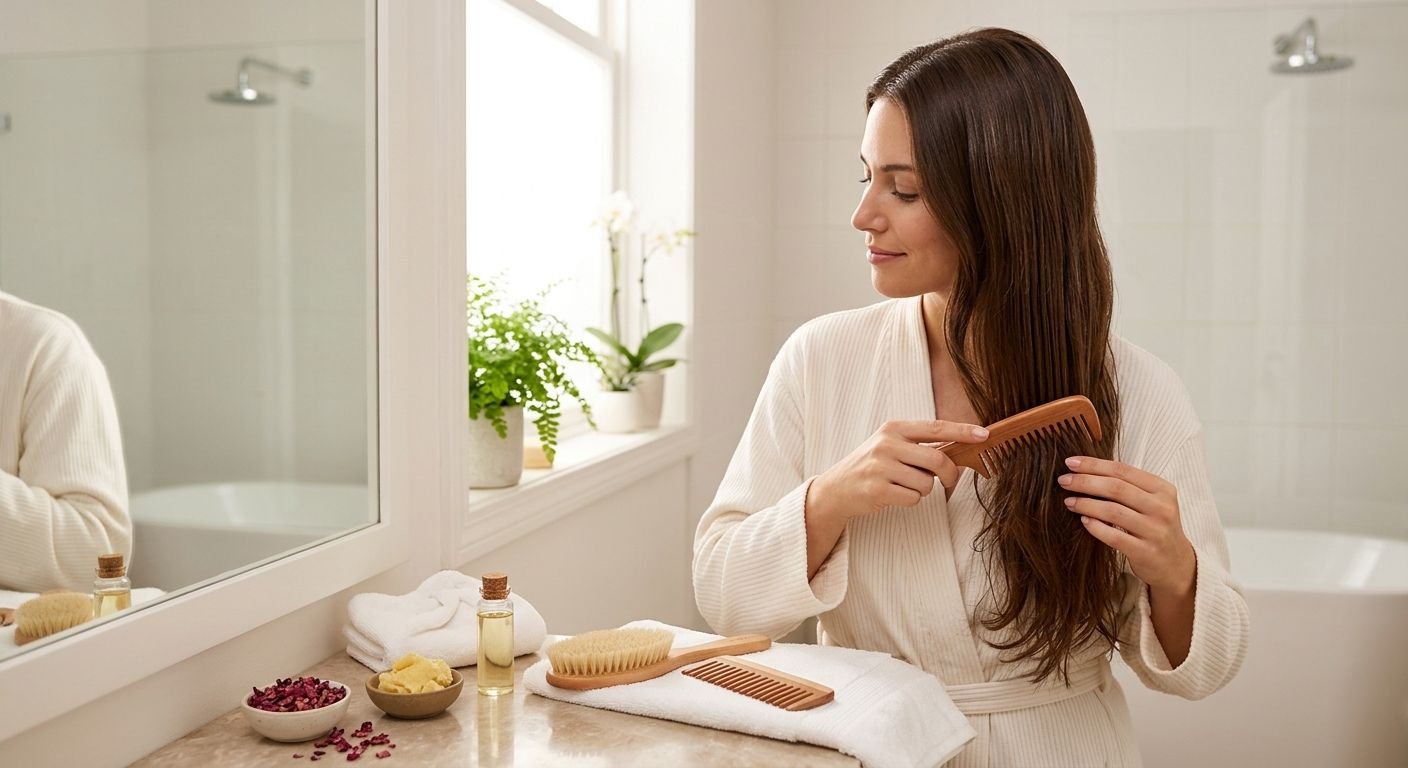
Wet hair is generally more fragile, so it should be handled gently. A wide-tooth comb can help with detangling. The best approach can vary with hair texture, so avoid pulling or forcing through knots.
8. Can tight hairstyles cause hair loss?
Yes. Repeated tension from tight ponytails, braids, buns, extensions, or similar styles can contribute to traction alopecia. If a hairstyle causes pain or discomfort, loosen it.
9. How long does it take to improve hair health?
It depends on the cause and your starting condition. Improvements in softness and manageability may become noticeable sooner, while changes related to hair growth require much more patience. Persistent hair loss should be evaluated rather than simply waiting.
10. Should I take supplements for hair growth?
Don’t automatically take supplements just because you’re experiencing hair loss. Nutritional deficiencies can contribute to hair problems, but excessive intake of certain nutrients may also be harmful. A healthcare professional can help determine whether testing or supplementation is appropriate.
Conclusion
Building an effective hair care routine is less about collecting dozens of products and more about developing the right habits. Start by understanding your hair and scalp, choose suitable cleansing and conditioning products, handle your hair gently, limit excessive heat, avoid repeated tension, and support your body with a balanced diet.
If you enjoy oil-based hair care, adding a product such as Regrowth Hair Oil can be one part of that routine. The key is to use it sensibly and keep expectations realistic.
Most importantly, don’t ignore persistent changes. Hair loss can have several causes, and professional evaluation can help identify the right approach.
With patience, consistency, and a routine designed around your individual needs, you can create a healthier hair-care environment and maintain hair that looks stronger, smoother, and more manageable over time.