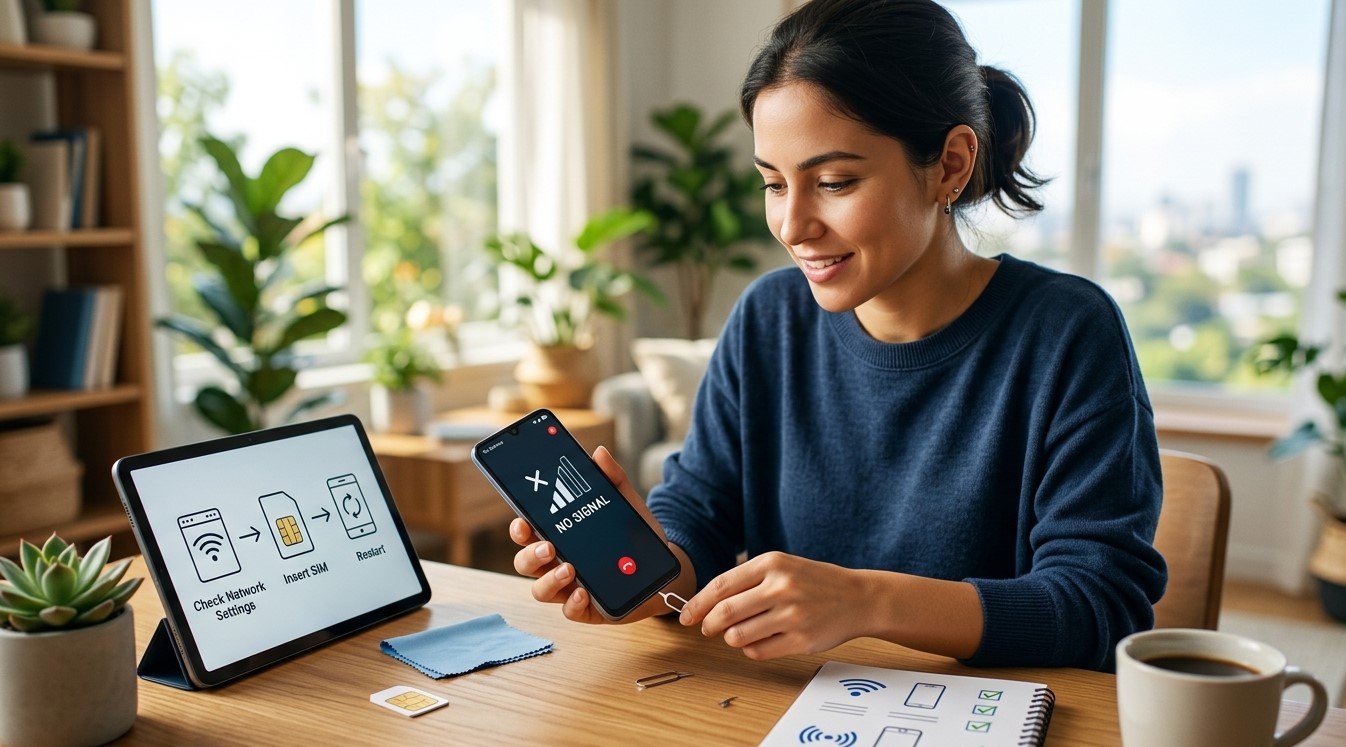
A smartphone that cannot make or receive calls can quickly become a serious problem, especially when you rely on your phone for work, family communication, emergencies, or everyday tasks. You may see messages such as “No Service,” “Call Failed,” or “Emergency Calls Only,” while incoming calls may go directly to voicemail or fail to reach your device. In other cases, the phone may show full signal bars but still be unable to place or receive calls. These problems can be caused by poor network coverage, SIM card issues, incorrect settings, software glitches, account restrictions, carrier problems, or damaged internal hardware. If basic troubleshooting does not resolve the issue, professional cell phone repair El Paso can help determine whether the problem is related to the phone itself.
Call problems can affect iPhones, Samsung Galaxy devices, and other smartphones. If a Samsung phone cannot make or receive calls, professional Samsung phone repair El Paso can help identify whether the issue involves the SIM card, network configuration, antenna, or internal hardware. iPhone users experiencing persistent calling problems may also need iPhone repair El Paso diagnostics. If the phone was recently dropped and has additional display damage, iPhone screen repair El Paso may be required as part of a broader inspection. SmartPhone Solutions can help identify whether the problem is caused by settings, connectivity, software, or physical damage.
Common Signs of a Phone Call Problem
Call-related problems can appear in several different ways.
You may notice:
- Calls fail immediately
- Incoming calls do not reach the phone
- The phone shows “No Service”
- The device displays “Emergency Calls Only”
- Calls drop unexpectedly
- The phone has signal bars but cannot place calls
- Calls go directly to voicemail
- The SIM card is not recognized
- The phone cannot connect to a cellular network
Identifying exactly what happens when you try to make or receive a call can help narrow down the cause.
Why Your Smartphone May Not Make or Receive Calls
Several issues can prevent normal calling.
Common causes include:
- Weak cellular coverage
- Airplane Mode
- SIM card problems
- Carrier outages
- Account restrictions
- Incorrect network settings
- Call-blocking settings
- Do Not Disturb or Focus settings
- Software glitches
- Outdated carrier settings
- Damaged antennas
- Liquid or physical damage
Fortunately, many call problems can be resolved with basic troubleshooting.
1. Check Your Cellular Signal
Start by looking at the signal indicator.
If the phone shows little or no signal, move to another location.
Try going:
- Outdoors
- Near a window
- To a higher floor
- Away from thick concrete walls
- To another neighborhood
Buildings, underground locations, remote areas, and other obstacles can reduce cellular reception.
If calls work normally in another location, weak coverage may be responsible.
However, if the phone cannot make calls anywhere, continue troubleshooting.
2. Make Sure Airplane Mode Is Turned Off
Airplane Mode disables cellular communication.
Open the quick settings panel or Control Center and make sure Airplane Mode is disabled.
If it is already disabled, turn it on for several seconds and then turn it off again.
This can refresh the phone’s connection to the cellular network.
Wait a few moments after disabling Airplane Mode before attempting another call.
3. Restart Your Smartphone
A temporary software or network connection problem can prevent calling.
Restart the phone normally and allow it to reconnect to the cellular network.
After restarting, check the signal indicator and try making a call.
If calling works after every restart but eventually stops again, there may be an underlying software or network issue that requires additional investigation.
4. Check the SIM Card
The SIM card allows many smartphones to connect to the carrier network.
A loose, damaged, dirty, or improperly installed SIM can cause calling problems.
Depending on your device, remove the SIM card and inspect it for visible damage.
Check that it is properly positioned in the tray.
If possible, test the SIM in another compatible phone.
You can also test another working SIM in your smartphone.
These tests can help determine whether the problem is related to the SIM card or the phone.
5. Check Whether Your Carrier Is Experiencing an Outage
Sometimes the smartphone is working correctly and the carrier is experiencing a network problem.
Check whether other people using the same carrier are experiencing similar issues.
You can also check the carrier’s official service-status information.
If many customers in the same area cannot make or receive calls, waiting for the carrier to restore service may be necessary.
A carrier outage cannot be fixed through smartphone settings.
6. Check Your Mobile Account
An account issue can sometimes prevent outgoing or incoming calls.
Possible causes include:
- Unpaid balance
- Suspended service
- Expired prepaid plan
- Account changes
- SIM activation problems
- Number-porting issues
If your phone suddenly stopped making and receiving calls after an account change, contact your carrier.
Confirm that your mobile service is active and that voice calling is included in your current plan.
7. Check Call Blocking Settings
Your phone may be blocking certain incoming numbers.
Review your blocked contacts and call-blocking settings.
Make sure important contacts have not been accidentally blocked.
Some smartphones and carrier services also provide spam-call filtering.
Temporarily review or disable aggressive call-filtering settings if legitimate calls are being blocked.
If only specific people cannot reach you, call-blocking or filtering is more likely than a general cellular problem.
8. Check Do Not Disturb and Focus Modes
Do Not Disturb and Focus features can change how incoming calls are handled.
Depending on your settings, calls may be silenced or restricted except for selected contacts.
Review your current Focus or Do Not Disturb configuration.
Make sure the people who need to contact you are allowed through.
Remember that these settings do not normally prevent outgoing calls, so if you cannot make calls either, investigate other possible causes.
9. Check Call Forwarding
Call forwarding can redirect incoming calls to another number.
If your phone does not ring but callers can reach another destination, check whether call forwarding has been enabled.
Open the phone settings and review call-forwarding options.
If you are unsure about the settings, contact your carrier for assistance.
10. Check Network Selection Settings
Most smartphones automatically select an appropriate carrier network.
However, incorrect network-selection settings can occasionally cause connectivity problems.
Make sure the device is set to automatic network selection where appropriate.
Also check that the preferred network mode is compatible with your carrier.
Avoid changing advanced network settings unless you understand what each option does.
11. Reset Network Settings
Incorrect or corrupted network configurations can interfere with calling.
A network reset can restore wireless settings to their defaults.
Depending on your smartphone, this may remove:
- Saved Wi-Fi networks
- Bluetooth pairings
- Cellular preferences
- VPN configurations
- Other network-related settings
After the reset, you may need to reconnect to Wi-Fi and Bluetooth devices.
Make sure you know important passwords before performing this step.
12. Check for Software Updates
Software updates can fix cellular connectivity bugs and improve compatibility with carrier networks.
Check your phone for available operating system updates.
Install official updates when appropriate.
Also check for carrier settings updates when your device provides that option.
If calling problems began after a recent software update, check whether another official update is available.
13. Check Whether Data and Text Messages Work
Try sending a text message or using mobile data.
If texts and mobile data also fail, the problem is likely related to the cellular connection, SIM, account, or carrier.
If mobile data works but calls do not, the issue may involve voice-service configuration, network compatibility, or calling settings.
This comparison can provide useful diagnostic information.
Why Does My Phone Have Signal but Calls Still Fail?
Seeing signal bars does not always guarantee that voice calling will work.
Your phone may display signal strength while experiencing another type of network problem.
Possible causes include:
- Carrier configuration problems
- SIM issues
- Network registration errors
- Account restrictions
- Temporary carrier problems
- Software glitches
- Hardware problems
Try restarting the phone and refreshing the network connection.
If the problem continues, contacting your carrier can help determine whether your account and local service are functioning normally.
Can Physical Damage Affect Phone Calls?
Yes.
A significant drop can damage internal components involved in cellular communication.
Possible affected components include:
- Cellular antennas
- Antenna connectors
- Internal cables
- Motherboard components
- SIM-related connections
The phone may still turn on and operate normally while having difficulty connecting to cellular networks.
If calling problems started immediately after a drop, professional inspection is recommended.
Can Liquid Damage Cause Calling Problems?
Liquid exposure can affect internal cellular components.
Moisture may cause corrosion around connectors and electronic circuits.
Call problems may appear immediately or develop later.
If your smartphone was exposed to water or another liquid before cellular problems began, avoid assuming that changing settings will fix the issue.
Professional inspection can help identify internal damage.
When Should You Seek Professional Repair?
Professional repair may be appropriate when your phone cannot make or receive calls despite having an active account, working SIM card, and available network coverage.
Consider professional diagnostics if:
- Calls fail in multiple locations
- Other phones on the same carrier work normally
- A working SIM does not solve the problem
- Network resets do not help
- The phone was recently dropped
- The phone was exposed to liquid
- Cellular reception is consistently abnormal
- Other wireless functions are also malfunctioning
For customers searching for cell phone repair El Paso, professional technicians can inspect cellular antennas, SIM connections, software configuration, and internal hardware.
Samsung owners can consider Samsung phone repair El Paso when a Galaxy device consistently fails to make or receive calls.
For iPhone users, iPhone repair El Paso can help determine whether the issue involves the carrier connection, SIM or eSIM configuration, antenna system, or internal hardware.
If an iPhone was damaged in a fall and has a cracked display, iPhone screen repair El Paso can be performed alongside a complete device inspection.
How to Prevent Future Calling Problems
You can take several steps to maintain reliable cellular connectivity.
Keep your phone’s software updated and use a protective case to reduce the risk of physical damage.
Avoid exposing the device to unnecessary moisture.
Make sure your SIM or eSIM remains active with your carrier.
If you frequently travel through areas with weak coverage, consider how local network availability affects your calling reliability.
Pay attention to early warning signs such as repeated dropped calls, disappearing signal, or intermittent SIM errors.
Addressing these symptoms early can prevent more serious connectivity problems from being overlooked.
Why Professional Diagnosis Matters
A phone that cannot make or receive calls does not automatically need hardware repair.
The cause may be a carrier outage, account issue, SIM problem, network setting, or temporary software glitch.
Replacing internal components without identifying the actual cause can result in unnecessary expense.
Professional diagnostics can help determine whether the problem is related to the phone’s software, antenna, SIM connection, motherboard, or another component.
Final Thoughts
When a smartphone cannot make or receive calls, start with basic troubleshooting. Check the cellular signal, turn Airplane Mode off and on, restart the phone, inspect the SIM card, verify your carrier account, check call-blocking and Focus settings, and confirm that no carrier outage is affecting your area. Network resets and software updates can also resolve configuration and software-related problems.
If the phone continues to fail when making or receiving calls, professional cell phone repair El Paso can help identify whether the issue is related to the device or its cellular hardware. Samsung users can consider Samsung phone repair El Paso, while iPhone owners may benefit from iPhone repair El Paso diagnostics. If an iPhone also has physical screen damage after a drop, iPhone screen repair El Paso can be included during a broader inspection. With assistance from a trusted provider such as SmartPhone Solutions, you can identify the actual cause of persistent calling problems and determine the appropriate solution.