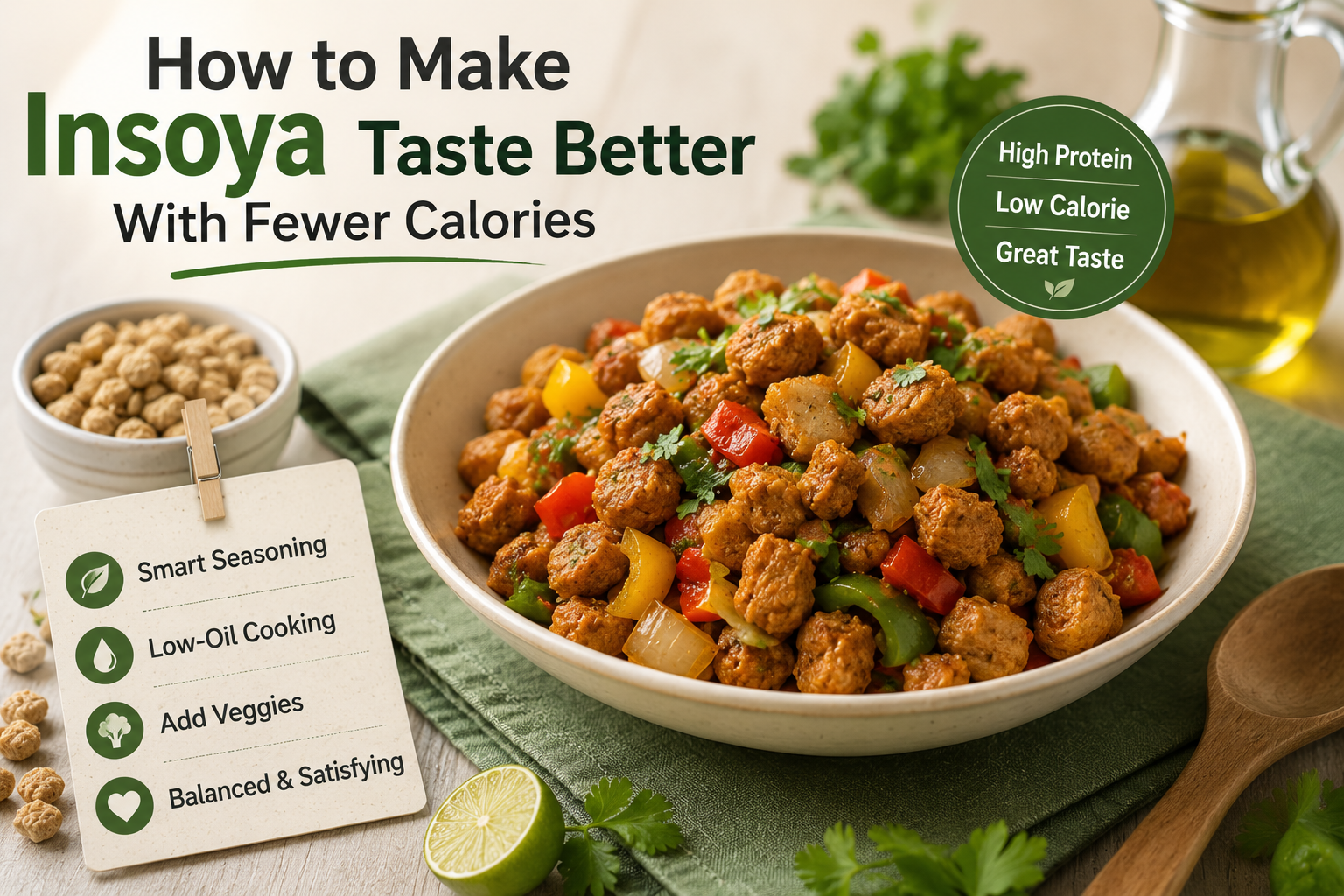
Eating more protein does not mean your meals have to taste plain or boring. Many people add Insoya to their diet because it is easy to use, filling, and works well in many everyday dishes. The problem is that soy-based foods can sometimes taste bland if you cook them without enough seasoning.
The good news is that you do not need heavy sauces, lots of oil, butter, or cheese to improve the flavor. A few simple ingredients can make a big difference without adding too many calories.
This guide explains practical ways to make your meals taste better while keeping them light, balanced, and enjoyable.
Start With the Right Preparation
Good flavor starts before cooking.
If you are using a dry soy-based product, prepare it according to the instructions on the pack. Once it becomes soft, remove any extra water. Too much water can make the food taste weak because seasonings will not stick properly.
If possible, gently press out excess moisture before adding spices.
This simple step helps Insoya absorb flavors more easily. It also gives you better control over the texture.
Avoid overcooking it. Cooking for too long can make some soy foods dry or chewy. A softer texture usually works better in curries, stir-fries, wraps, salads, and rice dishes.
Use Fresh Herbs for More Flavor
Fresh herbs are one of the easiest ways to improve taste without adding many calories.
Try using:
- Fresh coriander
- Mint leaves
- Parsley
- Basil
- Spring onions
- Dill
You can add herbs after cooking or mix them into the dish shortly before serving.
Fresh coriander works especially well with Indian-style recipes. Mint can add freshness to salads, wraps, and yogurt-based sauces. Basil works nicely with tomato-based dishes.
Instead of relying on heavy sauces, let fresh herbs provide aroma and freshness.
Add More Flavor With Spices
Spices can completely change a simple dish.
You do not need large amounts. Start small and adjust according to your taste.
Useful options include:
- Cumin
- Black pepper
- Paprika
- Turmeric
- Chili powder
- Garam masala
- Garlic powder
- Onion powder
- Coriander powder
For a simple meal, season Insoya with cumin, black pepper, garlic, and a little chili powder. Add vegetables such as onions, tomatoes, and bell peppers.
The result will have much more flavor without needing large amounts of oil.
You can also change the spice combination depending on what you are cooking. Use Italian herbs for pasta dishes, curry spices for Indian meals, or paprika and garlic for wraps and bowls.
Use Lemon or Lime Juice
Sometimes a meal does not need more salt or fat. It simply needs acidity.
A squeeze of lemon or lime can make food taste brighter and fresher.
Add it just before serving.
Lemon works especially well when you prepare Insoya with herbs, vegetables, salads, or light curries. Lime can work well in spicy dishes, tacos, wraps, and rice bowls.
You can also combine lemon juice with black pepper and fresh coriander for a simple low-calorie dressing.
Cook With Tomatoes
Tomatoes naturally add moisture, sweetness, and acidity.
Fresh tomatoes are useful in curries, stir-fries, soups, and sauces. You can also use plain tomato puree or crushed tomatoes when a recipe needs more moisture.
Try cooking onions, garlic, chopped tomatoes, and spices together before adding your soy ingredient.
This creates a flavorful base without relying on cream or butter.
Tomato-based sauces can also help Insoya absorb more flavor while keeping the meal relatively light.
Add Plenty of Vegetables
Vegetables do much more than increase the size of your meal.
They also add sweetness, texture, freshness, and natural flavor.
Good choices include:
- Bell peppers
- Onions
- Carrots
- Spinach
- Mushrooms
- Cabbage
- Tomatoes
- Green beans
- Broccoli
For example, sauté onions, peppers, mushrooms, and garlic using a small amount of oil. Then add your prepared soy food and season everything together.
The vegetables help make the meal feel more complete without needing rich sauces.
They also create different textures, which can make a simple dish much more enjoyable.
Use Garlic and Ginger
Garlic and ginger are simple ingredients, but they can make a major difference.
Fresh garlic adds a deeper savory flavor. Ginger gives food warmth and freshness.
You can use them together when making curries, stir-fries, soups, or rice dishes.
For a quick meal, cook a small amount of garlic and ginger with onions. Add your spices and vegetables. Then mix in Insoya.
This combination creates a strong flavor base without adding many extra calories.
Make a Light Yogurt Sauce
You do not always need mayonnaise or creamy dressing.
Plain yogurt can work as a lighter base for sauces and dips.
Mix yogurt with:
- Lemon juice
- Black pepper
- Mint
- Coriander
- Garlic
- Cumin
- A small pinch of salt
Serve it with wraps, grilled vegetables, bowls, or lightly seasoned soy dishes.
If you prefer dairy-free food, you can use an unsweetened plant-based yogurt instead.
The goal is to add moisture and flavor without covering the meal in a heavy sauce.
Roast or Pan-Cook for Better Texture
Texture affects how food tastes.
Boiled ingredients can sometimes feel soft and plain. Light roasting or pan-cooking can create a firmer outside and stronger flavor.
After preparing Insoya, season it with spices and place it in a non-stick pan. Cook until the outside becomes slightly browned.
You can use a very small amount of oil or cooking spray if needed.
Another option is roasting it with vegetables in the oven.
A slightly crisp texture can make the meal feel richer even when you are using simple ingredients.
Try Mustard, Salsa, or Hot Sauce
Condiments can provide a lot of flavor, but you should check the label because calorie and sugar levels can vary.
Some useful options include plain mustard, fresh salsa, chili sauce, or hot sauce.
A spoonful of tomato salsa can add acidity, spice, and moisture to wraps or bowls.
Mustard works well in sandwiches and salads.
Hot sauce can make Insoya much more interesting if you enjoy spicy food.
You usually need only a small amount, which helps keep the meal light.
Build Flavor in Layers
One common cooking mistake is adding all the seasoning at the end.
Instead, build flavor gradually.
Start by cooking onions, garlic, or ginger. Add spices next. Then add vegetables and your main ingredient. Finish with fresh herbs or lemon juice.
Each step adds another layer of taste.
This approach helps you create flavorful food without depending on large amounts of oil, butter, cheese, or sugary sauces.
The yourhomify community is also a useful place for home and food lovers to exchange simple ideas that make everyday meals easier and more enjoyable.
Easy Low-Calorie Insoya Meal Ideas
You do not need complicated recipes to make good meals.
Try these combinations:
Spicy vegetable bowl: Combine your prepared soy food with bell peppers, onions, tomatoes, cumin, chili, and coriander.
Fresh salad: Mix it with cucumber, tomato, onion, lettuce, lemon juice, herbs, and black pepper.
Light wrap: Add seasoned soy filling, cabbage, tomato, onion, and yogurt-mint sauce to a whole-grain wrap.
Tomato curry: Cook tomatoes, onions, garlic, ginger, and spices together. Add the soy ingredient and simmer briefly.
Quick stir-fry: Combine it with mushrooms, carrots, cabbage, garlic, and a small amount of reduced-sodium soy sauce.
These meals use simple ingredients while giving you plenty of flavor.
Common Mistakes That Make Insoya Taste Bland
A few small mistakes can reduce flavor.
Avoid using too much water during cooking. Extra moisture can dilute your seasonings.
Do not depend only on salt. Herbs, spices, garlic, ginger, lemon, and vegetables can create much more interesting flavors.
Avoid overcooking as well. A dry or rubbery texture can make even a well-seasoned meal less enjoyable.
Finally, do not be afraid to experiment. Soy-based foods absorb different flavors well, so you can easily adjust them to suit Indian, Mediterranean, Mexican, or Asian-style dishes.
Final Thoughts
Making Insoya taste better does not require heavy sauces or high-calorie ingredients. The key is to use strong natural flavors.
Fresh herbs, spices, garlic, ginger, tomatoes, lemon juice, vegetables, and light sauces can completely transform a simple meal.
Pay attention to texture as well. Remove excess water, avoid overcooking, and try light roasting or pan-cooking when you want a firmer bite.
Once you learn how to build flavor in layers, it becomes much easier to prepare meals that are satisfying without adding unnecessary calories.
Frequently Asked Questions
1. How can I make Insoya taste better without using oil?
Use spices, garlic, ginger, lemon juice, tomatoes, herbs, and vegetables. You can also cook it in a good non-stick pan with a small amount of water or broth.
2. What spices work best with soy-based foods?
Cumin, black pepper, paprika, chili powder, turmeric, coriander powder, garam masala, garlic powder, and mixed herbs all work well. Choose the combination based on the type of dish you are preparing.
3. Can I use yogurt to add flavor?
Yes. Plain yogurt mixed with herbs, lemon juice, garlic, or spices makes a simple sauce for wraps, bowls, salads, and grilled dishes.
4. How do I stop soy food from becoming chewy?
Avoid cooking it for too long. Prepare it until tender, remove excess moisture, and then cook briefly with your seasonings and other ingredients.
5. What vegetables pair well with Insoya?
Onions, tomatoes, peppers, mushrooms, carrots, spinach, cabbage, broccoli, and green beans are all good options. They add flavor, texture, and volume without requiring heavy sauces.